
• What is ISO 22301 (BCMS) Standard?

    ISO 22301 transforms continuity planning into a structured, tested, and trusted system giving your business a real competitive edge.

    Read Here: https://www.infosectrain.com/blog/what-is-iso-22301-bcms-standard

    #ISO22301 #BusinessContinuity #BCMS #RiskManagement #DisasterRecovery #InfosecTrain #CyberResilience #Compliance #BusinessProtection #OperationalResilience
    What is ISO 22301 (BCMS) Standard? ISO 22301 transforms continuity planning into a structured, tested, and trusted system giving your business a real competitive edge. Read Here: https://www.infosectrain.com/blog/what-is-iso-22301-bcms-standard #ISO22301 #BusinessContinuity #BCMS #RiskManagement #DisasterRecovery #InfosecTrain #CyberResilience #Compliance #BusinessProtection #OperationalResilience
    WWW.INFOSECTRAIN.COM
    What is ISO 22301 (BCMS) Standard?
    The ISO 22301:2019 standard is the globally acknowledged specification that sets out the requirements for establishing, implementing, maintaining, and continually improving a BCMS.
    0 Comentários 0 Compartilhamentos 3191 Visualizações 0 Anterior
  • 𝐖𝐡𝐨 𝐦𝐢𝐠𝐡𝐭 𝐛𝐞 𝐦𝐨𝐧𝐢𝐭𝐨𝐫𝐢𝐧𝐠 𝐲𝐨𝐮𝐫 𝐧𝐞𝐭𝐰𝐨𝐫𝐤 𝐰𝐡𝐢𝐥𝐞 𝐲𝐨𝐮 𝐬𝐥𝐞𝐞𝐩?

    In 𝐜𝐲𝐛𝐞𝐫𝐬𝐞𝐜𝐮𝐫𝐢𝐭𝐲, 𝐚𝐮𝐝𝐢𝐭 𝐥𝐨𝐠𝐬 are the only witnesses awake at 3 A.M.

    𝐈𝐝𝐞𝐧𝐭𝐢𝐭𝐲 𝐀𝐜𝐜𝐨𝐮𝐧𝐭𝐢𝐧𝐠 𝐢𝐬 𝐭𝐡𝐞 𝐦𝐨𝐬𝐭 𝐢𝐠𝐧𝐨𝐫𝐞𝐝 𝐩𝐚𝐫𝐭 𝐨𝐟 𝐀𝐀𝐀, 𝐲𝐞𝐭 𝐢𝐭’𝐬 𝐨𝐟𝐭𝐞𝐧 𝐭𝐡𝐞 𝐨𝐧𝐥𝐲 𝐭𝐡𝐢𝐧𝐠 𝐬𝐭𝐚𝐧𝐝𝐢𝐧𝐠 𝐛𝐞𝐭𝐰𝐞𝐞𝐧 𝐜𝐥𝐚𝐫𝐢𝐭𝐲 𝐚𝐧𝐝 𝐜𝐡𝐚𝐨𝐬 𝐝𝐮𝐫𝐢𝐧𝐠 𝐚𝐧 𝐢𝐧𝐜𝐢𝐝𝐞𝐧𝐭. If you can’t answer who did what, when, and from where, you don’t have security you have assumptions.

    𝐀𝐮𝐭𝐡𝐞𝐧𝐭𝐢𝐜𝐚𝐭𝐢𝐨𝐧 = Who you are
    𝐀𝐮𝐭𝐡𝐨𝐫𝐢𝐳𝐚𝐭𝐢𝐨𝐧 = What you can do
    𝐀𝐜𝐜𝐨𝐮𝐧𝐭𝐢𝐧𝐠 = What actually happened

    Think of Identity Accounting as your network's "Black Box" flight recorder.[𝐒𝐨𝐮𝐫𝐜𝐞 𝐍𝐨𝐭𝐞: 𝐓𝐡𝐢𝐬 𝐚𝐧𝐚𝐥𝐨𝐠𝐲 𝐢𝐬 𝐧𝐨𝐭 𝐟𝐫𝐨𝐦 𝐭𝐡𝐞 𝐬𝐨𝐮𝐫𝐜𝐞𝐬 𝐛𝐮𝐭 𝐢𝐬 𝐮𝐬𝐞𝐝 𝐭𝐨 𝐜𝐥𝐚𝐫𝐢𝐟𝐲 𝐭𝐡𝐞 𝐜𝐨𝐧𝐜𝐞𝐩𝐭]. It captures every significant action, who had access to what, when did they do it, and by what means. From 𝐇𝐈𝐏𝐀𝐀 that secures patient data to 𝐏𝐂𝐈 𝐃𝐒𝐒 that protects your credit card details, proper logging is the basic element that keeps our digital existence secured and compliant.

    𝐑𝐞𝐚𝐝 𝐦𝐨𝐫𝐞 𝐡𝐞𝐫𝐞: https://www.infosectrain.com/blog/isc2-issap-domain-4-4-4-architect-identity-accounting

    Don't let your business operate the nether-most layer of cyber dangers. Get hands-on learning with 𝐈𝐧𝐟𝐨𝐬𝐞𝐜 𝐓𝐫𝐚𝐢𝐧 𝐈𝐒𝐒𝐀𝐏 𝐓𝐫𝐚𝐢𝐧𝐢𝐧𝐠 and be on the road to becoming a security architect.

    #CyberSecurity #IAM #IdentityAccounting #ISSAP #InfosecTrain #AuditLogs #DigitalForensics #SecurityArchitecture #CyberResilience
    𝐖𝐡𝐨 𝐦𝐢𝐠𝐡𝐭 𝐛𝐞 𝐦𝐨𝐧𝐢𝐭𝐨𝐫𝐢𝐧𝐠 𝐲𝐨𝐮𝐫 𝐧𝐞𝐭𝐰𝐨𝐫𝐤 𝐰𝐡𝐢𝐥𝐞 𝐲𝐨𝐮 𝐬𝐥𝐞𝐞𝐩? In 𝐜𝐲𝐛𝐞𝐫𝐬𝐞𝐜𝐮𝐫𝐢𝐭𝐲, 𝐚𝐮𝐝𝐢𝐭 𝐥𝐨𝐠𝐬 are the only witnesses awake at 3 A.M. ✅ 𝐈𝐝𝐞𝐧𝐭𝐢𝐭𝐲 𝐀𝐜𝐜𝐨𝐮𝐧𝐭𝐢𝐧𝐠 𝐢𝐬 𝐭𝐡𝐞 𝐦𝐨𝐬𝐭 𝐢𝐠𝐧𝐨𝐫𝐞𝐝 𝐩𝐚𝐫𝐭 𝐨𝐟 𝐀𝐀𝐀, 𝐲𝐞𝐭 𝐢𝐭’𝐬 𝐨𝐟𝐭𝐞𝐧 𝐭𝐡𝐞 𝐨𝐧𝐥𝐲 𝐭𝐡𝐢𝐧𝐠 𝐬𝐭𝐚𝐧𝐝𝐢𝐧𝐠 𝐛𝐞𝐭𝐰𝐞𝐞𝐧 𝐜𝐥𝐚𝐫𝐢𝐭𝐲 𝐚𝐧𝐝 𝐜𝐡𝐚𝐨𝐬 𝐝𝐮𝐫𝐢𝐧𝐠 𝐚𝐧 𝐢𝐧𝐜𝐢𝐝𝐞𝐧𝐭. If you can’t answer who did what, when, and from where, you don’t have security ➡️ you have assumptions. ☑️ 𝐀𝐮𝐭𝐡𝐞𝐧𝐭𝐢𝐜𝐚𝐭𝐢𝐨𝐧 = Who you are ☑️𝐀𝐮𝐭𝐡𝐨𝐫𝐢𝐳𝐚𝐭𝐢𝐨𝐧 = What you can do ☑️𝐀𝐜𝐜𝐨𝐮𝐧𝐭𝐢𝐧𝐠 = What actually happened Think of Identity Accounting as your network's "Black Box" flight recorder.[𝐒𝐨𝐮𝐫𝐜𝐞 𝐍𝐨𝐭𝐞: 𝐓𝐡𝐢𝐬 𝐚𝐧𝐚𝐥𝐨𝐠𝐲 𝐢𝐬 𝐧𝐨𝐭 𝐟𝐫𝐨𝐦 𝐭𝐡𝐞 𝐬𝐨𝐮𝐫𝐜𝐞𝐬 𝐛𝐮𝐭 𝐢𝐬 𝐮𝐬𝐞𝐝 𝐭𝐨 𝐜𝐥𝐚𝐫𝐢𝐟𝐲 𝐭𝐡𝐞 𝐜𝐨𝐧𝐜𝐞𝐩𝐭]. It captures every significant action, who had access to what, when did they do it, and by what means. From 𝐇𝐈𝐏𝐀𝐀 that secures patient data to 𝐏𝐂𝐈 𝐃𝐒𝐒 that protects your credit card details, proper logging is the basic element that keeps our digital existence secured and compliant. 👉 𝐑𝐞𝐚𝐝 𝐦𝐨𝐫𝐞 𝐡𝐞𝐫𝐞: https://www.infosectrain.com/blog/isc2-issap-domain-4-4-4-architect-identity-accounting ➡️ Don't let your business operate the nether-most layer of cyber dangers. Get hands-on learning with 𝐈𝐧𝐟𝐨𝐬𝐞𝐜 𝐓𝐫𝐚𝐢𝐧 𝐈𝐒𝐒𝐀𝐏 𝐓𝐫𝐚𝐢𝐧𝐢𝐧𝐠 and be on the road to becoming a security architect. #CyberSecurity #IAM #IdentityAccounting #ISSAP #InfosecTrain #AuditLogs #DigitalForensics #SecurityArchitecture #CyberResilience
    0 Comentários 0 Compartilhamentos 3762 Visualizações 0 Anterior
  • 𝐁𝐂𝐌𝐒 𝐋𝐞𝐚𝐝 𝐈𝐦𝐩𝐥𝐞𝐦𝐞𝐧𝐭𝐞𝐫: 𝐒𝐤𝐢𝐥𝐥𝐬 𝐓𝐡𝐚𝐭 𝐃𝐞𝐟𝐢𝐧𝐞 𝐎𝐫𝐠𝐚𝐧𝐢𝐳𝐚𝐭𝐢𝐨𝐧𝐚𝐥 𝐑𝐞𝐬𝐢𝐥𝐢𝐞𝐧𝐜𝐞

    𝐖𝐡𝐲 𝐢𝐭 𝐦𝐚𝐭𝐭𝐞𝐫𝐬:
    A 𝐬𝐭𝐫𝐨𝐧𝐠 𝐁𝐂𝐌𝐬 implementation will assure the organizations to be able to resist the disruptions, maintain the critical services and meet the compliance requirements without any doubt.

    𝐑𝐞𝐚𝐝 𝐦𝐨𝐫𝐞 𝐡𝐞𝐫𝐞: https://www.infosectrain.com/blog/top-bcms-lead-implementer-interview-questions

    The 𝐁𝐂𝐌𝐬 𝐋𝐞𝐚𝐝 𝐈𝐦𝐩𝐥𝐞𝐦𝐞𝐧𝐭𝐞𝐫 𝐭𝐫𝐚𝐢𝐧𝐢𝐧𝐠 𝐛𝐲 Infosec Train provides a series of structured and practical guidelines helping the professionals gain mastery over the ISO 22301 implementation and get the success in the real-world roles.

    #BCMS #ISO22301 #BusinessContinuity #RiskManagement #BCMSLeadImplementer #Resilience #InfosecTrain #Compliance #ContinuityPlanning
    𝐁𝐂𝐌𝐒 𝐋𝐞𝐚𝐝 𝐈𝐦𝐩𝐥𝐞𝐦𝐞𝐧𝐭𝐞𝐫: 𝐒𝐤𝐢𝐥𝐥𝐬 𝐓𝐡𝐚𝐭 𝐃𝐞𝐟𝐢𝐧𝐞 𝐎𝐫𝐠𝐚𝐧𝐢𝐳𝐚𝐭𝐢𝐨𝐧𝐚𝐥 𝐑𝐞𝐬𝐢𝐥𝐢𝐞𝐧𝐜𝐞 ✅ 𝐖𝐡𝐲 𝐢𝐭 𝐦𝐚𝐭𝐭𝐞𝐫𝐬: A 𝐬𝐭𝐫𝐨𝐧𝐠 𝐁𝐂𝐌𝐬 implementation will assure the organizations to be able to resist the disruptions, maintain the critical services and meet the compliance requirements without any doubt. 🔗 𝐑𝐞𝐚𝐝 𝐦𝐨𝐫𝐞 𝐡𝐞𝐫𝐞: https://www.infosectrain.com/blog/top-bcms-lead-implementer-interview-questions ✅ The 𝐁𝐂𝐌𝐬 𝐋𝐞𝐚𝐝 𝐈𝐦𝐩𝐥𝐞𝐦𝐞𝐧𝐭𝐞𝐫 𝐭𝐫𝐚𝐢𝐧𝐢𝐧𝐠 𝐛𝐲 Infosec Train provides a series of structured and practical guidelines helping the professionals gain mastery over the ISO 22301 implementation and get the success in the real-world roles. #BCMS #ISO22301 #BusinessContinuity #RiskManagement #BCMSLeadImplementer #Resilience #InfosecTrain #Compliance #ContinuityPlanning
    WWW.INFOSECTRAIN.COM
    Top BCMS Lead Implementer Interview Questions
    Interview questions for this role focus heavily on your ability to translate organizational goals into a robust Business Continuity Management System (BCMS) framework.
    0 Comentários 0 Compartilhamentos 4679 Visualizações 0 Anterior
  • Master BCMS Implementation: The Ultimate ISO 22301 Guide

    What You’ll Learn During the Session
    Understanding BCMS: The Foundation of Resilience
    Business Impact Analysis (BIA) in Action
    Building and Testing Continuity Plans
    Aligning BCMS with ISO 22301 and Other Frameworks
    Case Study & Lessons Learned

    Watch Here: https://youtu.be/kBqbhUrcRa4?si=lOmDi3DtxY2H63yr

    #ISO22301 #BCMS #BusinessContinuityManagement #DisasterRecovery #RiskManagement #BusinessResilience #CrisisManagement #InformationSecurity #ContinuityPlanning #ISOStandards #ComplianceTraining #CyberSecurity #InfosecTrain
    Master BCMS Implementation: The Ultimate ISO 22301 Guide 🧠 What You’ll Learn During the Session 👉 Understanding BCMS: The Foundation of Resilience 👉 Business Impact Analysis (BIA) in Action 👉 Building and Testing Continuity Plans 👉 Aligning BCMS with ISO 22301 and Other Frameworks 👉 Case Study & Lessons Learned Watch Here: https://youtu.be/kBqbhUrcRa4?si=lOmDi3DtxY2H63yr #ISO22301 #BCMS #BusinessContinuityManagement #DisasterRecovery #RiskManagement #BusinessResilience #CrisisManagement #InformationSecurity #ContinuityPlanning #ISOStandards #ComplianceTraining #CyberSecurity #InfosecTrain
    0 Comentários 0 Compartilhamentos 4179 Visualizações 0 Anterior
  • Operational Resilience vs. Business Continuity — What’s the Difference?

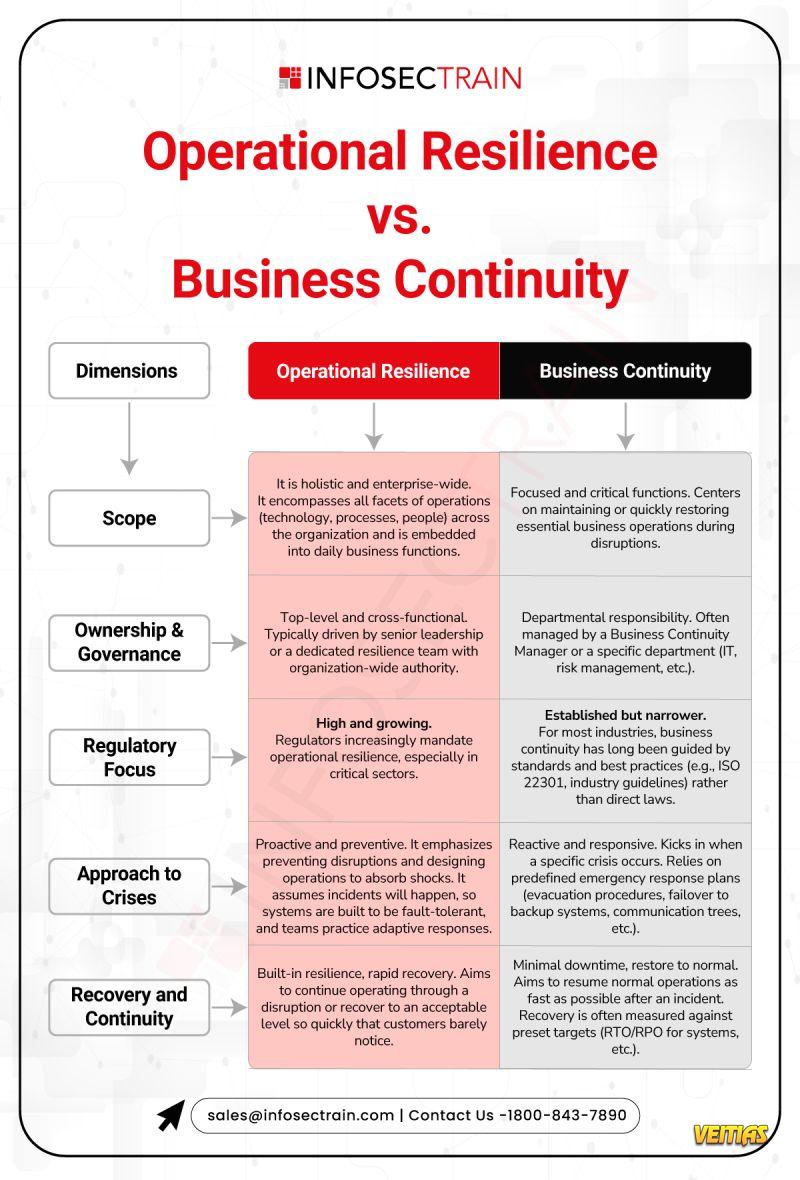
    Many organizations use both terms interchangeably, but they aren’t the same. As cyber threats, regulatory pressure, and global disruptions increase, understanding the distinction is crucial for building a truly resilient enterprise.

    Business Continuity = Restore essential operations after a disruption.

    Operational Resilience = Continue operating through disruption with minimal impact.

    Organizations that embed resilience into people, processes & technology are better equipped to withstand shocks whether it’s a cyberattack, system outage, or large-scale incident.

    If you’re involved in risk, compliance, BCMS, cybersecurity, or IT governance, this distinction is a game-changer.

    Explore the visual comparison below & level up your resilience strategy!

    #OperationalResilience #BusinessContinuity #BCMS #CyberResilience #ISO22301 #RiskManagement #CrisisManagement #DisasterRecovery #Governance #Compliance #OrganizationalResilience #InfoSecTrain
    Operational Resilience vs. Business Continuity — What’s the Difference? Many organizations use both terms interchangeably, but they aren’t the same. As cyber threats, regulatory pressure, and global disruptions increase, understanding the distinction is crucial for building a truly resilient enterprise. Business Continuity = Restore essential operations after a disruption. Operational Resilience = Continue operating through disruption with minimal impact. Organizations that embed resilience into people, processes & technology are better equipped to withstand shocks whether it’s a cyberattack, system outage, or large-scale incident. If you’re involved in risk, compliance, BCMS, cybersecurity, or IT governance, this distinction is a game-changer. Explore the visual comparison below & level up your resilience strategy! #OperationalResilience #BusinessContinuity #BCMS #CyberResilience #ISO22301 #RiskManagement #CrisisManagement #DisasterRecovery #Governance #Compliance #OrganizationalResilience #InfoSecTrain
    0 Comentários 0 Compartilhamentos 4854 Visualizações 0 Anterior
  • Why Choose the ISO 22301 Lead Implementer Course with InfosecTrain?

    In today’s landscape of cyberattacks, IT failures, and operational disruptions, business continuity has become an essential strategic priority, not just a compliance checkbox. Organizations are seeking leaders who can keep operations running even when crisis hits.

    Training Highlights
    • Implement BCMS to ensure organizational resilience
    • Learn incident response, disaster recovery & risk mitigation
    • Scenario-based exercises with real-world case studies
    • Guidance on audits, documentation & regulatory compliance

    Read Here: https://www.infosectrain.com/blog/why-choose-the-iso-22301-lead-implementer-course-with-infosectrain/

    #ISO22301 #BusinessContinuity #BCMS #CyberResilience #LeadImplementer #DisasterRecovery #RiskManagement #ComplianceTraining #CyberSecurity #OrganizationalResilience #InfoSecTrain
    Why Choose the ISO 22301 Lead Implementer Course with InfosecTrain? In today’s landscape of cyberattacks, IT failures, and operational disruptions, business continuity has become an essential strategic priority, not just a compliance checkbox. Organizations are seeking leaders who can keep operations running even when crisis hits. 📌 Training Highlights • Implement BCMS to ensure organizational resilience • Learn incident response, disaster recovery & risk mitigation • Scenario-based exercises with real-world case studies • Guidance on audits, documentation & regulatory compliance Read Here: https://www.infosectrain.com/blog/why-choose-the-iso-22301-lead-implementer-course-with-infosectrain/ #ISO22301 #BusinessContinuity #BCMS #CyberResilience #LeadImplementer #DisasterRecovery #RiskManagement #ComplianceTraining #CyberSecurity #OrganizationalResilience #InfoSecTrain
    WWW.INFOSECTRAIN.COM
    Why Choose the ISO 22301 Lead Implementer Course with InfosecTrain?
    Discover why InfosecTrain’s ISO 22301 Lead Implementer training is the top choice for mastering BCMS, real-world implementation, expert coaching, and globally recognised skills.
    0 Comentários 0 Compartilhamentos 4738 Visualizações 0 Anterior
  • Operational resilience focuses on an organization’s ability to continue delivering critical services during disruptions by building strong systems, processes, and risk controls. Business continuity, on the other hand, deals with creating plans and procedures to restore operations after an incident occurs. While business continuity is reactive—activating recovery steps after a disruption—operational resilience is proactive, aiming to anticipate risks, minimize impact, and keep core services running regardless of the situation. Together, they ensure an organization can withstand, recover, and adapt to both expected and unexpected challenges.
    Operational resilience focuses on an organization’s ability to continue delivering critical services during disruptions by building strong systems, processes, and risk controls. Business continuity, on the other hand, deals with creating plans and procedures to restore operations after an incident occurs. While business continuity is reactive—activating recovery steps after a disruption—operational resilience is proactive, aiming to anticipate risks, minimize impact, and keep core services running regardless of the situation. Together, they ensure an organization can withstand, recover, and adapt to both expected and unexpected challenges.
    0 Comentários 0 Compartilhamentos 2469 Visualizações 0 Anterior
  • Think Ahead or Act After? Proactive vs Reactive Security Explained!

    In today's rapidly evolving cybersecurity landscape, how you respond to threats can make or break your organization's security posture. This video dives deep into Proactive vs Reactive Response strategies—what they are, how they differ, and which is better for long-term resilience.

    Watch Here: https://www.youtube.com/watch?v=k7nvTPU4WEw

    #proactivesecurity #reactiveresponse #cybersecuritytraining #incidentresponse #soc #infosectrain #cyberawareness #riskmanagement #threathunting #cyberdefense
    Think Ahead or Act After? Proactive vs Reactive Security Explained! In today's rapidly evolving cybersecurity landscape, how you respond to threats can make or break your organization's security posture. This video dives deep into Proactive vs Reactive Response strategies—what they are, how they differ, and which is better for long-term resilience. Watch Here: https://www.youtube.com/watch?v=k7nvTPU4WEw #proactivesecurity #reactiveresponse #cybersecuritytraining #incidentresponse #soc #infosectrain #cyberawareness #riskmanagement #threathunting #cyberdefense
    0 Comentários 0 Compartilhamentos 5016 Visualizações 0 Anterior
  • 𝐈𝐒𝐒𝐀𝐏 𝐃𝐨𝐦𝐚𝐢𝐧 𝟐.𝟐: 𝐕𝐞𝐫𝐢𝐟𝐲 & 𝐕𝐚𝐥𝐢𝐝𝐚𝐭𝐞 𝐃𝐞𝐬𝐢𝐠𝐧 – 𝐁𝐮𝐢𝐥𝐝𝐢𝐧𝐠 𝐒𝐞𝐜𝐮𝐫𝐢𝐭𝐲 𝐓𝐡𝐚𝐭 𝐀𝐜𝐭𝐮𝐚𝐥𝐥𝐲 𝐖𝐨𝐫𝐤𝐬

    Building your security architecture is more than just a moving part of systems design, it needs to be tested, validated, and shown to provide effective protection against real-world threats. Domain 2.2 Know how to test security designs to meet security functional requirements prior to, during, and after production becomes the focus of this critical stage of the lifecycle.

    𝐃𝐢𝐝 𝐘𝐨𝐮 𝐊𝐧𝐨𝐰?
    𝟕𝟎% 𝐨𝐟 𝐬𝐞𝐜𝐮𝐫𝐢𝐭𝐲 𝐟𝐥𝐚𝐰𝐬 𝐢𝐧 𝐝𝐞𝐩𝐥𝐨𝐲𝐞𝐝 𝐬𝐲𝐬𝐭𝐞𝐦𝐬 𝐬𝐭𝐞𝐦 𝐟𝐫𝐨𝐦 𝐩𝐨𝐨𝐫 𝐯𝐚𝐥𝐢𝐝𝐚𝐭𝐢𝐨𝐧 𝐝𝐮𝐫𝐢𝐧𝐠 𝐝𝐞𝐯𝐞𝐥𝐨𝐩𝐦𝐞𝐧𝐭 𝟐𝟎𝟐𝟒 𝐄𝐍𝐈𝐒𝐀 𝐑𝐞𝐩𝐨𝐫𝐭.

    𝐖𝐡𝐲 𝐓𝐡𝐢𝐬 𝐌𝐚𝐭𝐭𝐞𝐫𝐬:
    Architecture validation validates that systems are not only secure by design but also secure by implementation and resilient, compliant, and able to survive real-world attacks. It’s a foundational skill for anyone who would like to take the 𝐈𝐒𝐂𝟐 𝐈𝐒𝐒𝐀𝐏 or just grow as more of a security architect.

    𝐑𝐞𝐚𝐝 𝐭𝐡𝐞 𝐝𝐞𝐭𝐚𝐢𝐥𝐞𝐝 𝐚𝐫𝐭𝐢𝐜𝐥𝐞 𝐡𝐞𝐫𝐞: https://www.infosectrain.com/blog/issap-domain-2-2-2-verify-and-validate-design/

    #ISSAP #ISC2 #SecurityArchitecture #RiskManagement #ThreatModeling #CyberTesting #TOGAF #SecurityValidation #CyberResilience #Infosectrain
    𝐈𝐒𝐒𝐀𝐏 𝐃𝐨𝐦𝐚𝐢𝐧 𝟐.𝟐: 𝐕𝐞𝐫𝐢𝐟𝐲 & 𝐕𝐚𝐥𝐢𝐝𝐚𝐭𝐞 𝐃𝐞𝐬𝐢𝐠𝐧 – 𝐁𝐮𝐢𝐥𝐝𝐢𝐧𝐠 𝐒𝐞𝐜𝐮𝐫𝐢𝐭𝐲 𝐓𝐡𝐚𝐭 𝐀𝐜𝐭𝐮𝐚𝐥𝐥𝐲 𝐖𝐨𝐫𝐤𝐬 Building your security architecture is more than just a moving part of systems design, it needs to be tested, validated, and shown to provide effective protection against real-world threats. Domain 2.2 Know how to test security designs to meet security functional requirements prior to, during, and after production becomes the focus of this critical stage of the lifecycle. ➡️ 𝐃𝐢𝐝 𝐘𝐨𝐮 𝐊𝐧𝐨𝐰? 𝟕𝟎% 𝐨𝐟 𝐬𝐞𝐜𝐮𝐫𝐢𝐭𝐲 𝐟𝐥𝐚𝐰𝐬 𝐢𝐧 𝐝𝐞𝐩𝐥𝐨𝐲𝐞𝐝 𝐬𝐲𝐬𝐭𝐞𝐦𝐬 𝐬𝐭𝐞𝐦 𝐟𝐫𝐨𝐦 𝐩𝐨𝐨𝐫 𝐯𝐚𝐥𝐢𝐝𝐚𝐭𝐢𝐨𝐧 𝐝𝐮𝐫𝐢𝐧𝐠 𝐝𝐞𝐯𝐞𝐥𝐨𝐩𝐦𝐞𝐧𝐭 𝟐𝟎𝟐𝟒 𝐄𝐍𝐈𝐒𝐀 𝐑𝐞𝐩𝐨𝐫𝐭. 🔐 𝐖𝐡𝐲 𝐓𝐡𝐢𝐬 𝐌𝐚𝐭𝐭𝐞𝐫𝐬: Architecture validation validates that systems are not only secure by design but also secure by implementation and resilient, compliant, and able to survive real-world attacks. It’s a foundational skill for anyone who would like to take the 𝐈𝐒𝐂𝟐 𝐈𝐒𝐒𝐀𝐏 or just grow as more of a security architect. 👉 𝐑𝐞𝐚𝐝 𝐭𝐡𝐞 𝐝𝐞𝐭𝐚𝐢𝐥𝐞𝐝 𝐚𝐫𝐭𝐢𝐜𝐥𝐞 𝐡𝐞𝐫𝐞: https://www.infosectrain.com/blog/issap-domain-2-2-2-verify-and-validate-design/ #ISSAP #ISC2 #SecurityArchitecture #RiskManagement #ThreatModeling #CyberTesting #TOGAF #SecurityValidation #CyberResilience #Infosectrain
    WWW.INFOSECTRAIN.COM
    ISSAP Domain 2:2.2: Verify and Validate Design
    Learn how to verify and validate security architecture designs in ISSAP Domain 2.2. Understand methods, controls, and evaluation steps for secure system design.
    0 Comentários 0 Compartilhamentos 3469 Visualizações 0 Anterior
  • Scope 2 of the ISSAP - Security Architecture and Engineering Modelling (Domain 2)

    In the current environment, cyber is more than just tools and controls—it’s about developing a strategic, enterprise-level architecture that is resilient, scalable and aligned to business objectives.

    Read Here: https://www.infosectrain.com/blog/isc2-issap-domain-2-security-architecture-modeling/

    Why It Matters
    Security Architecture Modeling delivers security by design – mitigating risk, enabling compliance, and enhancing cyber resilience throughout the enterprise. This is what distinguishes the best cyber security architects.

    Infosec Train 𝐈𝐒𝐒𝐀𝐏 𝐓𝐫𝐚𝐢𝐧𝐢𝐧𝐠 Program equips you with complete hands-on knowledge.

    #ISSAP #ISC2 #SecurityArchitecture #CyberSecurityArchitect #DefenseInDepth #EnterpriseSecurity #SABSA #TOGAF #ZeroTrust #CloudSecurity #CyberResilience #InfoSecTrain #SkillsUpgrade #ISOCompliance
    🔐 Scope 2 of the ISSAP - Security Architecture and Engineering Modelling (Domain 2) In the current environment, cyber is more than just tools and controls—it’s about developing a strategic, enterprise-level architecture that is resilient, scalable and aligned to business objectives. Read Here: https://www.infosectrain.com/blog/isc2-issap-domain-2-security-architecture-modeling/ Why It Matters Security Architecture Modeling delivers security by design – mitigating risk, enabling compliance, and enhancing cyber resilience throughout the enterprise. This is what distinguishes the best cyber security architects. ☑️ Infosec Train 𝐈𝐒𝐒𝐀𝐏 𝐓𝐫𝐚𝐢𝐧𝐢𝐧𝐠 Program equips you with complete hands-on knowledge. #ISSAP #ISC2 #SecurityArchitecture #CyberSecurityArchitect #DefenseInDepth #EnterpriseSecurity #SABSA #TOGAF #ZeroTrust #CloudSecurity #CyberResilience #InfoSecTrain #SkillsUpgrade #ISOCompliance
    WWW.INFOSECTRAIN.COM
    ISC2 ISSAP Domain 2: Security Architecture Modeling
    Master ISSAP Domain 2 concepts with our guide on Security Architecture Modeling. Learn frameworks, design principles, and strategies for enterprise security success.
    0 Comentários 0 Compartilhamentos 4767 Visualizações 0 Anterior
  • Stay Resilient in an Unpredictable World!

    Today, in an era of increasing cyberattacks, supply chain interruptions, and compliance requirements, Business Continuity Know how is not optional, it’s essential.

    InfosecTrain’s ISO 22301 Lead Implementer Course enables you with skills to manage and develop a robust Business Continuity Management System (BCMS) based on ISO 22301:2019 standards.

    It’s risk management, disaster recovery, and business resiliency all wrapped into one training that provides the techniques your organization needs most right now.

    Read more here: https://www.infosectrain.com/blog/why-choose-the-iso-22301-lead-implementer-course-with-infosectrain/

    #ISO22301 #BusinessContinuity #OperationalResilience #RiskManagement #DisasterRecovery #InfosecTrain #BCMS #CybersecurityTraining #ContinuityPlanning
    Stay Resilient in an Unpredictable World! Today, in an era of increasing cyberattacks, supply chain interruptions, and compliance requirements, Business Continuity Know how is not optional, it’s essential. InfosecTrain’s ISO 22301 Lead Implementer Course enables you with skills to manage and develop a robust Business Continuity Management System (BCMS) based on ISO 22301:2019 standards. It’s risk management, disaster recovery, and business resiliency all wrapped into one training that provides the techniques your organization needs most right now. Read more here: https://www.infosectrain.com/blog/why-choose-the-iso-22301-lead-implementer-course-with-infosectrain/ #ISO22301 #BusinessContinuity #OperationalResilience #RiskManagement #DisasterRecovery #InfosecTrain #BCMS #CybersecurityTraining #ContinuityPlanning
    WWW.INFOSECTRAIN.COM
    Why Choose the ISO 22301 Lead Implementer Course with InfosecTrain?
    Discover why InfosecTrain’s ISO 22301 Lead Implementer training is the top choice for mastering BCMS, real-world implementation, expert coaching, and globally recognised skills.
    0 Comentários 0 Compartilhamentos 6241 Visualizações 0 Anterior
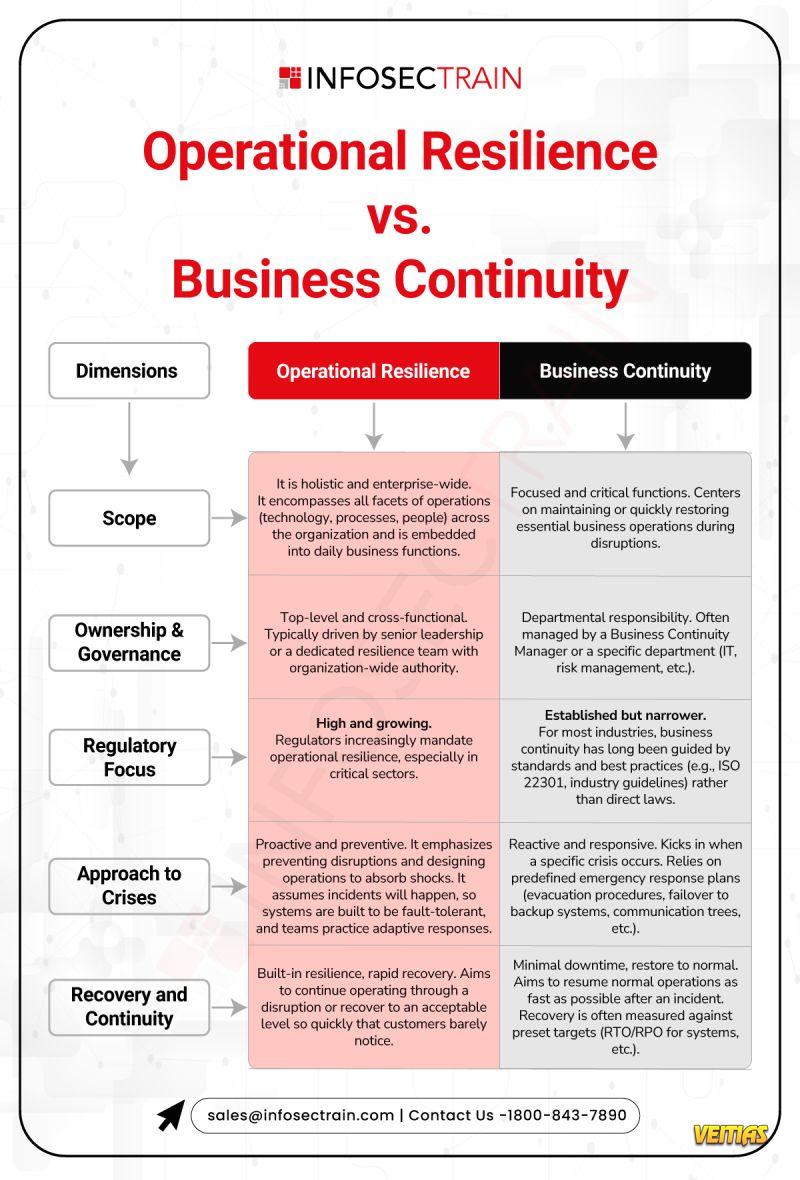
  • 𝐎𝐩𝐞𝐫𝐚𝐭𝐢𝐨𝐧𝐚𝐥 𝐑𝐞𝐬𝐢𝐥𝐢𝐞𝐧𝐜𝐞 𝐯𝐬. 𝐁𝐮𝐬𝐢𝐧𝐞𝐬𝐬 𝐂𝐨𝐧𝐭𝐢𝐧𝐮𝐢𝐭𝐲

    Why they're not the same, and why your organization needs a mix of both to get through today's disruptions. vs. Business Continuity

    𝐖𝐡𝐲 𝐓𝐡𝐞𝐲’𝐫𝐞 𝐍𝐨𝐭 𝐈𝐧𝐭𝐞𝐫𝐜𝐡𝐚𝐧𝐠𝐞𝐚𝐛𝐥𝐞
    Daily Operational Resilience is running operations.
    Business Continuity brings them back.
    Today’s organizations need both layers, to survive and to scale.

    𝐑𝐞𝐚𝐝 𝐭𝐡𝐞 𝐝𝐞𝐭𝐚𝐢𝐥𝐞𝐝 𝐚𝐫𝐭𝐢𝐜𝐥𝐞 𝐡𝐞𝐫𝐞: https://www.infosectrain.com/blog/operational-resilience-vs-business-continuity/

    Become proficient in each approach with 𝐈𝐧𝐟𝐨𝐬𝐞𝐜𝐓𝐫𝐚𝐢𝐧’𝐬 𝐆𝐑𝐂 𝐓𝐫𝐚𝐢𝐧𝐢𝐧𝐠 Programs. Build, audit, and deploy new age of resilience + continuity frameworks in operational environments.

    #OperationalResilience #BusinessContinuity #CyberSecurity #GRC #RiskManagement #ResilienceStrategy #ContinuityPlanning#Compliance #InfosecTrain #Leadership #BusinessResilience
    𝐎𝐩𝐞𝐫𝐚𝐭𝐢𝐨𝐧𝐚𝐥 𝐑𝐞𝐬𝐢𝐥𝐢𝐞𝐧𝐜𝐞 𝐯𝐬. 𝐁𝐮𝐬𝐢𝐧𝐞𝐬𝐬 𝐂𝐨𝐧𝐭𝐢𝐧𝐮𝐢𝐭𝐲 Why they're not the same, and why your organization needs a mix of both to get through today's disruptions. vs. Business Continuity ✅ 𝐖𝐡𝐲 𝐓𝐡𝐞𝐲’𝐫𝐞 𝐍𝐨𝐭 𝐈𝐧𝐭𝐞𝐫𝐜𝐡𝐚𝐧𝐠𝐞𝐚𝐛𝐥𝐞 🔹 Daily Operational Resilience is running operations. 🔹Business Continuity brings them back. 🔹 Today’s organizations need both layers, to survive and to scale. 👉 𝐑𝐞𝐚𝐝 𝐭𝐡𝐞 𝐝𝐞𝐭𝐚𝐢𝐥𝐞𝐝 𝐚𝐫𝐭𝐢𝐜𝐥𝐞 𝐡𝐞𝐫𝐞: https://www.infosectrain.com/blog/operational-resilience-vs-business-continuity/ Become proficient in each approach with 𝐈𝐧𝐟𝐨𝐬𝐞𝐜𝐓𝐫𝐚𝐢𝐧’𝐬 𝐆𝐑𝐂 𝐓𝐫𝐚𝐢𝐧𝐢𝐧𝐠 Programs. Build, audit, and deploy new age of resilience + continuity frameworks in operational environments. #OperationalResilience #BusinessContinuity #CyberSecurity #GRC #RiskManagement #ResilienceStrategy #ContinuityPlanning#Compliance #InfosecTrain #Leadership #BusinessResilience
    WWW.INFOSECTRAIN.COM
    Operational Resilience vs. Business Continuity
    It often comes down to the difference between operational resilience and business continuity. Many assume these terms mean the same thing, but they don’t.
    0 Comentários 0 Compartilhamentos 4579 Visualizações 0 Anterior
Páginas Impulsionadas