
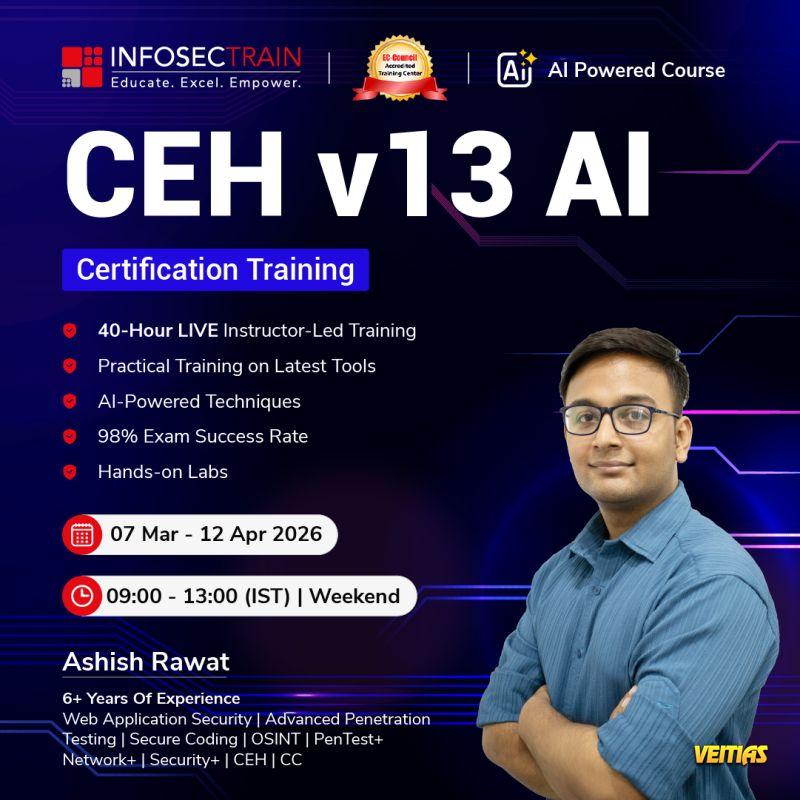
• 𝗖𝗘𝗛 𝘃𝟭𝟯 𝗔𝗜 – 𝗖𝗲𝗿𝘁𝗶𝗳𝗶𝗰𝗮𝘁𝗶𝗼𝗻 𝗧𝗿𝗮𝗶𝗻𝗶𝗻𝗴 𝗖𝗼𝘂𝗿𝘀𝗲
    𝑨𝑰-𝑷𝒐𝒘𝒆𝒓𝒆𝒅 Ethical Hacking for the Modern Threat Landscape

    Cybersecurity is evolving - and so is ethical hacking.
    InfosecTrain’s 𝗖𝗘𝗛 𝘃𝟭𝟯 𝗔𝗜 𝗖𝗲𝗿𝘁𝗶𝗳𝗶𝗰𝗮𝘁𝗶𝗼𝗻 𝗧𝗿𝗮𝗶𝗻𝗶𝗻𝗴 equips you with next-generation hacking techniques powered by AI to detect, exploit, and defend against modern cyber threats.

    This 40-hour LIVE program blends traditional ethical hacking with AI-driven methodologies, practical tools, and real-world lab environments.

    Led by Ashish Rawat (6+ Years of Experience) - Web App Security | Advanced Penetration Testing | Secure Coding | OSINT | CEH | PenTest+ | Network+ | Security+ | CC
    💻🤖 𝗖𝗘𝗛 𝘃𝟭𝟯 𝗔𝗜 – 𝗖𝗲𝗿𝘁𝗶𝗳𝗶𝗰𝗮𝘁𝗶𝗼𝗻 𝗧𝗿𝗮𝗶𝗻𝗶𝗻𝗴 𝗖𝗼𝘂𝗿𝘀𝗲 𝑨𝑰-𝑷𝒐𝒘𝒆𝒓𝒆𝒅 Ethical Hacking for the Modern Threat Landscape Cybersecurity is evolving - and so is ethical hacking. InfosecTrain’s 𝗖𝗘𝗛 𝘃𝟭𝟯 𝗔𝗜 𝗖𝗲𝗿𝘁𝗶𝗳𝗶𝗰𝗮𝘁𝗶𝗼𝗻 𝗧𝗿𝗮𝗶𝗻𝗶𝗻𝗴 equips you with next-generation hacking techniques powered by AI to detect, exploit, and defend against modern cyber threats. This 40-hour LIVE program blends traditional ethical hacking with AI-driven methodologies, practical tools, and real-world lab environments. Led by Ashish Rawat (6+ Years of Experience) - Web App Security | Advanced Penetration Testing | Secure Coding | OSINT | CEH | PenTest+ | Network+ | Security+ | CC
    0 Σχόλια 0 Μοιράστηκε 6792 Views 0 Προεπισκόπηση
  • Me as a Super Saiyan & Super Saiyan 3! #saiyajin #dragonballz #goku
    Me as a Super Saiyan & Super Saiyan 3! 🔥 #saiyajin #dragonballz #goku
    0 Σχόλια 0 Μοιράστηκε 4794 Views 0 Προεπισκόπηση
  • Wazuh vs. Splunk: A Practical Comparison of SIEM Platforms

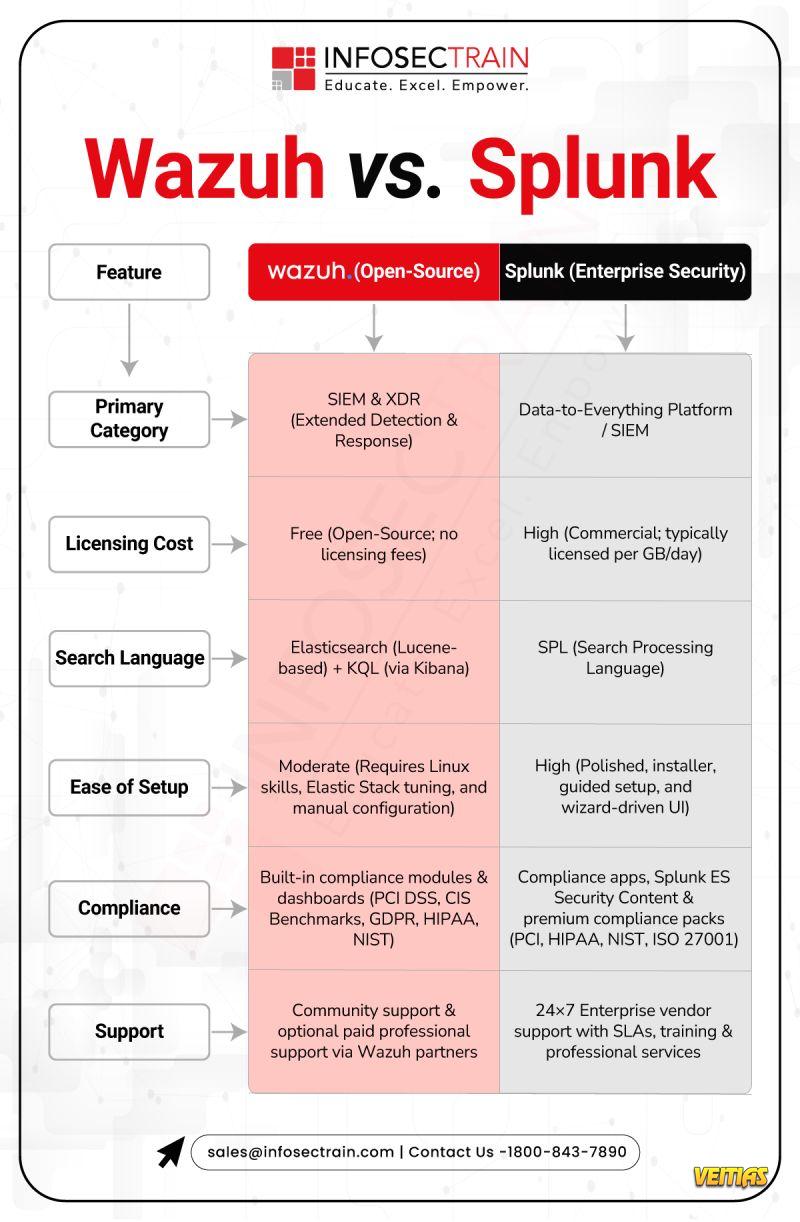
    This visual comparison breaks down the key differences between Wazuh and Splunk to help security teams choose the right SIEM solution. It highlights core aspects such as platform type, licensing cost, search language, ease of setup, compliance support, and enterprise readiness. Wazuh stands out as an open-source SIEM and XDR option with strong community-driven capabilities, while Splunk is positioned as a powerful enterprise-grade data and security analytics platform with advanced features and commercial support. This guide is ideal for SOC teams, security architects, and decision-makers evaluating SIEM tools based on budget, scalability, and operational needs.

    #SIEM #XDR #Wazuh #Splunk #CyberSecurity #SOC #ThreatDetection #LogManagement #SecurityAnalytics #Infosectrain
    Wazuh vs. Splunk: A Practical Comparison of SIEM Platforms This visual comparison breaks down the key differences between Wazuh and Splunk to help security teams choose the right SIEM solution. It highlights core aspects such as platform type, licensing cost, search language, ease of setup, compliance support, and enterprise readiness. Wazuh stands out as an open-source SIEM and XDR option with strong community-driven capabilities, while Splunk is positioned as a powerful enterprise-grade data and security analytics platform with advanced features and commercial support. This guide is ideal for SOC teams, security architects, and decision-makers evaluating SIEM tools based on budget, scalability, and operational needs. #SIEM #XDR #Wazuh #Splunk #CyberSecurity #SOC #ThreatDetection #LogManagement #SecurityAnalytics #Infosectrain
    0 Σχόλια 0 Μοιράστηκε 3420 Views 0 Προεπισκόπηση
  • 𝐖𝐡𝐚𝐭 𝐠𝐞𝐭𝐬 𝐦𝐞𝐚𝐬𝐮𝐫𝐞𝐝 𝐠𝐞𝐭𝐬 𝐦𝐚𝐧𝐚𝐠𝐞𝐝, 𝐞𝐬𝐩𝐞𝐜𝐢𝐚𝐥𝐥𝐲 𝐚𝐭 𝐭𝐡𝐞 𝐂𝐈𝐒𝐎 𝐥𝐞𝐯𝐞𝐥.
    Modern security leadership isn’t about counting alerts.

    It’s about 𝐭𝐞𝐥𝐥𝐢𝐧𝐠 𝐚 𝐜𝐥𝐞𝐚𝐫, 𝐛𝐮𝐬𝐢𝐧𝐞𝐬𝐬-𝐟𝐨𝐜𝐮𝐬𝐞𝐝 𝐫𝐢𝐬𝐤 𝐬𝐭𝐨𝐫𝐲 𝐭𝐨 𝐭𝐡𝐞 𝐛𝐨𝐚𝐫𝐝.
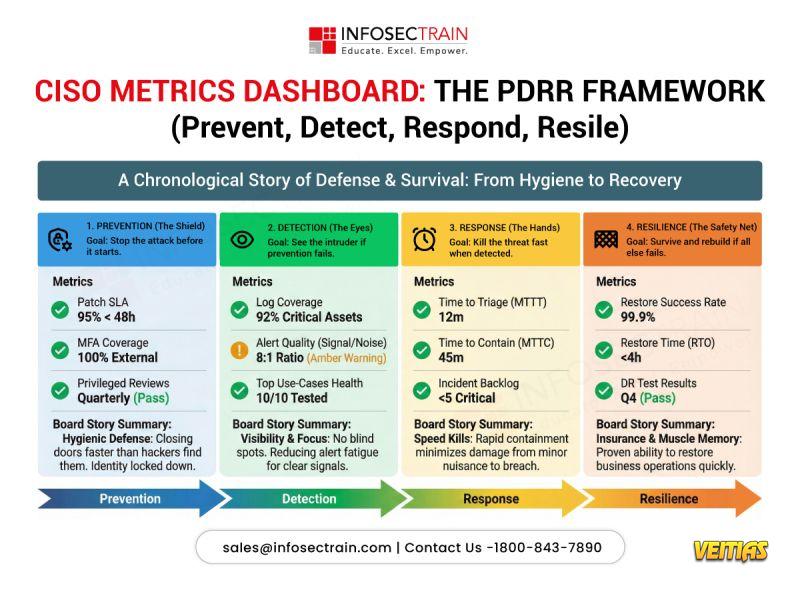
    The PDRR framework (𝐏𝐫𝐞𝐯𝐞𝐧𝐭, 𝐃𝐞𝐭𝐞𝐜𝐭, 𝐑𝐞𝐬𝐩𝐨𝐧𝐝, 𝐑𝐞𝐬𝐢𝐥𝐞) helps CISOs align metrics across the entire security lifecycle:
    • 𝐏𝐫𝐞𝐯𝐞𝐧𝐭 – Reduce attack opportunities
    • 𝐃𝐞𝐭𝐞𝐜𝐭 – Gain early, high-fidelity visibility
    • 𝐑𝐞𝐬𝐩𝐨𝐧𝐝 – Contain threats quickly
    • 𝐑𝐞𝐬𝐢𝐥𝐞 – Recover and sustain business operations

    When metrics follow this structure, 𝐜𝐨𝐧𝐯𝐞𝐫𝐬𝐚𝐭𝐢𝐨𝐧𝐬 𝐬𝐡𝐢𝐟𝐭 𝐟𝐫𝐨𝐦 𝐭𝐨𝐨𝐥𝐬 𝐭𝐨 𝐫𝐢𝐬𝐤, 𝐫𝐞𝐬𝐢𝐥𝐢𝐞𝐧𝐜𝐞, 𝐚𝐧𝐝 𝐨𝐮𝐭𝐜𝐨𝐦𝐞𝐬.
    𝐖𝐡𝐚𝐭 𝐠𝐞𝐭𝐬 𝐦𝐞𝐚𝐬𝐮𝐫𝐞𝐝 𝐠𝐞𝐭𝐬 𝐦𝐚𝐧𝐚𝐠𝐞𝐝, 𝐞𝐬𝐩𝐞𝐜𝐢𝐚𝐥𝐥𝐲 𝐚𝐭 𝐭𝐡𝐞 𝐂𝐈𝐒𝐎 𝐥𝐞𝐯𝐞𝐥. Modern security leadership isn’t about counting alerts. It’s about 𝐭𝐞𝐥𝐥𝐢𝐧𝐠 𝐚 𝐜𝐥𝐞𝐚𝐫, 𝐛𝐮𝐬𝐢𝐧𝐞𝐬𝐬-𝐟𝐨𝐜𝐮𝐬𝐞𝐝 𝐫𝐢𝐬𝐤 𝐬𝐭𝐨𝐫𝐲 𝐭𝐨 𝐭𝐡𝐞 𝐛𝐨𝐚𝐫𝐝. The PDRR framework (𝐏𝐫𝐞𝐯𝐞𝐧𝐭, 𝐃𝐞𝐭𝐞𝐜𝐭, 𝐑𝐞𝐬𝐩𝐨𝐧𝐝, 𝐑𝐞𝐬𝐢𝐥𝐞) helps CISOs align metrics across the entire security lifecycle: • 𝐏𝐫𝐞𝐯𝐞𝐧𝐭 – Reduce attack opportunities • 𝐃𝐞𝐭𝐞𝐜𝐭 – Gain early, high-fidelity visibility • 𝐑𝐞𝐬𝐩𝐨𝐧𝐝 – Contain threats quickly • 𝐑𝐞𝐬𝐢𝐥𝐞 – Recover and sustain business operations When metrics follow this structure, 𝐜𝐨𝐧𝐯𝐞𝐫𝐬𝐚𝐭𝐢𝐨𝐧𝐬 𝐬𝐡𝐢𝐟𝐭 𝐟𝐫𝐨𝐦 𝐭𝐨𝐨𝐥𝐬 𝐭𝐨 𝐫𝐢𝐬𝐤, 𝐫𝐞𝐬𝐢𝐥𝐢𝐞𝐧𝐜𝐞, 𝐚𝐧𝐝 𝐨𝐮𝐭𝐜𝐨𝐦𝐞𝐬.
    0 Σχόλια 0 Μοιράστηκε 7655 Views 0 Προεπισκόπηση
  • Why do security strategies fail between the boardroom and the SOC?
    Because vision doesn’t always translate into execution.

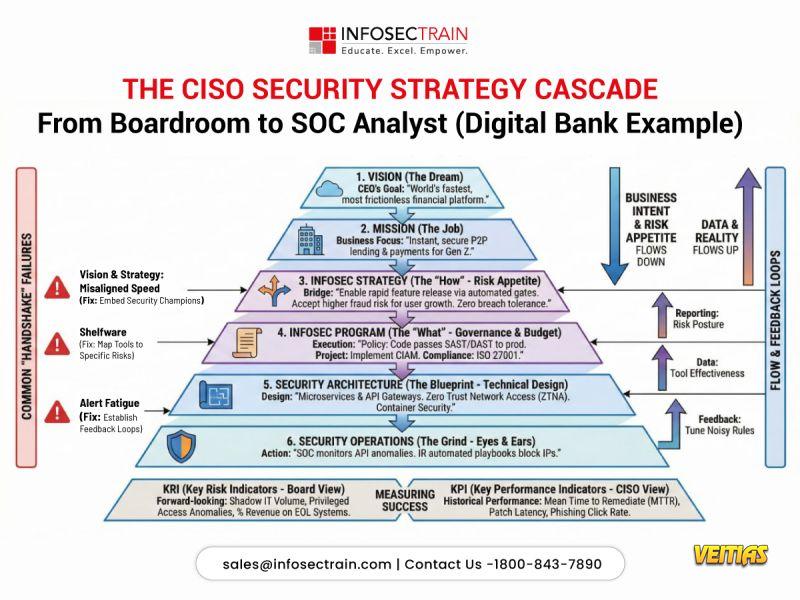
    A strong CISO strategy must cascade clearly:

    * From business vision to defined risk appetite
    * From governance to security architecture
    * From architecture to SOC actions
    * From alerts to measurable business outcomes

    When this alignment breaks, organizations experience misaligned priorities, shelfware tools, and alert fatigue. Modern security leadership is about connecting intent, risk, technology, and operations into a single, continuous feedback loop.

    If you’re stepping into, or already in, a CISO role, mastering this translation from strategy to execution is non-negotiable.

    Build real CISO-level strategy and execution skills.
    Why do security strategies fail between the boardroom and the SOC? Because vision doesn’t always translate into execution. A strong CISO strategy must cascade clearly: * From business vision to defined risk appetite * From governance to security architecture * From architecture to SOC actions * From alerts to measurable business outcomes When this alignment breaks, organizations experience misaligned priorities, shelfware tools, and alert fatigue. Modern security leadership is about connecting intent, risk, technology, and operations into a single, continuous feedback loop. If you’re stepping into, or already in, a CISO role, mastering this translation from strategy to execution is non-negotiable. Build real CISO-level strategy and execution skills.
    0 Σχόλια 0 Μοιράστηκε 11428 Views 0 Προεπισκόπηση
  • 𝐀𝐈 𝐆𝐨𝐯𝐞𝐫𝐧𝐚𝐧𝐜𝐞: 𝐓𝐡𝐞 𝐂𝐨𝐧𝐭𝐫𝐨𝐥𝐬 𝐓𝐡𝐚𝐭 𝐊𝐞𝐞𝐩 𝐀𝐈 𝐨𝐧 𝐓𝐫𝐚𝐜𝐤

    Good AI governance is the framework that ensures AI systems operate safely, fairly, and within legal boundaries, instead of becoming “black box AI” that makes decisions no one can explain or stop.

    𝐖𝐡𝐲 𝐠𝐨𝐯𝐞𝐫𝐧𝐚𝐧𝐜𝐞 𝐦𝐚𝐭𝐭𝐞𝐫𝐬 𝐟𝐨𝐫 𝐛𝐮𝐬𝐢𝐧𝐞𝐬𝐬
    Clear governance boundaries let organizations innovate with AI confidently and driving growth while protecting reputation, compliance architecture, and budget from costly mistakes.

    𝐑𝐞𝐚𝐝 𝐦𝐨𝐫𝐞 𝐡𝐞𝐫𝐞: https://www.infosectrain.com/blog/what-are-the-key-principles-of-good-ai-governance

    In the end, AI governance isn’t about fear or restriction. It’s about control, accountability, and trust making sure powerful AI systems work for us, not against us.

    #AIGovernance #ResponsibleAI #PrivacyByDesign #PETs #AICompliance #InfosecTrain #CyberSecurity #AILeadership #EthicalAI #FutureOfAI
    𝐀𝐈 𝐆𝐨𝐯𝐞𝐫𝐧𝐚𝐧𝐜𝐞: 𝐓𝐡𝐞 𝐂𝐨𝐧𝐭𝐫𝐨𝐥𝐬 𝐓𝐡𝐚𝐭 𝐊𝐞𝐞𝐩 𝐀𝐈 𝐨𝐧 𝐓𝐫𝐚𝐜𝐤 Good AI governance is the framework that ensures AI systems operate safely, fairly, and within legal boundaries, instead of becoming “black box AI” that makes decisions no one can explain or stop. ➡️ 𝐖𝐡𝐲 𝐠𝐨𝐯𝐞𝐫𝐧𝐚𝐧𝐜𝐞 𝐦𝐚𝐭𝐭𝐞𝐫𝐬 𝐟𝐨𝐫 𝐛𝐮𝐬𝐢𝐧𝐞𝐬𝐬 Clear governance boundaries let organizations innovate with AI confidently and driving growth while protecting reputation, compliance architecture, and budget from costly mistakes. 👉 𝐑𝐞𝐚𝐝 𝐦𝐨𝐫𝐞 𝐡𝐞𝐫𝐞: https://www.infosectrain.com/blog/what-are-the-key-principles-of-good-ai-governance ✅ In the end, AI governance isn’t about fear or restriction. It’s about control, accountability, and trust ➡️ making sure powerful AI systems work for us, not against us. #AIGovernance #ResponsibleAI #PrivacyByDesign #PETs #AICompliance #InfosecTrain #CyberSecurity #AILeadership #EthicalAI #FutureOfAI
    WWW.INFOSECTRAIN.COM
    What are the Key Principles of Good AI Governance?
    Discover the key principles of good AI governance, including transparency, accountability, fairness, and risk management.
    0 Σχόλια 0 Μοιράστηκε 11400 Views 0 Προεπισκόπηση
  • How to Build an Enterprise Security Program | Complete Step-by-Step Guide

    𝐖𝐡𝐚𝐭 𝐲𝐨𝐮’𝐥𝐥 𝐥𝐞𝐚𝐫𝐧:
    Business Understanding and Stakeholder Engagement
    Current State Assessment and Risk Management
    Develop Policies, Processes, and Plans
    Performance Evaluation, Monitoring, and Continuous Improvement

    Watch Here: https://www.youtube.com/watch?v=5B0ik9KhdmA

    Have a query or need more info? Drop us a line at sales@infosectrain.com

    #EnterpriseSecurity #SecurityProgram #CISO #CyberSecurityStrategy #InformationSecurity #SecurityGovernance #RiskManagement #SecurityArchitecture #CyberLeadership #SecurityOperations #InfosecTrain #CyberDefense #EnterpriseRisk #SecurityFramework
    How to Build an Enterprise Security Program | Complete Step-by-Step Guide 🔍 𝐖𝐡𝐚𝐭 𝐲𝐨𝐮’𝐥𝐥 𝐥𝐞𝐚𝐫𝐧: ✅ Business Understanding and Stakeholder Engagement ✅ Current State Assessment and Risk Management ✅ Develop Policies, Processes, and Plans ✅ Performance Evaluation, Monitoring, and Continuous Improvement Watch Here: https://www.youtube.com/watch?v=5B0ik9KhdmA 📥 Have a query or need more info? Drop us a line at sales@infosectrain.com #EnterpriseSecurity #SecurityProgram #CISO #CyberSecurityStrategy #InformationSecurity #SecurityGovernance #RiskManagement #SecurityArchitecture #CyberLeadership #SecurityOperations #InfosecTrain #CyberDefense #EnterpriseRisk #SecurityFramework
    0 Σχόλια 0 Μοιράστηκε 10123 Views 0 Προεπισκόπηση
  • Risks Relevant to the Deployment of AI Models

    AI can drive innovation, but without proper governance, it can also introduce serious risks. From biased decision-making and data drift to adversarial attacks and lack of explainability, poorly governed AI can lead to security gaps, ethical concerns, and regulatory trouble.

    Read Here: https://www.infosectrain.com/blog/risks-relevant-to-the-deployment-of-ai-models

    #AIGovernance #ResponsibleAI #AICompliance #EUAIAct #CyberRisk #EthicalAI #InfosecTrain
    Risks Relevant to the Deployment of AI Models AI can drive innovation, but without proper governance, it can also introduce serious risks. From biased decision-making and data drift to adversarial attacks and lack of explainability, poorly governed AI can lead to security gaps, ethical concerns, and regulatory trouble. Read Here: https://www.infosectrain.com/blog/risks-relevant-to-the-deployment-of-ai-models #AIGovernance #ResponsibleAI #AICompliance #EUAIAct #CyberRisk #EthicalAI #InfosecTrain
    WWW.INFOSECTRAIN.COM
    Risks Relevant to the Deployment of AI Models
    These risks relate to the AI model's real-world performance and its management within the existing IT infrastructure.
    0 Σχόλια 0 Μοιράστηκε 3927 Views 0 Προεπισκόπηση
  • Differences between active attack and passive attack

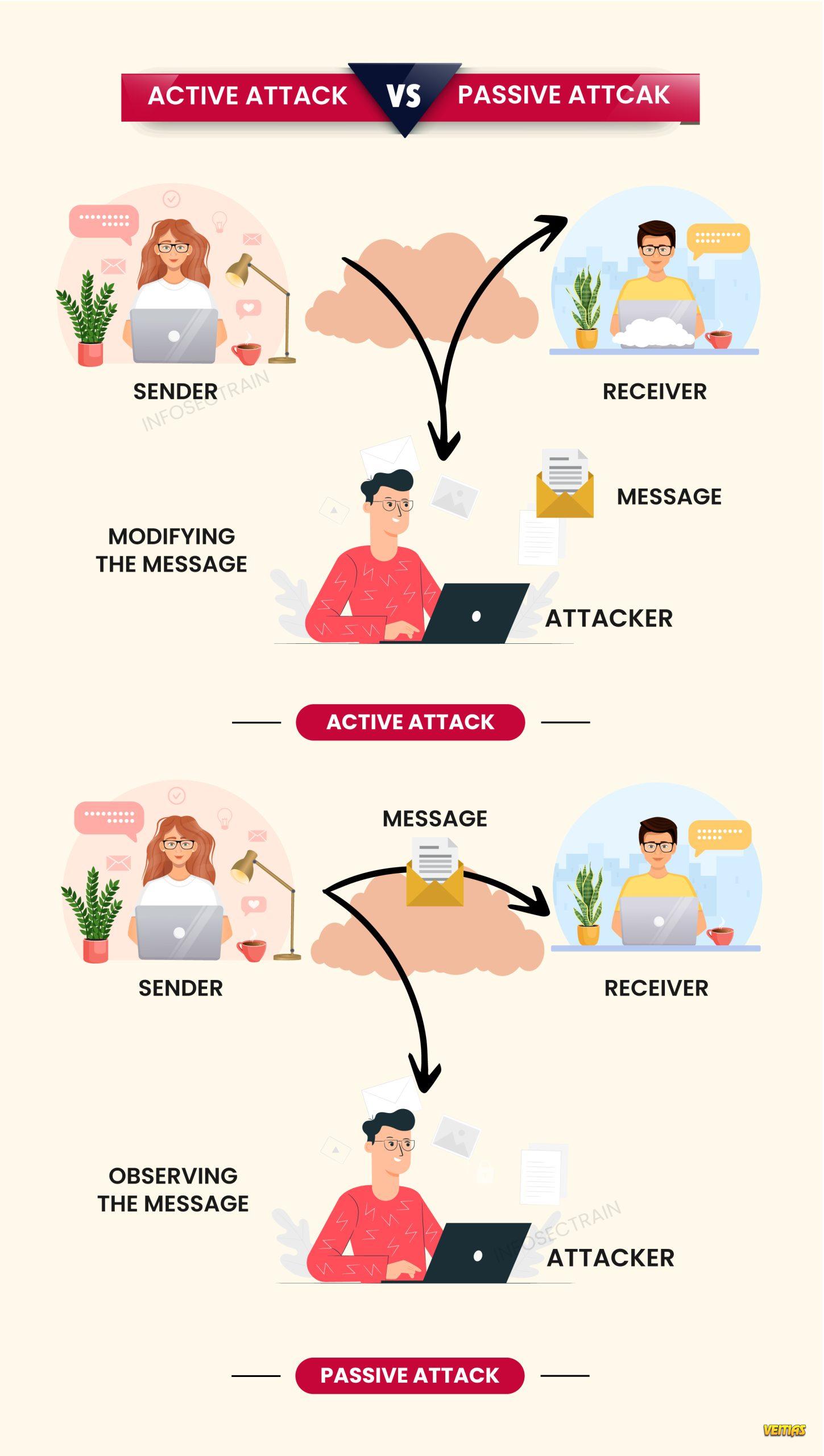
    Active and passive attacks represent two fundamental threat categories in cybersecurity. An active attack involves modifying, disrupting, or destroying data and systems, such as malware injection, denial-of-service attacks, or message tampering. In contrast, a passive attack focuses on silently monitoring or intercepting information without altering it, commonly through eavesdropping or traffic analysis. Understanding the differences between these attacks helps security professionals design stronger detection, prevention, and response strategies to protect sensitive data and ensure system integrity.

    #CyberSecurity #ActiveAttack #PassiveAttack #NetworkSecurity #InfoSec #CyberThreats #SecurityAwareness #EthicalHacking #DataProtection #CyberRisk
    Differences between active attack and passive attack Active and passive attacks represent two fundamental threat categories in cybersecurity. An active attack involves modifying, disrupting, or destroying data and systems, such as malware injection, denial-of-service attacks, or message tampering. In contrast, a passive attack focuses on silently monitoring or intercepting information without altering it, commonly through eavesdropping or traffic analysis. Understanding the differences between these attacks helps security professionals design stronger detection, prevention, and response strategies to protect sensitive data and ensure system integrity. #CyberSecurity #ActiveAttack #PassiveAttack #NetworkSecurity #InfoSec #CyberThreats #SecurityAwareness #EthicalHacking #DataProtection #CyberRisk
    0 Σχόλια 0 Μοιράστηκε 1772 Views 0 Προεπισκόπηση
  • Understanding the CIA Triad in Cybersecurity | Simple Breakdown

    What you’ll learn:
    What Confidentiality really means (and how data stays private)
    How Integrity protects data from unauthorized changes
    Why Availability is critical to keeping systems accessible
    How the CIA Triad is used in real security decisions

    Watch Here: https://youtu.be/4MC8osBedRU?si=kpS8ZFkOpYuRsX9t

    This video is perfect for:
    Beginners starting their cybersecurity journey
    Cybersecurity enthusiasts building strong fundamentals
    Certification aspirants preparing for Security+, CEH, CISSP, and more

    #CIATriad #CyberSecurity #InformationSecurity #SecurityFundamentals #EthicalHacking #SecurityPlus #CEH #CISSP #CyberLearning
    Understanding the CIA Triad in Cybersecurity | Simple Breakdown 📌 What you’ll learn: ✔️ What Confidentiality really means (and how data stays private) ✔️ How Integrity protects data from unauthorized changes ✔️ Why Availability is critical to keeping systems accessible ✔️ How the CIA Triad is used in real security decisions Watch Here: https://youtu.be/4MC8osBedRU?si=kpS8ZFkOpYuRsX9t 🎯 This video is perfect for: 👶 Beginners starting their cybersecurity journey 🧠 Cybersecurity enthusiasts building strong fundamentals 📚 Certification aspirants preparing for Security+, CEH, CISSP, and more #CIATriad #CyberSecurity #InformationSecurity #SecurityFundamentals #EthicalHacking #SecurityPlus #CEH #CISSP #CyberLearning
    0 Σχόλια 0 Μοιράστηκε 3899 Views 0 Προεπισκόπηση
  • AI risk doesn’t come from using AI.
    It comes from governing it poorly.
    As organizations scale AI adoption, one thing becomes clear:
    there’s no single way to govern AI responsibly.
    Most enterprises rely on a combination of governance approaches:
    Informal governance shaped by culture and ethics
    Ad hoc governance created after incidents
    Formal governance with defined roles, controls, and accountability
    Market-driven approaches led by industry standards
    State-driven oversight through regulation and compliance
    Each has strengths, and limits.
    AI risk doesn’t come from using AI. It comes from governing it poorly. As organizations scale AI adoption, one thing becomes clear: there’s no single way to govern AI responsibly. Most enterprises rely on a combination of governance approaches: Informal governance shaped by culture and ethics Ad hoc governance created after incidents Formal governance with defined roles, controls, and accountability Market-driven approaches led by industry standards State-driven oversight through regulation and compliance Each has strengths, and limits.
    0 Σχόλια 0 Μοιράστηκε 2852 Views 0 Προεπισκόπηση
  • Free Masterclass on Governing GenAI: Practical Framework & AI Rulebook

    Date: 11 Jan (Sunday)
    ⌚️Time: 11:00 AM – 12:00 PM (IST)
    Speaker: Atul (10+ Years Of Experience) CEH | ISO 27001 | CC | CISSP CCSP | AZ-500 | Cyber Security & GRC Consultant & Instructor

    Free Register Now: https://www.infosectrain.com/events/governing-genai-practical-framework-ai-rulebook/

    Agenda for the Masterclass
    The Business Imperative: Why establishing GenAI governance is critical right now.
    The Governance Framework: The three core pillars of a robust framework (Ethics, Security, and Compliance).
    Key Risk Domains: Addressing critical challenges, including data privacy, intellectual property, and bias.
    Operationalizing Governance: Defining roles, responsibilities, and mandatory usage policies.
    Continuous Compliance: Implementing monitoring and auditing mechanisms for long-term health.
    Q&A
    Free Masterclass on Governing GenAI: Practical Framework & AI Rulebook 📅Date: 11 Jan (Sunday) ⌚️Time: 11:00 AM – 12:00 PM (IST) Speaker: Atul (10+ Years Of Experience) CEH | ISO 27001 | CC | CISSP CCSP | AZ-500 | Cyber Security & GRC Consultant & Instructor Free Register Now: https://www.infosectrain.com/events/governing-genai-practical-framework-ai-rulebook/ ➡️Agenda for the Masterclass ✅ The Business Imperative: Why establishing GenAI governance is critical right now. ✅ The Governance Framework: The three core pillars of a robust framework (Ethics, Security, and Compliance). ✅ Key Risk Domains: Addressing critical challenges, including data privacy, intellectual property, and bias. ✅ Operationalizing Governance: Defining roles, responsibilities, and mandatory usage policies. ✅ Continuous Compliance: Implementing monitoring and auditing mechanisms for long-term health. ✅ Q&A
    0 Σχόλια 0 Μοιράστηκε 4722 Views 0 Προεπισκόπηση
Αναζήτηση αποτελεσμάτων