
• Is Your Smartphone a Hacker's Playground? Let’s Find Out!

    Mobile devices are now our wallets, IDs, and personal assistants but are they really secure? CEH Module 17 explores into the threats targeting mobile platforms and how ethical hackers can defend them.

    Here’s What You Might Be Missing:
    Phishing & Smishing Attacks – Fake links in texts or emails that steal credentials
    Malicious Apps – Data theft, hidden spyware, or hijacked microphones
    Unsecured Wi-Fi & Bluetooth – Easy gateways for man-in-the-middle attacks
    SIM Swapping & OAuth Exploits – Hijacking OTPs and compromising logins

    Even legitimate apps may leak data if not properly secured. Skipping OS or app updates? You could be leaving the door wide open.

    How to Stay Protected:
    Avoid clicking unknown links or connecting to public networks
    Regularly update your OS and apps
    Download only from trusted sources
    Stay informed about the latest mobile attack vectors

    Read Herehttps://www.infosectrain.com/blog/ceh-module-17-hacking-mobile-platforms/

    Want to build real-world skills and fight back?
    Explore CEH v13 https://www.infosectrain.com/courses/certified-ethical-hacker-ceh-training/ and learn how ethical hackers detect, analyze, and mitigate mobile threats.

    #Cybersecurity #MobileSecurity #CEH #EthicalHacking #InfosecTrain #ProtectYourPhone #HackersBeware
    Is Your Smartphone a Hacker's Playground? Let’s Find Out! Mobile devices are now our wallets, IDs, and personal assistants but are they really secure? CEH Module 17 explores into the threats targeting mobile platforms and how ethical hackers can defend them. 👀 Here’s What You Might Be Missing: 🔸 Phishing & Smishing Attacks – Fake links in texts or emails that steal credentials 🔸 Malicious Apps – Data theft, hidden spyware, or hijacked microphones 🔸 Unsecured Wi-Fi & Bluetooth – Easy gateways for man-in-the-middle attacks 🔸 SIM Swapping & OAuth Exploits – Hijacking OTPs and compromising logins Even legitimate apps may leak data if not properly secured. Skipping OS or app updates? You could be leaving the door wide open. ✅ How to Stay Protected: 🔸Avoid clicking unknown links or connecting to public networks 🔸Regularly update your OS and apps 🔸Download only from trusted sources 🔸Stay informed about the latest mobile attack vectors 🔗 Read Here👉https://www.infosectrain.com/blog/ceh-module-17-hacking-mobile-platforms/ ➡️ Want to build real-world skills and fight back? Explore CEH v13 👉 https://www.infosectrain.com/courses/certified-ethical-hacker-ceh-training/ and learn how ethical hackers detect, analyze, and mitigate mobile threats. #Cybersecurity #MobileSecurity #CEH #EthicalHacking #InfosecTrain #ProtectYourPhone #HackersBeware
    WWW.INFOSECTRAIN.COM
    CEH Module 17: Hacking Mobile Platforms
    The "CEH Module 17: Hacking Mobile Platforms" dives into the vulnerabilities associated with mobile devices, focusing on the methods attackers use to exploit these weaknesses.
    0 التعليقات 0 المشاركات 5189 مشاهدة 0 معاينة
  • Session Hijacking Using Burp Suite

    Session hijacking is a silent yet dangerous cyber threat that can compromise user accounts and expose critical data often without leaving a trace.

    In this article, we break down:
    What session hijacking is
    How tools like Burp Suite help ethical hackers detect vulnerabilities
    Real attack vectors: XSS, MITM, Session Fixation
    Prevention strategies: Secure cookies, MFA, session timeouts & AI-based monitoring

    Read more: https://www.infosectrain.com/blog/session-hijacking-using-burp-suite/

    #CyberSecurity #WebAppSecurity #SessionHijacking #EthicalHacking #BurpSuite #AppSec #OWASP #RedTeam #SecureDevelopment #CyberAwareness #infosectrain
    Session Hijacking Using Burp Suite Session hijacking is a silent yet dangerous cyber threat that can compromise user accounts and expose critical data often without leaving a trace. In this article, we break down: ✅ What session hijacking is ✅ How tools like Burp Suite help ethical hackers detect vulnerabilities ✅ Real attack vectors: XSS, MITM, Session Fixation ✅ Prevention strategies: Secure cookies, MFA, session timeouts & AI-based monitoring Read more: https://www.infosectrain.com/blog/session-hijacking-using-burp-suite/ #CyberSecurity #WebAppSecurity #SessionHijacking #EthicalHacking #BurpSuite #AppSec #OWASP #RedTeam #SecureDevelopment #CyberAwareness #infosectrain
    WWW.INFOSECTRAIN.COM
    Session Hijacking Using Burp Suite
    we will explore how session hijacking works, demonstrate how Burp Suite can help detect vulnerabilities, and discuss mitigation strategies.
    0 التعليقات 0 المشاركات 21273 مشاهدة 0 معاينة
  • Introduction to CEH Module 11: Session Hijacking

    Session hijacking, a critical concern in cybersecurity, involves intercepting and exploiting authenticated sessions between clients and servers.

    Read Here: https://www.infosectrain.com/blog/introduction-to-ceh-module-11-session-hijacking/

    Understanding session hijacking is crucial for protecting web applications and maintaining secure user sessions.

    #CEH #Cybersecurity #SessionHijacking #InfoSec #WebSecurity #NetworkSecurity #CyberDefense #infosectrain
    Introduction to CEH Module 11: Session Hijacking Session hijacking, a critical concern in cybersecurity, involves intercepting and exploiting authenticated sessions between clients and servers. Read Here: https://www.infosectrain.com/blog/introduction-to-ceh-module-11-session-hijacking/ Understanding session hijacking is crucial for protecting web applications and maintaining secure user sessions. #CEH #Cybersecurity #SessionHijacking #InfoSec #WebSecurity #NetworkSecurity #CyberDefense #infosectrain
    WWW.INFOSECTRAIN.COM
    Introduction to CEH Module 11: Session Hijacking
    In module 11 of CEH, you will dive into session hijacking attacks—a sneaky cyber attack where attackers exploit web sessions to gain unauthorized access to information.
    0 التعليقات 0 المشاركات 5909 مشاهدة 0 معاينة
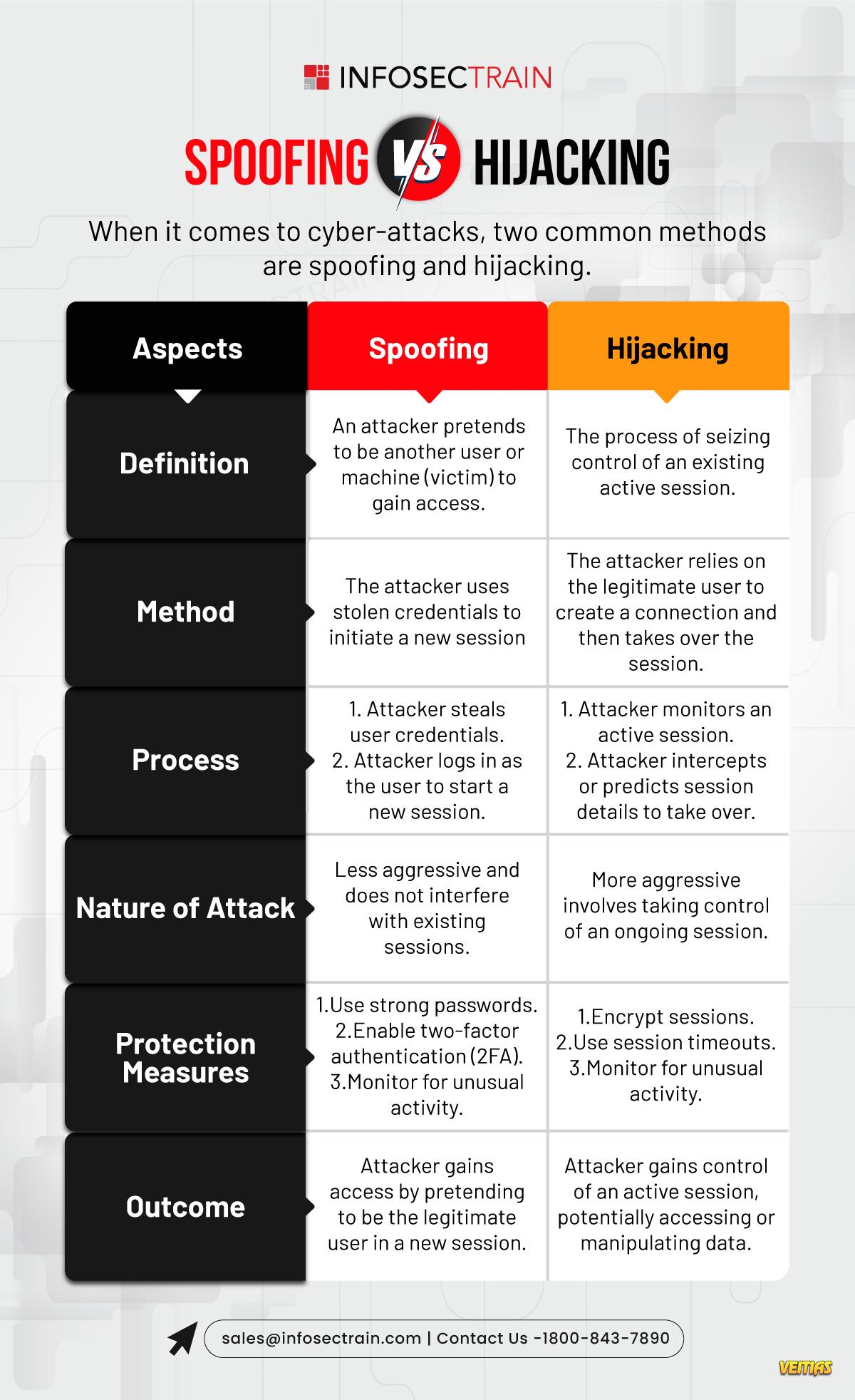
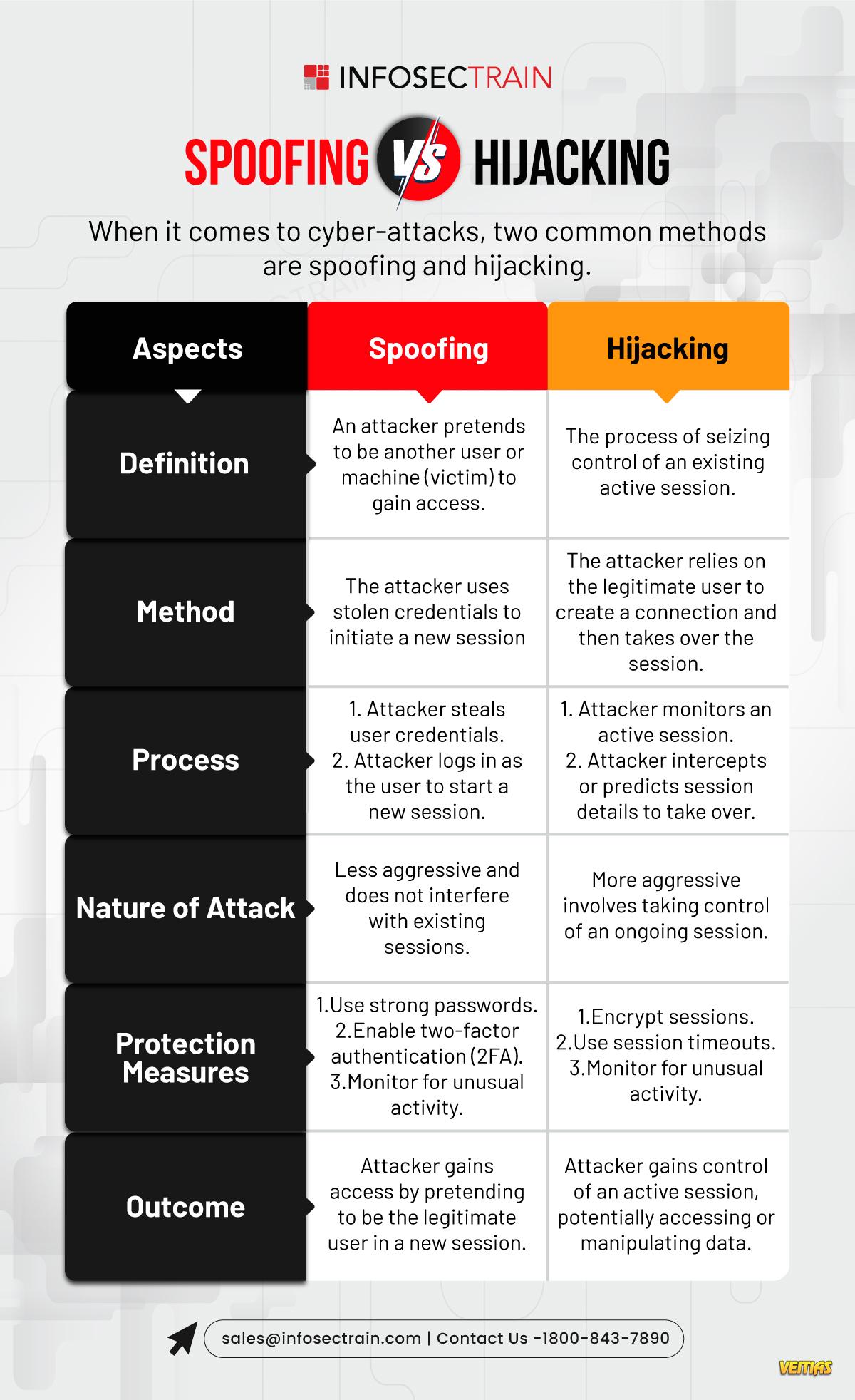
  • Spoofing vs. Hijacking - Know the Difference!

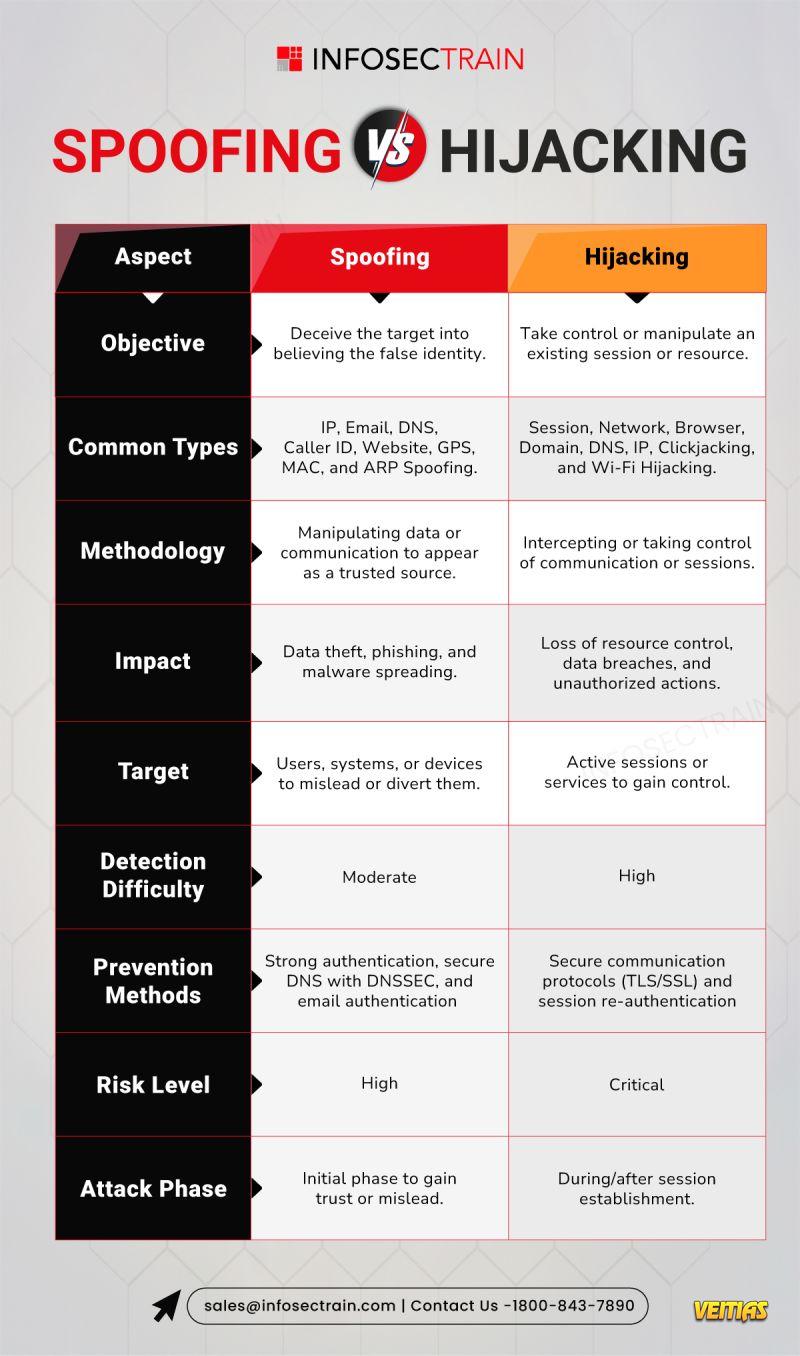
    Confused between spoofing and hijacking? Spoofing involves pretending to be a trusted entity to deceive victims, often targeting credentials or sensitive data. Hijacking, on the other hand, takes over a legitimate session or connection to gain unauthorized access. Learn how these cyberattacks differ, their real-world implications, and the best strategies to prevent them with InfosecTrain. Stay ahead in cybersecurity with us!

    More Info: - https://www.infosectrain.com/

    #SpoofingVsHijacking #CyberSecurity #InfosecTrain #ThreatDetection #NetworkSecurity #CyberAttacks #InformationSecurity #SecurityTraining #OnlineThreats #CyberSecurityAwareness
    Spoofing vs. Hijacking - Know the Difference! Confused between spoofing and hijacking? Spoofing involves pretending to be a trusted entity to deceive victims, often targeting credentials or sensitive data. Hijacking, on the other hand, takes over a legitimate session or connection to gain unauthorized access. Learn how these cyberattacks differ, their real-world implications, and the best strategies to prevent them with InfosecTrain. Stay ahead in cybersecurity with us! More Info: - https://www.infosectrain.com/ #SpoofingVsHijacking #CyberSecurity #InfosecTrain #ThreatDetection #NetworkSecurity #CyberAttacks #InformationSecurity #SecurityTraining #OnlineThreats #CyberSecurityAwareness
    0 التعليقات 0 المشاركات 9835 مشاهدة 0 معاينة
  • Spoofing and hijacking are two distinct cyberattack techniques used by attackers to exploit systems, though they differ in their methods and objectives. Spoofing involves impersonating a trusted entity to deceive a target into granting access or divulging sensitive information. Common types include email spoofing, IP spoofing, and website spoofing, where attackers disguise their identity to appear legitimate. In contrast, hijacking refers to taking over a legitimate session or connection, such as session hijacking or browser hijacking, where an attacker intercepts and controls an active communication channel. While spoofing focuses on deception and masquerading, hijacking emphasizes unauthorized control and exploitation. Both attacks pose significant risks to individuals and organizations, highlighting the importance of robust authentication mechanisms, encryption, and proactive monitoring to defend against these threats.
    Spoofing and hijacking are two distinct cyberattack techniques used by attackers to exploit systems, though they differ in their methods and objectives. Spoofing involves impersonating a trusted entity to deceive a target into granting access or divulging sensitive information. Common types include email spoofing, IP spoofing, and website spoofing, where attackers disguise their identity to appear legitimate. In contrast, hijacking refers to taking over a legitimate session or connection, such as session hijacking or browser hijacking, where an attacker intercepts and controls an active communication channel. While spoofing focuses on deception and masquerading, hijacking emphasizes unauthorized control and exploitation. Both attacks pose significant risks to individuals and organizations, highlighting the importance of robust authentication mechanisms, encryption, and proactive monitoring to defend against these threats.
    0 التعليقات 0 المشاركات 5736 مشاهدة 0 معاينة
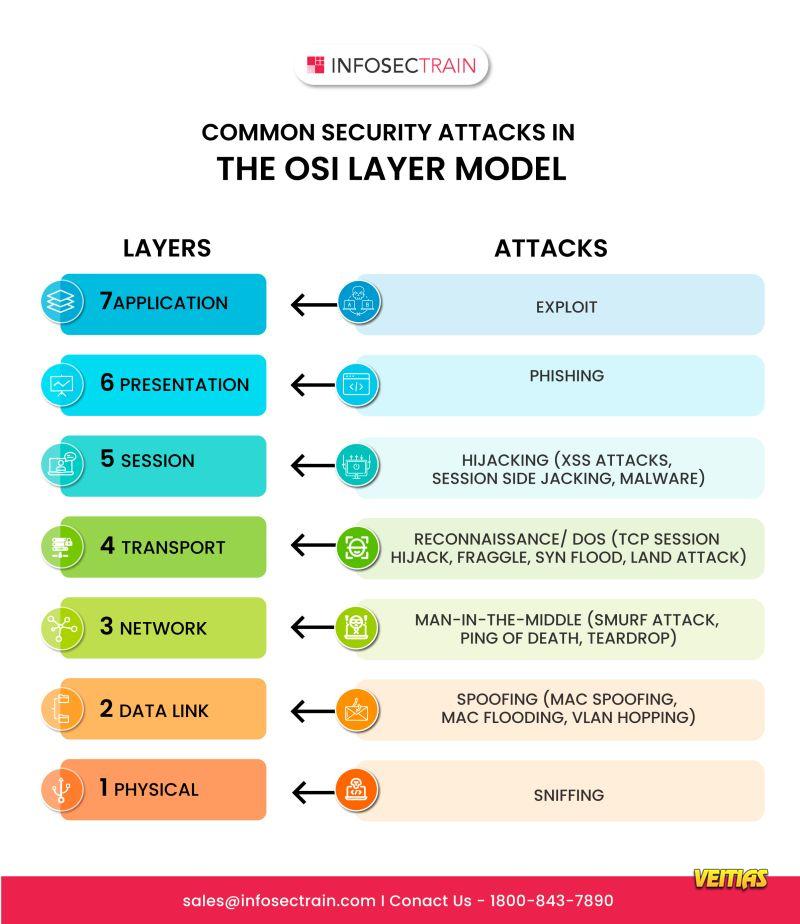
  • Have you considered how cyber-attacks target various layers of your network? Here’s a look at some common vulnerabilities:

    Application Layer : This layer is susceptible to exploits where attackers leverage software vulnerabilities.

    Presentation Layer : Phishing attacks can deceive users into disclosing sensitive information, putting data security at risk.

    Session Layer : Be cautious of hijacking, where attackers can take control of user sessions, gaining unauthorized access.

    Transport Layer : Reconnaissance attacks collect information about your system, often paving the way for larger and more damaging assaults.
    Have you considered how cyber-attacks target various layers of your network? Here’s a look at some common vulnerabilities: Application Layer : This layer is susceptible to exploits where attackers leverage software vulnerabilities. Presentation Layer : Phishing attacks can deceive users into disclosing sensitive information, putting data security at risk. Session Layer : Be cautious of hijacking, where attackers can take control of user sessions, gaining unauthorized access. Transport Layer : Reconnaissance attacks collect information about your system, often paving the way for larger and more damaging assaults.
    0 التعليقات 0 المشاركات 7654 مشاهدة 0 معاينة
  • Common Security Attacks in the OSI Model

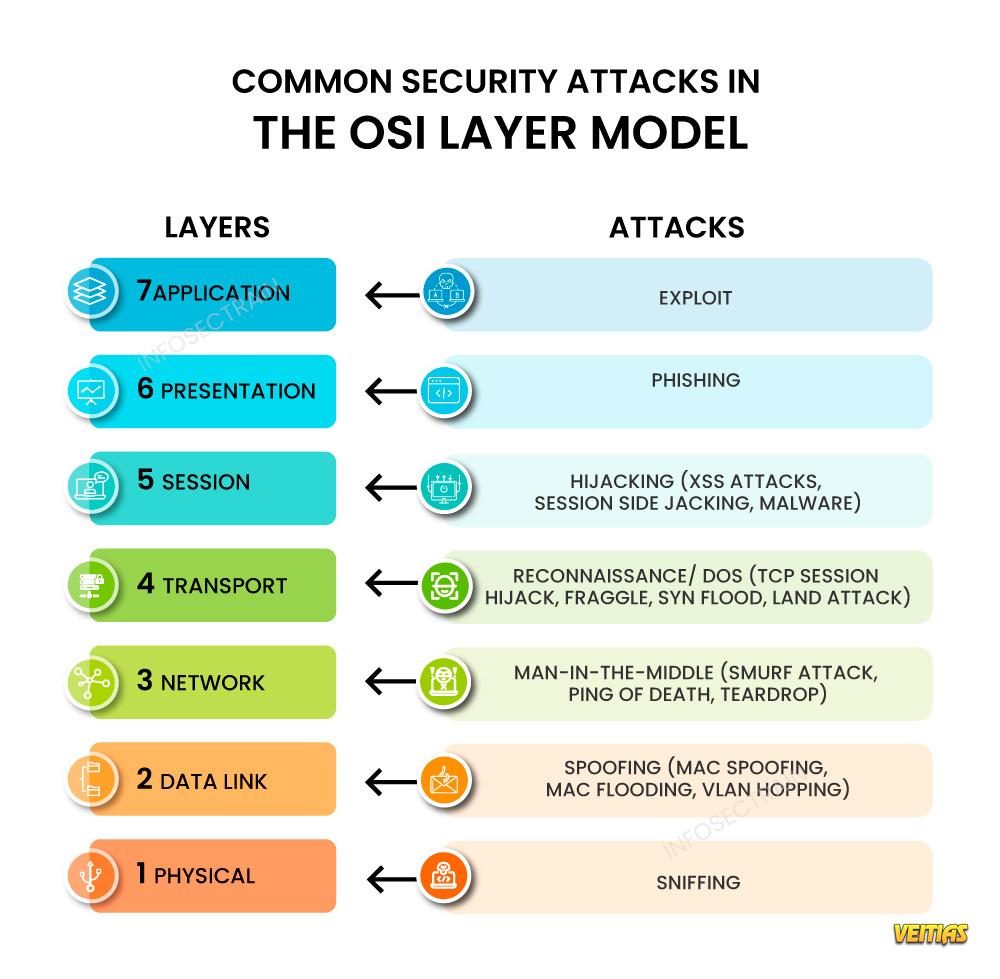
    Have you considered how cyber-attacks target various layers of your network? Here’s a look at some common vulnerabilities:

    Application Layer : This layer is susceptible to exploits where attackers leverage software vulnerabilities.

    Presentation Layer : Phishing attacks can deceive users into disclosing sensitive information, putting data security at risk.

    Session Layer : Be cautious of hijacking, where attackers can take control of user sessions, gaining unauthorized access.

    Transport Layer : Reconnaissance attacks collect information about your system, often paving the way for larger and more damaging assaults.

    Network Layer : MITM (Man-in-the-Middle) attacks can intercept communications between systems, enabling eavesdropping and data theft.

    Data Link Layer : Spoofing allows attackers to masquerade as legitimate devices on your network, circumventing security protocols.

    Physical Layer : Attacks such as cable tapping and physical device tampering can compromise the integrity of your network infrastructure.

    Read more: https://www.infosectrain.com/blog/common-security-attacks-in-the-osi-layer-model/

    Recognizing these threats is essential for fortifying defenses against cyber-attacks. Stay vigilant!

    #SecurityAttacks #OSIMode #CyberSecurity #NetworkSecurity #DataProtection #InfoSec #CyberThreats #Malware #PenetrationTesting #NetworkDefense #ApplicationSecurity #ThreatDetection #VulnerabilityManagement #infosectrain
    Common Security Attacks in the OSI Model Have you considered how cyber-attacks target various layers of your network? Here’s a look at some common vulnerabilities: Application Layer : This layer is susceptible to exploits where attackers leverage software vulnerabilities. Presentation Layer : Phishing attacks can deceive users into disclosing sensitive information, putting data security at risk. Session Layer : Be cautious of hijacking, where attackers can take control of user sessions, gaining unauthorized access. Transport Layer : Reconnaissance attacks collect information about your system, often paving the way for larger and more damaging assaults. Network Layer : MITM (Man-in-the-Middle) attacks can intercept communications between systems, enabling eavesdropping and data theft. Data Link Layer : Spoofing allows attackers to masquerade as legitimate devices on your network, circumventing security protocols. Physical Layer : Attacks such as cable tapping and physical device tampering can compromise the integrity of your network infrastructure. Read more: https://www.infosectrain.com/blog/common-security-attacks-in-the-osi-layer-model/ Recognizing these threats is essential for fortifying defenses against cyber-attacks. Stay vigilant! #SecurityAttacks #OSIMode #CyberSecurity #NetworkSecurity #DataProtection #InfoSec #CyberThreats #Malware #PenetrationTesting #NetworkDefense #ApplicationSecurity #ThreatDetection #VulnerabilityManagement #infosectrain
    0 التعليقات 0 المشاركات 16542 مشاهدة 0 معاينة
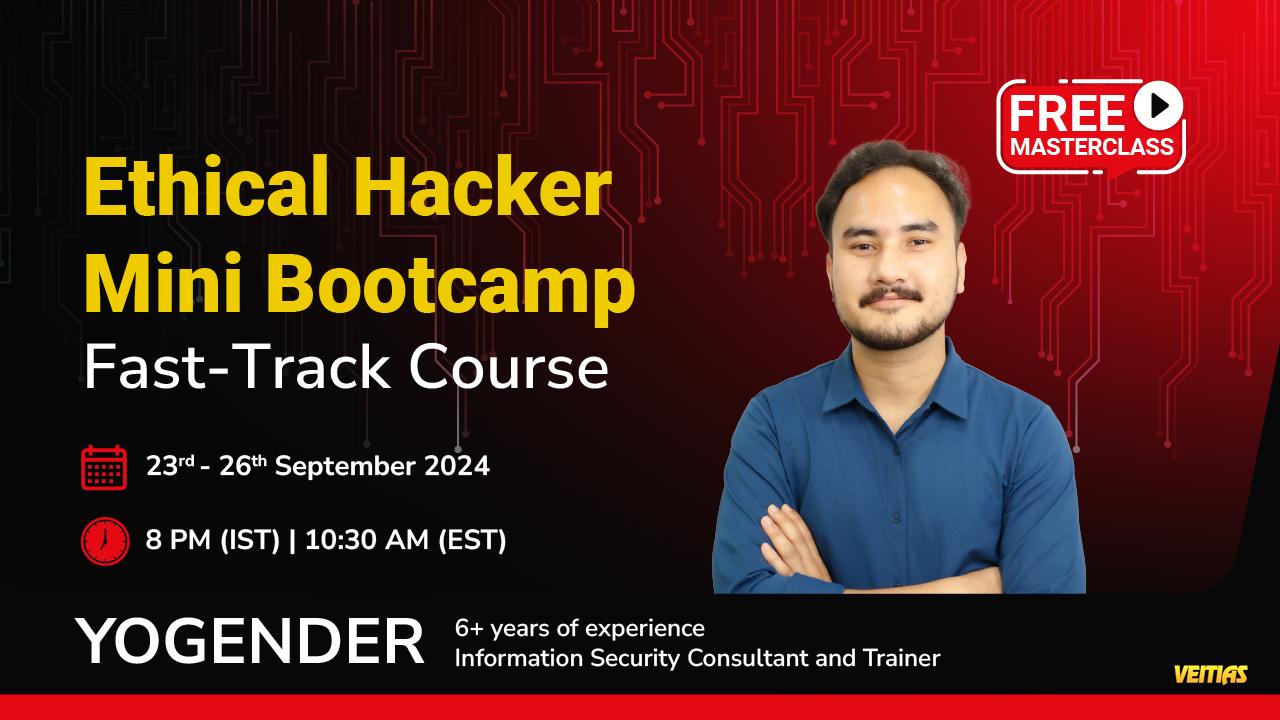
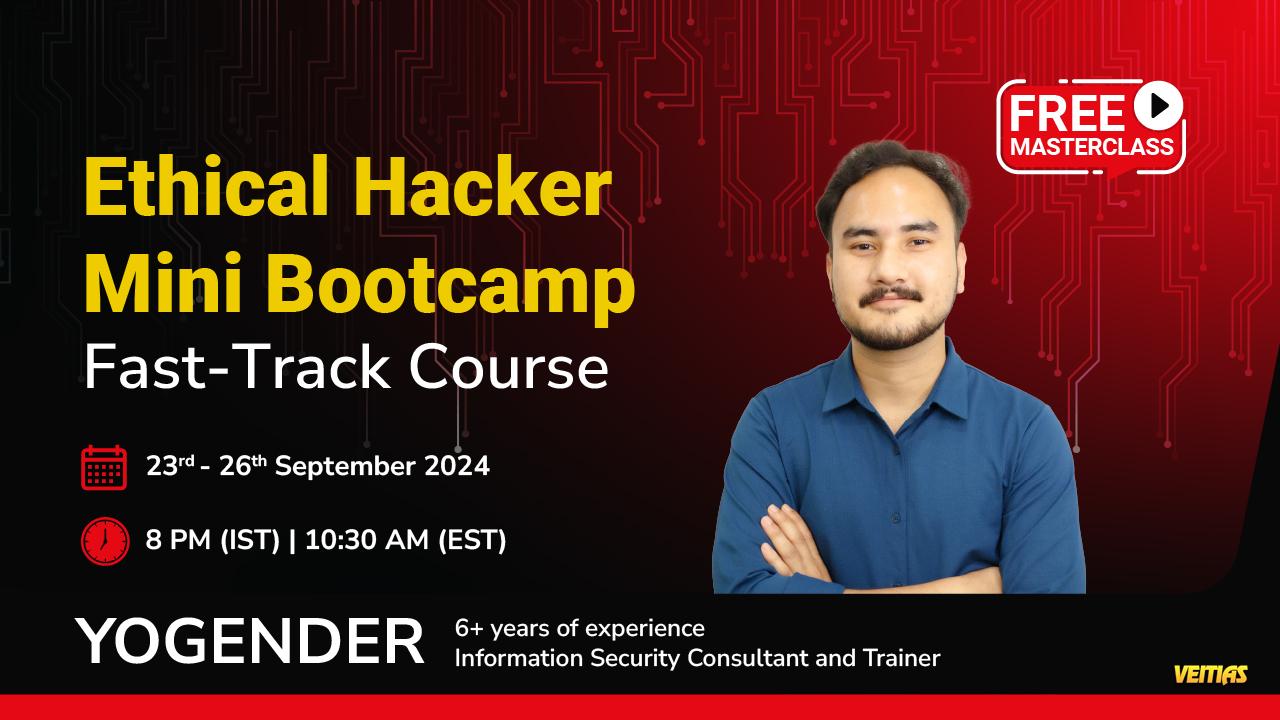
  • 🛡 Free Masterclass: Ethical Hacker Mini Bootcamp - Fast-Track Course

    Are you ready to dive into the exciting world of ethical hacking? Join our Free Masterclass and kickstart your journey to becoming a cybersecurity expert!

    Event Details:
    Date: 23-26Sep (Mon – Thu)
    Time: 08:00 – 10:00 PM (IST)
    Speaker: Yogender

    𝐅𝐫𝐞𝐞 𝐑𝐞𝐠𝐢𝐬𝐭𝐞𝐫 𝐍𝐨𝐰: https://www.infosectrain.com/events/ethical-hacker-mini-bootcamp-fast-track-course/

    What You'll Learn:
    Day 1:
    Module 1: Introduction to Ethical Hacking
    Module 2: Foot Printing and Reconnaissance
    Module 3: Scanning Networks
    Module 4: Enumeration
    Module 5: Vulnerability Analysis

    Day 2:
    Module 6: System Hacking
    Module 7: Malware Threats
    Module 8: Sniffing
    Module 9: Social Engineering
    Module 10: Denial of Service

    Day 3:
    Module 11: Session Hijacking
    Module 12: Evading IDS, Firewalls, and Honeypots
    Module 13: Hacking Web Servers
    Module 14: Hacking Web Applications
    Module 15: SQL Injections

    Day 4:
    Module 16: Hacking Wireless Networks
    Module 17: Hacking Mobile Platforms
    Module 18: IoT Hacking and OT Hacking
    Module 19: Cloud Computing
    Module 20: Cryptography

    #EthicalHacking #Cybersecurity #FreeMasterclass #HackerBootcamp #FastTrackLearning #LearnHacking #CyberDefense #PenetrationTesting #InfoSecTraining #CybersecuritySkills #EthicalHacker #OnlineTraining #TechLearning #CybersecurityCareer #SecurityAwareness #infosectrain #learntorise
    🛡 Free Masterclass: Ethical Hacker Mini Bootcamp - Fast-Track Course Are you ready to dive into the exciting world of ethical hacking? Join our Free Masterclass and kickstart your journey to becoming a cybersecurity expert! 📅 Event Details: Date: 23-26Sep (Mon – Thu) Time: 08:00 – 10:00 PM (IST) Speaker: Yogender 𝐅𝐫𝐞𝐞 𝐑𝐞𝐠𝐢𝐬𝐭𝐞𝐫 𝐍𝐨𝐰: https://www.infosectrain.com/events/ethical-hacker-mini-bootcamp-fast-track-course/ 🚀 What You'll Learn: Day 1: Module 1: Introduction to Ethical Hacking Module 2: Foot Printing and Reconnaissance Module 3: Scanning Networks Module 4: Enumeration Module 5: Vulnerability Analysis Day 2: Module 6: System Hacking Module 7: Malware Threats Module 8: Sniffing Module 9: Social Engineering Module 10: Denial of Service Day 3: Module 11: Session Hijacking Module 12: Evading IDS, Firewalls, and Honeypots Module 13: Hacking Web Servers Module 14: Hacking Web Applications Module 15: SQL Injections Day 4: Module 16: Hacking Wireless Networks Module 17: Hacking Mobile Platforms Module 18: IoT Hacking and OT Hacking Module 19: Cloud Computing Module 20: Cryptography #EthicalHacking #Cybersecurity #FreeMasterclass #HackerBootcamp #FastTrackLearning #LearnHacking #CyberDefense #PenetrationTesting #InfoSecTraining #CybersecuritySkills #EthicalHacker #OnlineTraining #TechLearning #CybersecurityCareer #SecurityAwareness #infosectrain #learntorise
    0 التعليقات 0 المشاركات 21627 مشاهدة 0 معاينة
  • 𝐅𝐫𝐞𝐞 𝐌𝐚𝐬𝐭𝐞𝐫𝐜𝐥𝐚𝐬𝐬: 𝐄𝐭𝐡𝐢𝐜𝐚𝐥 𝐇𝐚𝐜𝐤𝐞𝐫 𝐌𝐢𝐧𝐢 𝐁𝐨𝐨𝐭𝐜𝐚𝐦𝐩 – 𝐅𝐚𝐬𝐭-𝐓𝐫𝐚𝐜𝐤 𝐂𝐨𝐮𝐫𝐬𝐞!

    Are you ready to dive into the world of ethical hacking and cyber security? Join for an Free Masterclass designed to fast-track your journey to becoming a skilled ethical hacker!

    Date: 23-26Sep (Mon – Thu) Time: 08:00 – 10:00 PM (IST)
    Speaker: Yogender

    𝐅𝐫𝐞𝐞 𝐑𝐞𝐠𝐢𝐬𝐭𝐞𝐫 𝐍𝐨𝐰: https://www.infosectrain.com/events/ethical-hacker-mini-bootcamp-fast-track-course/

    Agenda for the Masterclass
    Day 1:
    Module 1: Introduction to Ethical Hacking
    Module 2: Foot Printing and Reconnaissance
    Module 3: Scanning Networks
    Module 4: Enumeration
    Module 5: Vulnerability Analysis

    Day 2:
    Module 6: System Hacking
    Module 7: Malware Threats
    Module 8: Sniffing
    Module 9: Social Engineering
    Module 10: Denial of Service

    Day 3:
    Module 11: Session Hijacking
    Module 12: Evading IDS, Firewalls, and Honeypots
    Module 13: Hacking Web Servers
    Module 14: Hacking Web Applications
    Module 15: SQL Injections

    Day 4:
    Module 16: Hacking Wireless Networks
    Module 17: Hacking Mobile Platforms
    Module 18: IoT Hacking and OT Hacking
    Module 19: Cloud Computing
    Module 20: Cryptography

    #EthicalHacking #CyberSecurity #InfoSec #HackerTraining #liveevent #FreeMasterclass #CyberSecurityTraining #ITCareer #HackingBootcamp #TechSkills #SecureYourFuture #PenetrationTesting #EthicalHacker #CyberDefense #SecurityTraining #HackThePlanet #freewebinar #infosectrain #learntorise
    𝐅𝐫𝐞𝐞 𝐌𝐚𝐬𝐭𝐞𝐫𝐜𝐥𝐚𝐬𝐬: 𝐄𝐭𝐡𝐢𝐜𝐚𝐥 𝐇𝐚𝐜𝐤𝐞𝐫 𝐌𝐢𝐧𝐢 𝐁𝐨𝐨𝐭𝐜𝐚𝐦𝐩 – 𝐅𝐚𝐬𝐭-𝐓𝐫𝐚𝐜𝐤 𝐂𝐨𝐮𝐫𝐬𝐞! Are you ready to dive into the world of ethical hacking and cyber security? Join for an Free Masterclass designed to fast-track your journey to becoming a skilled ethical hacker! 📅 Date: 23-26Sep (Mon – Thu) ⌚ Time: 08:00 – 10:00 PM (IST) Speaker: Yogender 𝐅𝐫𝐞𝐞 𝐑𝐞𝐠𝐢𝐬𝐭𝐞𝐫 𝐍𝐨𝐰: https://www.infosectrain.com/events/ethical-hacker-mini-bootcamp-fast-track-course/ ➡️ Agenda for the Masterclass Day 1: Module 1: Introduction to Ethical Hacking Module 2: Foot Printing and Reconnaissance Module 3: Scanning Networks Module 4: Enumeration Module 5: Vulnerability Analysis Day 2: Module 6: System Hacking Module 7: Malware Threats Module 8: Sniffing Module 9: Social Engineering Module 10: Denial of Service Day 3: Module 11: Session Hijacking Module 12: Evading IDS, Firewalls, and Honeypots Module 13: Hacking Web Servers Module 14: Hacking Web Applications Module 15: SQL Injections Day 4: Module 16: Hacking Wireless Networks Module 17: Hacking Mobile Platforms Module 18: IoT Hacking and OT Hacking Module 19: Cloud Computing Module 20: Cryptography #EthicalHacking #CyberSecurity #InfoSec #HackerTraining #liveevent #FreeMasterclass #CyberSecurityTraining #ITCareer #HackingBootcamp #TechSkills #SecureYourFuture #PenetrationTesting #EthicalHacker #CyberDefense #SecurityTraining #HackThePlanet #freewebinar #infosectrain #learntorise
    0 التعليقات 0 المشاركات 19733 مشاهدة 0 معاينة
  • Spoofing vs. Hijacking: Know the Difference!

    InfosecTrain presents a clear comparison between spoofing and hijacking to help you understand these two common cyber threats. Spoofing involves impersonating a legitimate user or device to gain unauthorized access. Common types include email spoofing, IP spoofing, and DNS spoofing, with the primary goal of deceiving users, stealing data, or spreading malware. Hijacking, on the other hand, involves taking over a legitimate session or communication channel.

    https://www.infosectrain.com/

    #CyberSecurity #Spoofing #Hijacking #InfoSec #DataProtection #ITSecurity #infosectrain #learntorise
    Spoofing vs. Hijacking: Know the Difference! InfosecTrain presents a clear comparison between spoofing and hijacking to help you understand these two common cyber threats. Spoofing involves impersonating a legitimate user or device to gain unauthorized access. Common types include email spoofing, IP spoofing, and DNS spoofing, with the primary goal of deceiving users, stealing data, or spreading malware. Hijacking, on the other hand, involves taking over a legitimate session or communication channel. https://www.infosectrain.com/ #CyberSecurity #Spoofing #Hijacking #InfoSec #DataProtection #ITSecurity #infosectrain #learntorise
    0 التعليقات 0 المشاركات 5938 مشاهدة 0 معاينة
  • How to Prevent Session Hijacking Attacks?

    Session hijacking can be prevented by enhancing the security mechanisms in web applications. Some precautions against session hijacking are outlined below.

    Read detailed Blog - https://infosec-train.blogspot.com/2024/01/how-to-prevent-session-hijacking-attacks.html

    #SessionHijackingPrevention #Cybersecurity #NetworkSecurity #SessionManagement #AuthenticationSecurity #WebSecurity #ITSecurity #CyberDefense #HackingPrevention #DataProtection #CyberThreats #SecurityAwareness #InformationSecurity
    How to Prevent Session Hijacking Attacks? Session hijacking can be prevented by enhancing the security mechanisms in web applications. Some precautions against session hijacking are outlined below. Read detailed Blog - https://infosec-train.blogspot.com/2024/01/how-to-prevent-session-hijacking-attacks.html #SessionHijackingPrevention #Cybersecurity #NetworkSecurity #SessionManagement #AuthenticationSecurity #WebSecurity #ITSecurity #CyberDefense #HackingPrevention #DataProtection #CyberThreats #SecurityAwareness #InformationSecurity
    INFOSEC-TRAIN.BLOGSPOT.COM
    How to Prevent Session Hijacking Attacks?
    In this technological era, signing into various online services and accounts is a regular activity. Each time we login into any web service,...
    0 التعليقات 0 المشاركات 11987 مشاهدة 0 معاينة