
• Types of Firewalls Explained: A Practical Security Overview

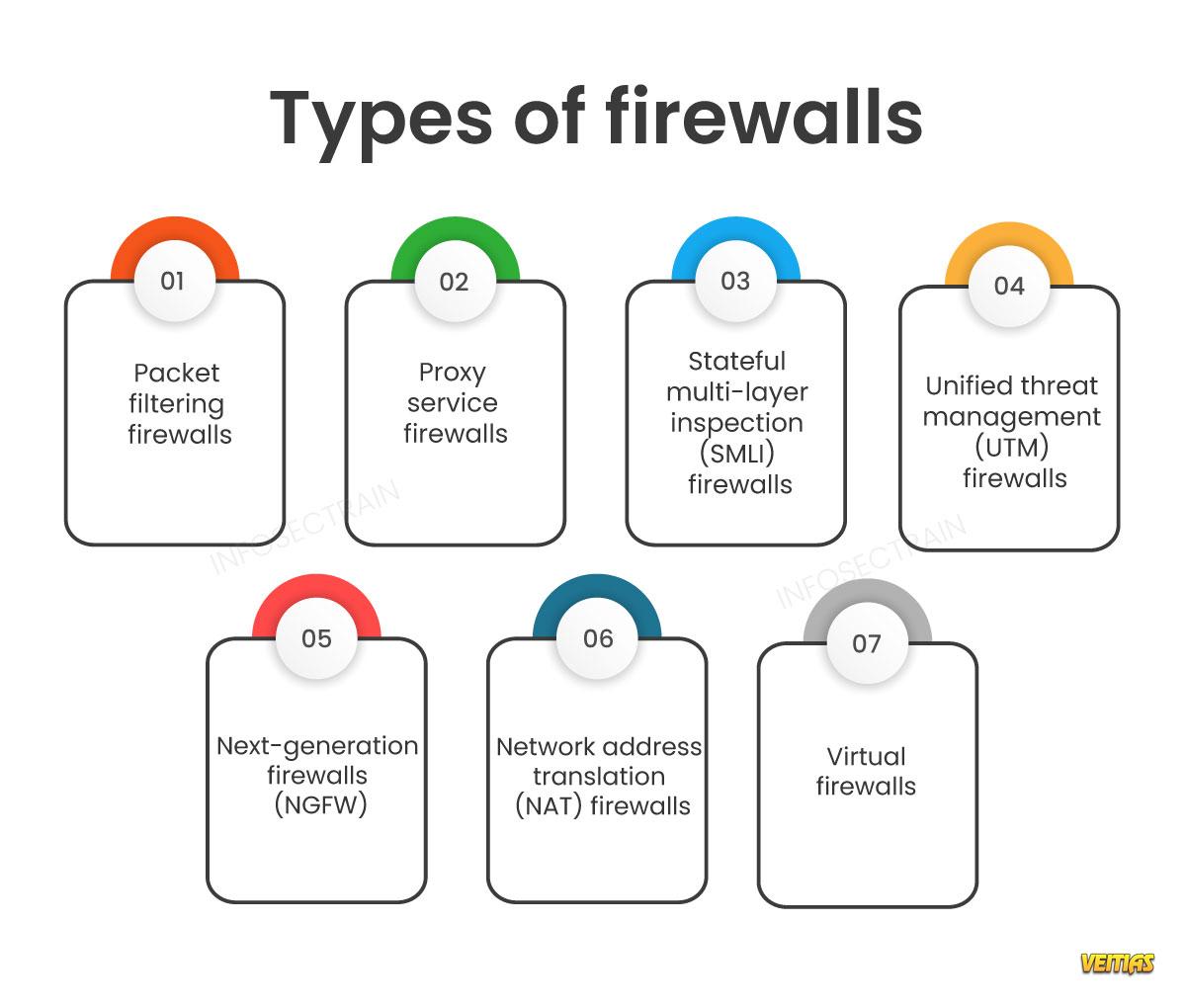
    Firewalls are a foundational component of network security, designed to monitor and control incoming and outgoing traffic based on predefined rules. This visual overview explains the major types of firewalls, including packet filtering, proxy firewalls, stateful multi-layer inspection, unified threat management, next-generation firewalls, NAT firewalls, and virtual firewalls. Understanding these firewall types helps organizations choose the right security controls to protect networks, applications, and data from evolving cyber threats.

    #CyberSecurity #NetworkSecurity #Firewalls #InfoSec #SecurityArchitecture #NGFW #UTM #ITSecurity #CyberDefense #Infosectrain
    Types of Firewalls Explained: A Practical Security Overview Firewalls are a foundational component of network security, designed to monitor and control incoming and outgoing traffic based on predefined rules. This visual overview explains the major types of firewalls, including packet filtering, proxy firewalls, stateful multi-layer inspection, unified threat management, next-generation firewalls, NAT firewalls, and virtual firewalls. Understanding these firewall types helps organizations choose the right security controls to protect networks, applications, and data from evolving cyber threats. #CyberSecurity #NetworkSecurity #Firewalls #InfoSec #SecurityArchitecture #NGFW #UTM #ITSecurity #CyberDefense #Infosectrain
    0 Commentarii 0 Distribuiri 299 Views 0 previzualizare
  • Types of Firewalls Explained: A Practical Security Overview

    Firewalls play a critical role in protecting networks by monitoring and controlling incoming and outgoing traffic based on predefined security rules. This visual overview explains the major types of firewalls, including packet filtering, proxy firewalls, stateful inspection, unified threat management (UTM), next-generation firewalls (NGFW), NAT firewalls, and virtual firewalls. Understanding these firewall types helps organizations choose the right security controls to defend against modern cyber threats across on-premises, cloud, and hybrid environments.

    #FirewallSecurity #NetworkSecurity #CyberSecurity #NGFW #UTMFirewall #PacketFiltering #ProxyFirewall #StatefulInspection #CloudSecurity #InfoSec
    Types of Firewalls Explained: A Practical Security Overview Firewalls play a critical role in protecting networks by monitoring and controlling incoming and outgoing traffic based on predefined security rules. This visual overview explains the major types of firewalls, including packet filtering, proxy firewalls, stateful inspection, unified threat management (UTM), next-generation firewalls (NGFW), NAT firewalls, and virtual firewalls. Understanding these firewall types helps organizations choose the right security controls to defend against modern cyber threats across on-premises, cloud, and hybrid environments. #FirewallSecurity #NetworkSecurity #CyberSecurity #NGFW #UTMFirewall #PacketFiltering #ProxyFirewall #StatefulInspection #CloudSecurity #InfoSec
    0 Commentarii 0 Distribuiri 173 Views 0 previzualizare
  • Differences between active attack and passive attack

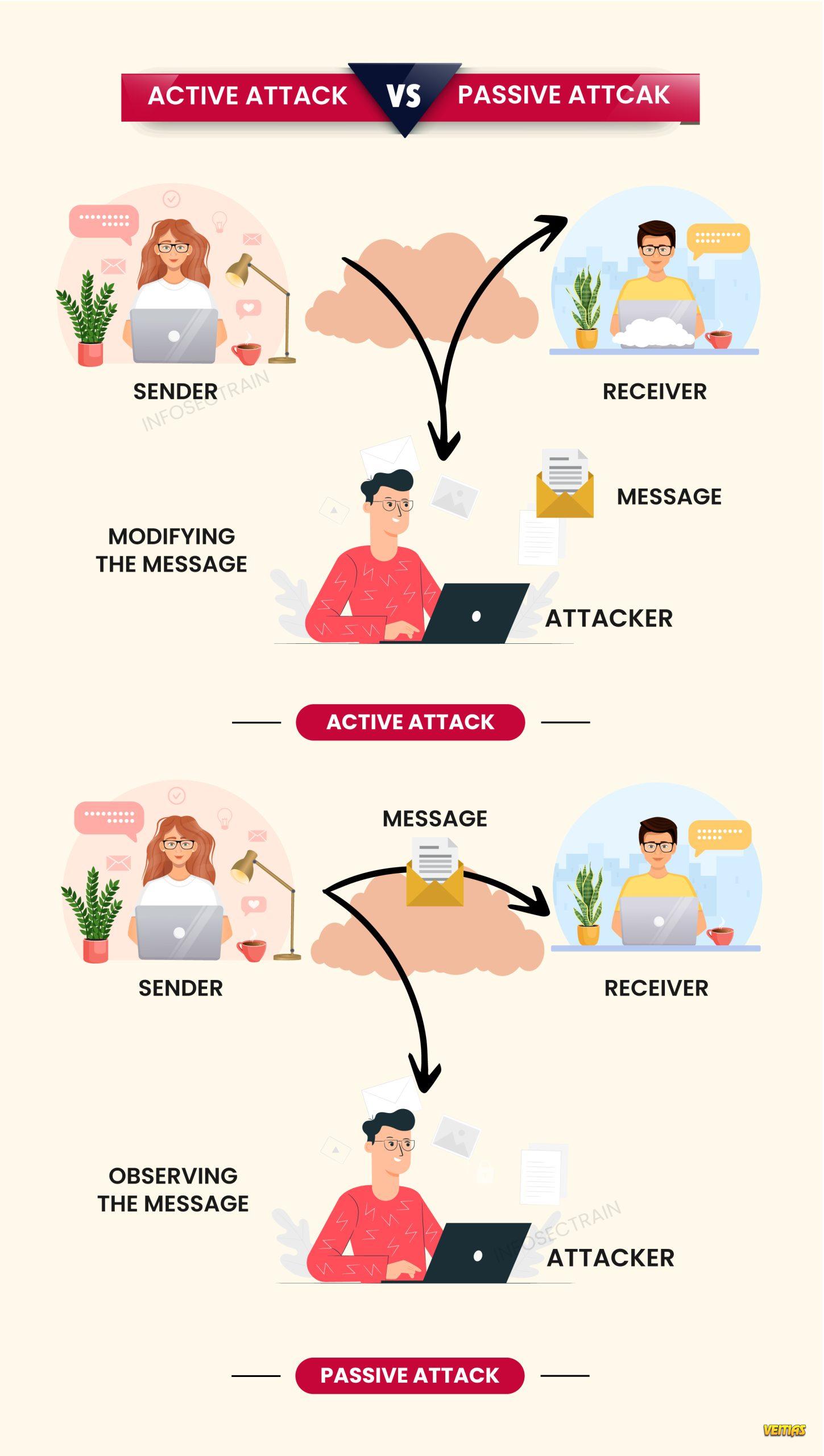
    Active and passive attacks represent two fundamental threat categories in cybersecurity. An active attack involves modifying, disrupting, or destroying data and systems, such as malware injection, denial-of-service attacks, or message tampering. In contrast, a passive attack focuses on silently monitoring or intercepting information without altering it, commonly through eavesdropping or traffic analysis. Understanding the differences between these attacks helps security professionals design stronger detection, prevention, and response strategies to protect sensitive data and ensure system integrity.

    #CyberSecurity #ActiveAttack #PassiveAttack #NetworkSecurity #InfoSec #CyberThreats #SecurityAwareness #EthicalHacking #DataProtection #CyberRisk
    Differences between active attack and passive attack Active and passive attacks represent two fundamental threat categories in cybersecurity. An active attack involves modifying, disrupting, or destroying data and systems, such as malware injection, denial-of-service attacks, or message tampering. In contrast, a passive attack focuses on silently monitoring or intercepting information without altering it, commonly through eavesdropping or traffic analysis. Understanding the differences between these attacks helps security professionals design stronger detection, prevention, and response strategies to protect sensitive data and ensure system integrity. #CyberSecurity #ActiveAttack #PassiveAttack #NetworkSecurity #InfoSec #CyberThreats #SecurityAwareness #EthicalHacking #DataProtection #CyberRisk
    0 Commentarii 0 Distribuiri 357 Views 0 previzualizare
  • FREE Masterclass on CompTIA Security+ | Exam Practice Session

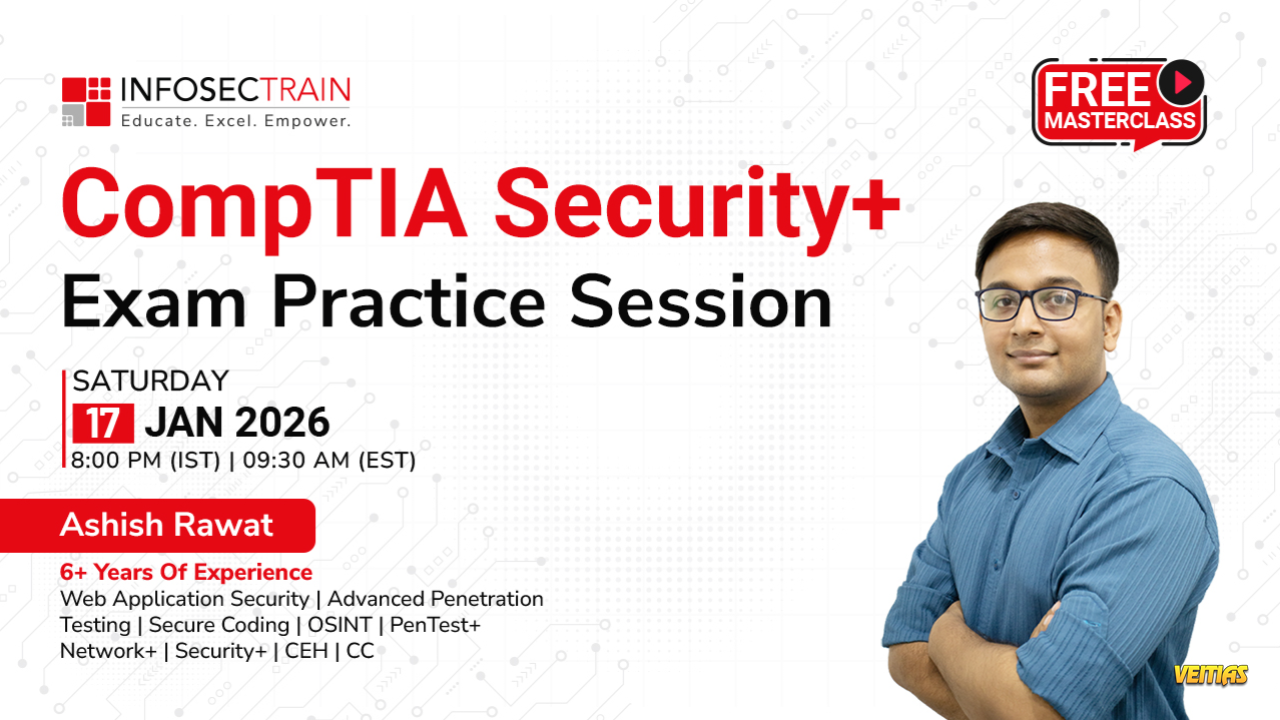
    Planning to crack the CompTIA Security+ exam? Don’t miss this expert-led, hands-on practice session designed to boost your confidence and exam readiness!

    Date: 17 Jan (Saturday)
    Time: 8 – 10 PM (IST)
    Speaker: Ashish Rawat (Industry Expert)

    What You’ll Learn in This Masterclass:
    Core Security Concepts Review
    Threats, Risks & Attack Vectors
    Cryptography Essentials
    Identity & Access Management (IAM)
    Enterprise Network Security
    Cloud Security Fundamentals
    Answer Review & Proven Exam Strategies

    Why You Should Attend:
    Get a CPE Certificate
    FREE Career Guidance & Mentorship
    Learn directly from industry experts
    Improve accuracy with real exam-style questions

    Register FREE Now https://www.infosectrain.com/events/comptia-security-exam-practice-session

    #CompTIASecurityPlus #CyberSecurity #SecurityPlus #FreeWebinar #CyberCareers #ITSecurity #InfosecTraining #ExamPreparation #CloudSecurity #IAM #NetworkSecurity #CyberLearning
    FREE Masterclass on CompTIA Security+ | Exam Practice Session Planning to crack the CompTIA Security+ exam? Don’t miss this expert-led, hands-on practice session designed to boost your confidence and exam readiness! 📅 Date: 17 Jan (Saturday) ⏰ Time: 8 – 10 PM (IST) 🎤 Speaker: Ashish Rawat (Industry Expert) 🎯 What You’ll Learn in This Masterclass: ✅ Core Security Concepts Review ✅ Threats, Risks & Attack Vectors ✅ Cryptography Essentials ✅ Identity & Access Management (IAM) ✅ Enterprise Network Security ✅ Cloud Security Fundamentals ✅ Answer Review & Proven Exam Strategies 🚀 Why You Should Attend: 🎓 Get a CPE Certificate 🧭 FREE Career Guidance & Mentorship 👨🏫 Learn directly from industry experts 📘 Improve accuracy with real exam-style questions 👉 Register FREE Now🔗 https://www.infosectrain.com/events/comptia-security-exam-practice-session #CompTIASecurityPlus #CyberSecurity #SecurityPlus #FreeWebinar #CyberCareers #ITSecurity #InfosecTraining #ExamPreparation #CloudSecurity #IAM #NetworkSecurity #CyberLearning
    0 Commentarii 0 Distribuiri 5904 Views 0 previzualizare
  • 𝐘𝐨𝐮𝐫 𝐖𝐢-𝐅𝐢 𝐍𝐞𝐭𝐰𝐨𝐫𝐤 𝐌𝐢𝐠𝐡𝐭 𝐁𝐞 𝐌𝐨𝐫𝐞 𝐔𝐧𝐝𝐞𝐫𝐦𝐢𝐧𝐞𝐝 𝐓𝐡𝐚𝐧 𝐘𝐨𝐮 𝐈𝐦𝐚𝐠𝐢𝐧𝐞

    Not every wireless attack involves a direct attack and gaining access first.
    Some of them simply rely on the waiting period for you to connect.

    𝐂𝐨𝐦𝐦𝐨𝐧 𝐖𝐢𝐫𝐞𝐥𝐞𝐬𝐬 𝐇𝐚𝐜𝐤𝐢𝐧𝐠 𝐌𝐞𝐭𝐡𝐨𝐝𝐬:
    • 𝐄𝐯𝐢𝐥 𝐓𝐰𝐢𝐧 𝐀𝐭𝐭𝐚𝐜𝐤𝐬 – PHony Wi-Fi networks simulating the real ones to carry out man-in-the-middle attacks
    • 𝐏𝐚𝐜𝐤𝐞𝐭 𝐒𝐧𝐢𝐟𝐟𝐢𝐧𝐠– Obtaining unencrypted data flowing on networks considered public or poorly secured
    • 𝐏𝐚𝐬𝐬𝐰𝐨𝐫𝐝 𝐂𝐫𝐚𝐜𝐤𝐢𝐧𝐠 – Weak passwords and old protocols like WEP can be hacked in just a few minutes
    • 𝐖𝐢-𝐅𝐢 𝐉𝐚𝐦𝐦𝐢𝐧𝐠 – Overloading the radio channels to cut off users from the network or to conduct further attacks

    🛡 𝐑𝐢𝐬𝐤 𝐑𝐞𝐝𝐮𝐜𝐭𝐢𝐨𝐧 𝐓𝐢𝐩𝐬 𝐟𝐨𝐫 𝐎𝐫𝐠𝐚𝐧𝐢𝐳𝐚𝐭𝐢𝐨𝐧𝐬 & 𝐈𝐧𝐝𝐢𝐯𝐢𝐝𝐮𝐚𝐥𝐬:
    ✔ Choose strong, distinct passwords
    ✔ Activate WPA3 encryption
    ✔ Always update router firmware
    ✔ Turn off WPS
    ✔ Public Wi-Fi should not be used for sensitive transactions
    ✔ Make use of trusted VPN services

    𝐑𝐞𝐚𝐝 𝐭𝐡𝐞 𝐈𝐧𝐟𝐨𝐬𝐞𝐜𝐓𝐫𝐚𝐢𝐧 𝐚𝐫𝐭𝐢𝐜𝐥𝐞: https://www.infosectrain.com/blog/top-wireless-hacking-techniques

    𝐓𝐡𝐞 𝐈𝐦𝐩𝐨𝐫𝐭𝐚𝐧𝐜𝐞 𝐨𝐟 𝐓𝐡𝐢𝐬:
    Data protection and secure networks maintenance are no longer possible without understanding wireless attack vectors considering 45% increase in IoT cyberattacks and the daily use of millions of public Wi-Fi hotspots.

    𝐒𝐞𝐜𝐮𝐫𝐢𝐭𝐲 𝐬𝐭𝐚𝐫𝐭𝐬 𝐰𝐢𝐭𝐡 𝐚𝐰𝐚𝐫𝐞𝐧𝐞𝐬𝐬. 𝐏𝐫𝐨𝐭𝐞𝐜𝐭𝐢𝐨𝐧 𝐬𝐭𝐚𝐫𝐭𝐬 𝐰𝐢𝐭𝐡 𝐚𝐜𝐭𝐢𝐨𝐧.

    #CyberSecurity #WirelessSecurity #EthicalHacking #CEHv13 #NetworkSecurity #InfosecTrain #GRC #ITSecurity #CyberAwareness
    🔐 𝐘𝐨𝐮𝐫 𝐖𝐢-𝐅𝐢 𝐍𝐞𝐭𝐰𝐨𝐫𝐤 𝐌𝐢𝐠𝐡𝐭 𝐁𝐞 𝐌𝐨𝐫𝐞 𝐔𝐧𝐝𝐞𝐫𝐦𝐢𝐧𝐞𝐝 𝐓𝐡𝐚𝐧 𝐘𝐨𝐮 𝐈𝐦𝐚𝐠𝐢𝐧𝐞 Not every wireless attack involves a direct attack and gaining access first. Some of them simply rely on the waiting period for you to connect. ➡️ 𝐂𝐨𝐦𝐦𝐨𝐧 𝐖𝐢𝐫𝐞𝐥𝐞𝐬𝐬 𝐇𝐚𝐜𝐤𝐢𝐧𝐠 𝐌𝐞𝐭𝐡𝐨𝐝𝐬: • 𝐄𝐯𝐢𝐥 𝐓𝐰𝐢𝐧 𝐀𝐭𝐭𝐚𝐜𝐤𝐬 – PHony Wi-Fi networks simulating the real ones to carry out man-in-the-middle attacks • 𝐏𝐚𝐜𝐤𝐞𝐭 𝐒𝐧𝐢𝐟𝐟𝐢𝐧𝐠– Obtaining unencrypted data flowing on networks considered public or poorly secured • 𝐏𝐚𝐬𝐬𝐰𝐨𝐫𝐝 𝐂𝐫𝐚𝐜𝐤𝐢𝐧𝐠 – Weak passwords and old protocols like WEP can be hacked in just a few minutes • 𝐖𝐢-𝐅𝐢 𝐉𝐚𝐦𝐦𝐢𝐧𝐠 – Overloading the radio channels to cut off users from the network or to conduct further attacks 🛡 𝐑𝐢𝐬𝐤 𝐑𝐞𝐝𝐮𝐜𝐭𝐢𝐨𝐧 𝐓𝐢𝐩𝐬 𝐟𝐨𝐫 𝐎𝐫𝐠𝐚𝐧𝐢𝐳𝐚𝐭𝐢𝐨𝐧𝐬 & 𝐈𝐧𝐝𝐢𝐯𝐢𝐝𝐮𝐚𝐥𝐬: ✔ Choose strong, distinct passwords ✔ Activate WPA3 encryption ✔ Always update router firmware ✔ Turn off WPS ✔ Public Wi-Fi should not be used for sensitive transactions ✔ Make use of trusted VPN services 🔗 𝐑𝐞𝐚𝐝 𝐭𝐡𝐞 𝐈𝐧𝐟𝐨𝐬𝐞𝐜𝐓𝐫𝐚𝐢𝐧 𝐚𝐫𝐭𝐢𝐜𝐥𝐞: https://www.infosectrain.com/blog/top-wireless-hacking-techniques ➡️ 𝐓𝐡𝐞 𝐈𝐦𝐩𝐨𝐫𝐭𝐚𝐧𝐜𝐞 𝐨𝐟 𝐓𝐡𝐢𝐬: Data protection and secure networks maintenance are no longer possible without understanding wireless attack vectors considering 45% increase in IoT cyberattacks and the daily use of millions of public Wi-Fi hotspots. ✅ 𝐒𝐞𝐜𝐮𝐫𝐢𝐭𝐲 𝐬𝐭𝐚𝐫𝐭𝐬 𝐰𝐢𝐭𝐡 𝐚𝐰𝐚𝐫𝐞𝐧𝐞𝐬𝐬. 𝐏𝐫𝐨𝐭𝐞𝐜𝐭𝐢𝐨𝐧 𝐬𝐭𝐚𝐫𝐭𝐬 𝐰𝐢𝐭𝐡 𝐚𝐜𝐭𝐢𝐨𝐧. #CyberSecurity #WirelessSecurity #EthicalHacking #CEHv13 #NetworkSecurity #InfosecTrain #GRC #ITSecurity #CyberAwareness
    WWW.INFOSECTRAIN.COM
    Top Wireless Hacking Techniques
    Explore top wireless hacking techniques used by ethical hackers. Learn Wi-Fi attack methods, risks, and prevention strategies.
    0 Commentarii 0 Distribuiri 5590 Views 0 previzualizare
  • Black Box vs Grey Box vs White Box Penetration Testing Explained

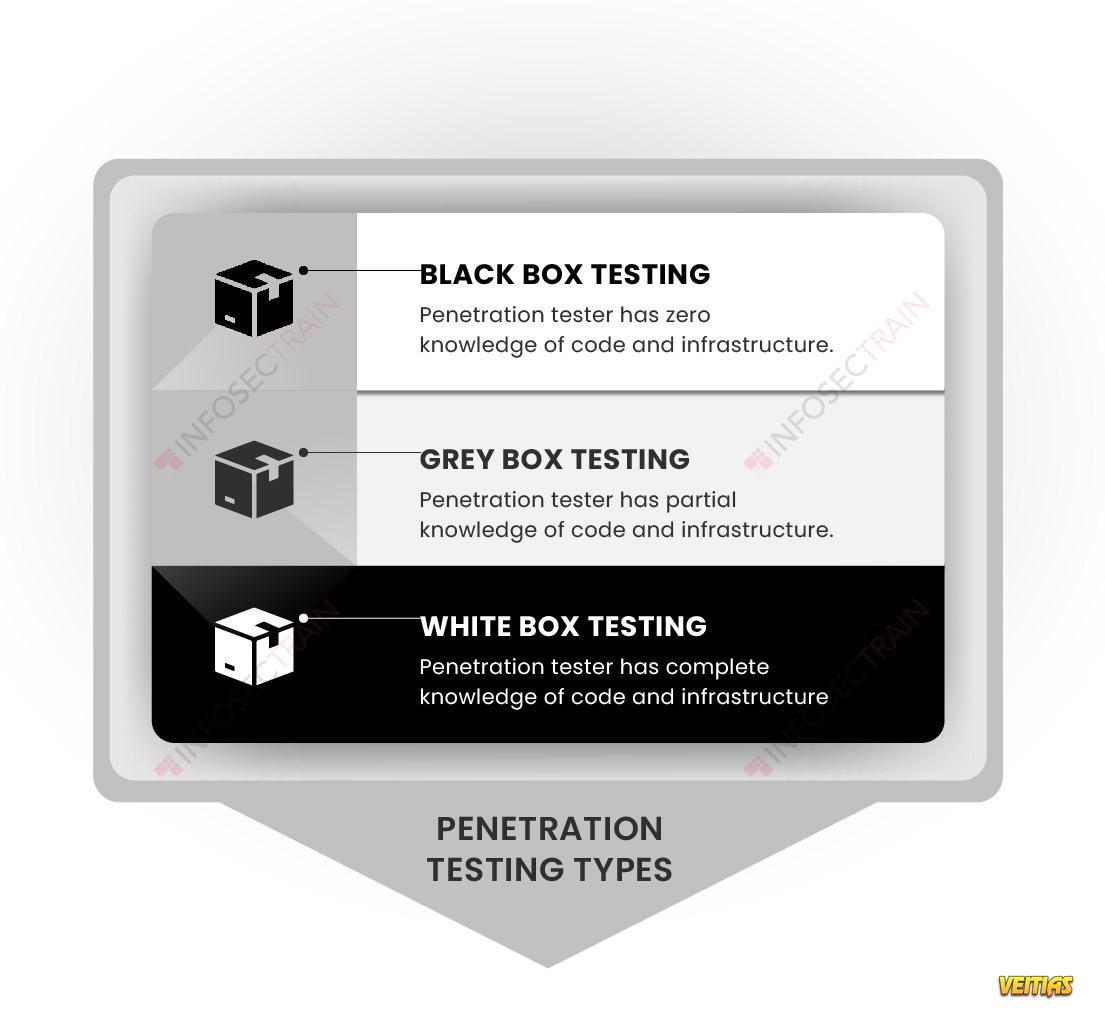
    This infographic explains the three main types of penetration testing: Black Box, Grey Box, and White Box testing. It highlights how each approach differs based on the tester’s level of knowledge about the system, helping organizations choose the right testing method to identify security vulnerabilities, strengthen defenses, and improve overall cybersecurity posture.

    #PenetrationTesting #BlackBoxTesting #GreyBoxTesting #WhiteBoxTesting #CyberSecurity #EthicalHacking #SecurityTesting #VulnerabilityAssessment #AppSecurity #NetworkSecurity
    Black Box vs Grey Box vs White Box Penetration Testing Explained This infographic explains the three main types of penetration testing: Black Box, Grey Box, and White Box testing. It highlights how each approach differs based on the tester’s level of knowledge about the system, helping organizations choose the right testing method to identify security vulnerabilities, strengthen defenses, and improve overall cybersecurity posture. #PenetrationTesting #BlackBoxTesting #GreyBoxTesting #WhiteBoxTesting #CyberSecurity #EthicalHacking #SecurityTesting #VulnerabilityAssessment #AppSecurity #NetworkSecurity
    0 Commentarii 0 Distribuiri 330 Views 0 previzualizare
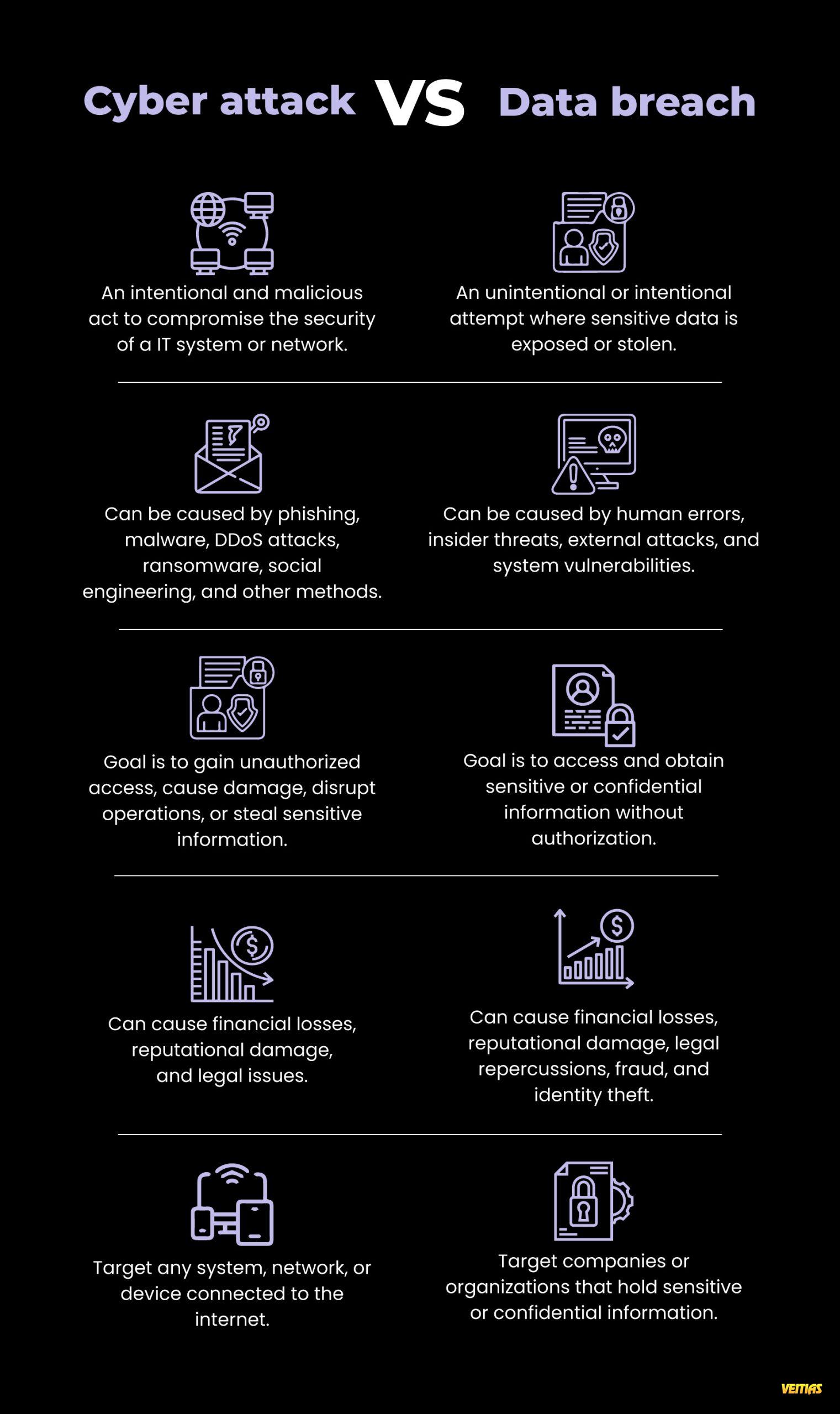
  • Cyber Attack vs Data Breach: Understanding the Key Differences

    This infographic explains the clear differences between a cyber attack and a data breach by comparing intent, causes, objectives, impact, and targets. A cyber attack is a deliberate and malicious attempt to compromise systems, disrupt operations, or gain unauthorized access, often through phishing, malware, ransomware, or DDoS attacks. A data breach, on the other hand, focuses on the exposure or theft of sensitive data, which can occur due to human error, insider threats, system vulnerabilities, or external attacks. Understanding these distinctions helps organizations strengthen security strategies, improve incident response, and reduce financial, legal, and reputational risks.

    #CyberAttack #DataBreach #CyberSecurity #InformationSecurity #RiskManagement #IncidentResponse #DataProtection #NetworkSecurity #Compliance #ThreatAwareness
    Cyber Attack vs Data Breach: Understanding the Key Differences This infographic explains the clear differences between a cyber attack and a data breach by comparing intent, causes, objectives, impact, and targets. A cyber attack is a deliberate and malicious attempt to compromise systems, disrupt operations, or gain unauthorized access, often through phishing, malware, ransomware, or DDoS attacks. A data breach, on the other hand, focuses on the exposure or theft of sensitive data, which can occur due to human error, insider threats, system vulnerabilities, or external attacks. Understanding these distinctions helps organizations strengthen security strategies, improve incident response, and reduce financial, legal, and reputational risks. #CyberAttack #DataBreach #CyberSecurity #InformationSecurity #RiskManagement #IncidentResponse #DataProtection #NetworkSecurity #Compliance #ThreatAwareness
    0 Commentarii 0 Distribuiri 260 Views 0 previzualizare
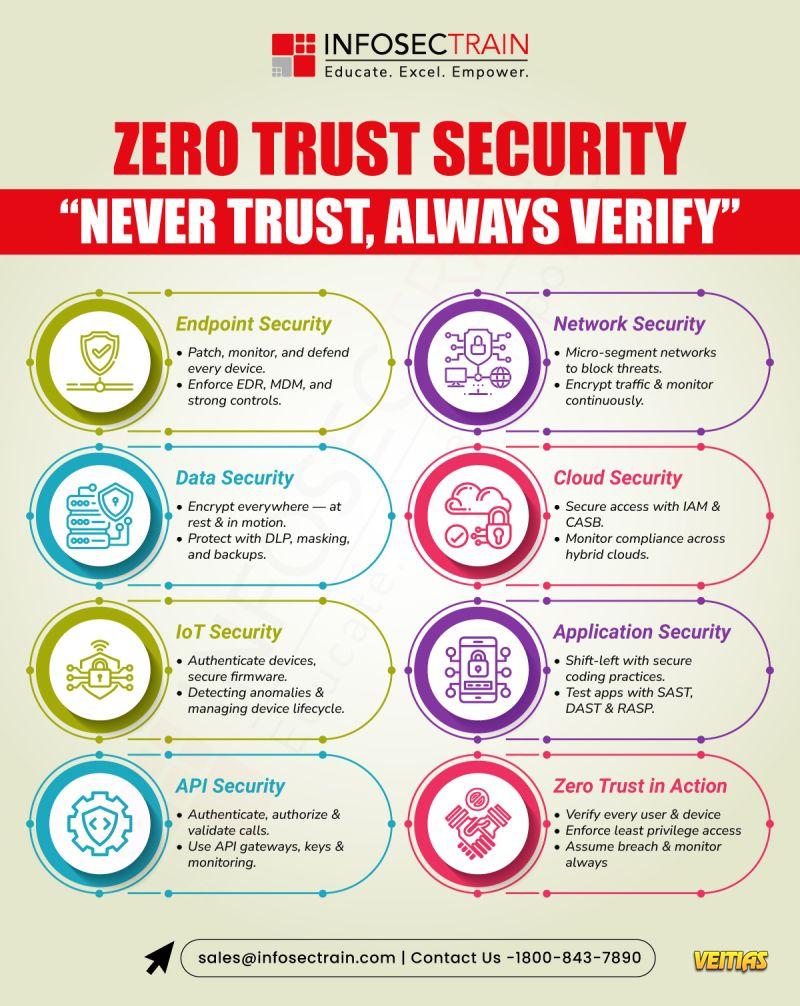
  • 𝐙𝐞𝐫𝐨 𝐓𝐫𝐮𝐬𝐭 𝐒𝐞𝐜𝐮𝐫𝐢𝐭𝐲 — “𝐍𝐞𝐯𝐞𝐫 𝐓𝐫𝐮𝐬𝐭, 𝐀𝐥𝐰𝐚𝐲𝐬 𝐕𝐞𝐫𝐢𝐟𝐲.”

    Perimeter defenses are no longer enough. Zero Trust protects every layer — 𝐮𝐬𝐞𝐫𝐬, 𝐝𝐞𝐯𝐢𝐜𝐞𝐬, 𝐝𝐚𝐭𝐚, 𝐚𝐧𝐝 𝐚𝐩𝐩𝐬 — through continuous verification and least privilege access.

    𝐄𝐧𝐝𝐩𝐨𝐢𝐧𝐭𝐬: Patch, monitor, defend with EDR & MDM
    𝐍𝐞𝐭𝐰𝐨𝐫𝐤: Micro-segment & encrypt traffic
    𝐃𝐚𝐭𝐚: Encrypt, back up, and apply DLP
    𝐂𝐥𝐨𝐮𝐝: Control access with IAM & CASB
    𝐀𝐩𝐩𝐬 & 𝐀𝐏𝐈𝐬: Secure code, test, and validate every call

    Assume breach. Verify everything. Trust nothing.

    #ZeroTrust #CyberSecurity #InfoSec #NetworkSecurity #LeastPrivilege #IdentitySecurity #SecurityArchitecture #ZeroTrustModel #CyberDefense #DataProtection #InfosecTrain
    🔐 𝐙𝐞𝐫𝐨 𝐓𝐫𝐮𝐬𝐭 𝐒𝐞𝐜𝐮𝐫𝐢𝐭𝐲 — “𝐍𝐞𝐯𝐞𝐫 𝐓𝐫𝐮𝐬𝐭, 𝐀𝐥𝐰𝐚𝐲𝐬 𝐕𝐞𝐫𝐢𝐟𝐲.” Perimeter defenses are no longer enough. Zero Trust protects every layer — 𝐮𝐬𝐞𝐫𝐬, 𝐝𝐞𝐯𝐢𝐜𝐞𝐬, 𝐝𝐚𝐭𝐚, 𝐚𝐧𝐝 𝐚𝐩𝐩𝐬 — through continuous verification and least privilege access. 💻 𝐄𝐧𝐝𝐩𝐨𝐢𝐧𝐭𝐬: Patch, monitor, defend with EDR & MDM 🌐 𝐍𝐞𝐭𝐰𝐨𝐫𝐤: Micro-segment & encrypt traffic 🧩 𝐃𝐚𝐭𝐚: Encrypt, back up, and apply DLP ☁️ 𝐂𝐥𝐨𝐮𝐝: Control access with IAM & CASB 🧱 𝐀𝐩𝐩𝐬 & 𝐀𝐏𝐈𝐬: Secure code, test, and validate every call Assume breach. Verify everything. Trust nothing. #ZeroTrust #CyberSecurity #InfoSec #NetworkSecurity #LeastPrivilege #IdentitySecurity #SecurityArchitecture #ZeroTrustModel #CyberDefense #DataProtection #InfosecTrain
    0 Commentarii 0 Distribuiri 5655 Views 0 previzualizare
  • Think Your Internal Network Is Safe? Think Again. LLMNR Might Be Your Silent Weak Spot!

    Most teams overlook it… but LLMNR (Link-Local Multicast Name Resolution) is one of the easiest ways attackers steal credentials inside internal networks.

    In this video, we break down:
    What LLMNR is & why it exists
    How attackers abuse it for credential harvesting
    Real-world techniques like MitM + spoofing
    How SOC teams and defenders can detect & prevent LLMNR attacks

    Watch Here: https://youtu.be/tw0Q_oIt0kg?si=Np1tX65Q7gL2daEG

    #LLMNR #NetworkSecurity #InfosecTrain #EthicalHacking #ResponderTool #ManInTheMiddleAttack #CredentialHarvesting #CyberSecurityTraining #RedTeam #BlueTeam
    Think Your Internal Network Is Safe? Think Again. LLMNR Might Be Your Silent Weak Spot! Most teams overlook it… but LLMNR (Link-Local Multicast Name Resolution) is one of the easiest ways attackers steal credentials inside internal networks. In this video, we break down: 🔹 What LLMNR is & why it exists 🔹 How attackers abuse it for credential harvesting 🔹 Real-world techniques like MitM + spoofing 🔹 How SOC teams and defenders can detect & prevent LLMNR attacks Watch Here: https://youtu.be/tw0Q_oIt0kg?si=Np1tX65Q7gL2daEG #LLMNR #NetworkSecurity #InfosecTrain #EthicalHacking #ResponderTool #ManInTheMiddleAttack #CredentialHarvesting #CyberSecurityTraining #RedTeam #BlueTeam
    0 Commentarii 0 Distribuiri 5276 Views 0 previzualizare
  • From Legacy VPNs to Zero Trust: The Future of Secure Access

    That’s where Zero Trust steps in.
    Never trust, always verify
    Continuous authentication
    Least-privilege access
    Microsegmentation to contain threats

    𝐑𝐞𝐚𝐝 𝐦𝐨𝐫𝐞 𝐡𝐞𝐫𝐞: https://www.infosectrain.com/blog/legacy-vpn-access-vs-zero-trust/

    Studies show organizations using Zero Trust save $1.76M on average in breach costs.

    Ready to move beyond outdated VPNs and build a resilient, modern security framework?

    Join InfosecTrain’s CCZT Training and master the future of cybersecurity!

    #ZeroTrust #CyberSecurity #NetworkSecurity #VPN #DataProtection #InfosecTrain #CCZT #CyberAwareness #InfoSec #SecurityTraining #ZeroTrustArchitecture #ITSecurity #CyberDefense
    From Legacy VPNs to Zero Trust: The Future of Secure Access That’s where Zero Trust steps in. ✅ Never trust, always verify ✅ Continuous authentication ✅ Least-privilege access ✅ Microsegmentation to contain threats 👉𝐑𝐞𝐚𝐝 𝐦𝐨𝐫𝐞 𝐡𝐞𝐫𝐞: https://www.infosectrain.com/blog/legacy-vpn-access-vs-zero-trust/ 💡 Studies show organizations using Zero Trust save $1.76M on average in breach costs. Ready to move beyond outdated VPNs and build a resilient, modern security framework? 👉 Join InfosecTrain’s CCZT Training and master the future of cybersecurity! #ZeroTrust #CyberSecurity #NetworkSecurity #VPN #DataProtection #InfosecTrain #CCZT #CyberAwareness #InfoSec #SecurityTraining #ZeroTrustArchitecture #ITSecurity #CyberDefense
    WWW.INFOSECTRAIN.COM
    Legacy VPN Access vs. Zero Trust
    Legacy VPN (Virtual Private Network) access is a traditional security model that provides remote users with access to a private network. It is based on a "castle-and-moat" security philosophy.
    0 Commentarii 0 Distribuiri 4856 Views 0 previzualizare
  • DoS vs DDoS | What’s the Real Difference?

    In this video, we explain:
    What is a DoS attack and how it works
    What makes a DDoS attack more powerful and harder to stop
    Real-world attack examples and case studies
    Prevention and mitigation techniques every cybersecurity pro should know

    Watch Here: https://youtu.be/c84v3CineAc?si=o_iCSVO4UQvUpCAy

    #DoSAttack #DDoSAttack #CyberSecurityAwareness #InfosecTrain #NetworkSecurity #CyberThreats #DDoSMitigation #DenialOfService #CyberAttackExplained #SecurityTraining
    DoS vs DDoS | What’s the Real Difference? In this video, we explain: ✅ What is a DoS attack and how it works ✅ What makes a DDoS attack more powerful and harder to stop ✅ Real-world attack examples and case studies ✅ Prevention and mitigation techniques every cybersecurity pro should know Watch Here: https://youtu.be/c84v3CineAc?si=o_iCSVO4UQvUpCAy #DoSAttack #DDoSAttack #CyberSecurityAwareness #InfosecTrain #NetworkSecurity #CyberThreats #DDoSMitigation #DenialOfService #CyberAttackExplained #SecurityTraining
    0 Commentarii 0 Distribuiri 6357 Views 0 previzualizare
  • What is Packet Capture (PCAP)?

    PCAP is the backbone of network visibility and cybersecurity defense.

    Read Here: https://infosec-train.blogspot.com/2025/11/what-is-packet-capture-pcap.html

    #CyberSecurity #NetworkAnalysis #PCAP #Wireshark #NetworkSecurity #InfoSec #CyberAwareness #TechTools #EthicalHacking #InfoSecTrain
    What is Packet Capture (PCAP)? PCAP is the backbone of network visibility and cybersecurity defense. Read Here: https://infosec-train.blogspot.com/2025/11/what-is-packet-capture-pcap.html #CyberSecurity #NetworkAnalysis #PCAP #Wireshark #NetworkSecurity #InfoSec #CyberAwareness #TechTools #EthicalHacking #InfoSecTrain
    INFOSEC-TRAIN.BLOGSPOT.COM
    What is Packet Capture (PCAP)?
    What is Packet Capture (PCAP)? What happens when you browse a website or send an email? Packet Capture , or PCAP, is like having a special t...
    0 Commentarii 0 Distribuiri 5114 Views 0 previzualizare
Sponsorizeaza Paginile