
• What is Sender Policy Framework (SPF)?

    Ever wondered how email servers know whether a message is legit or fake?That’s where Sender Policy Framework (SPF) steps in.

    How SPF Helps:
    Verifies legitimate sending servers via DNS records
    Blocks cybercriminals from impersonating trusted domains
    Protects brand reputation and email communication integrity
    Reduces phishing and email spoofing attacks

    Read more: https://infosec-train.blogspot.com/2026/01/what-is-sender-policy-framework-spf.html

    #EmailSecurity #SPF #CyberSecurity #PhishingPrevention #EmailAuthentication #InfoSec #DMARC #DKIM #infosectrain
    What is Sender Policy Framework (SPF)? Ever wondered how email servers know whether a message is legit or fake?That’s where Sender Policy Framework (SPF) steps in. 🔍 How SPF Helps: ✔️ Verifies legitimate sending servers via DNS records ✔️ Blocks cybercriminals from impersonating trusted domains ✔️ Protects brand reputation and email communication integrity ✔️ Reduces phishing and email spoofing attacks Read more: https://infosec-train.blogspot.com/2026/01/what-is-sender-policy-framework-spf.html #EmailSecurity #SPF #CyberSecurity #PhishingPrevention #EmailAuthentication #InfoSec #DMARC #DKIM #infosectrain
    INFOSEC-TRAIN.BLOGSPOT.COM
    What is Sender Policy Framework (SPF)?
    As cyber threats grow more sophisticated, emails have become both a powerful tool and a potential vulnerability. While they keep us connecte...
    0 Commentarios 0 Acciones 6515 Views 0 Vista previa
  • Think Your Internal Network Is Safe? Think Again. LLMNR Might Be Your Silent Weak Spot!

    Most teams overlook it… but LLMNR (Link-Local Multicast Name Resolution) is one of the easiest ways attackers steal credentials inside internal networks.

    In this video, we break down:
    What LLMNR is & why it exists
    How attackers abuse it for credential harvesting
    Real-world techniques like MitM + spoofing
    How SOC teams and defenders can detect & prevent LLMNR attacks

    Watch Here: https://youtu.be/tw0Q_oIt0kg?si=Np1tX65Q7gL2daEG

    #LLMNR #NetworkSecurity #InfosecTrain #EthicalHacking #ResponderTool #ManInTheMiddleAttack #CredentialHarvesting #CyberSecurityTraining #RedTeam #BlueTeam
    Think Your Internal Network Is Safe? Think Again. LLMNR Might Be Your Silent Weak Spot! Most teams overlook it… but LLMNR (Link-Local Multicast Name Resolution) is one of the easiest ways attackers steal credentials inside internal networks. In this video, we break down: 🔹 What LLMNR is & why it exists 🔹 How attackers abuse it for credential harvesting 🔹 Real-world techniques like MitM + spoofing 🔹 How SOC teams and defenders can detect & prevent LLMNR attacks Watch Here: https://youtu.be/tw0Q_oIt0kg?si=Np1tX65Q7gL2daEG #LLMNR #NetworkSecurity #InfosecTrain #EthicalHacking #ResponderTool #ManInTheMiddleAttack #CredentialHarvesting #CyberSecurityTraining #RedTeam #BlueTeam
    0 Commentarios 0 Acciones 8547 Views 0 Vista previa
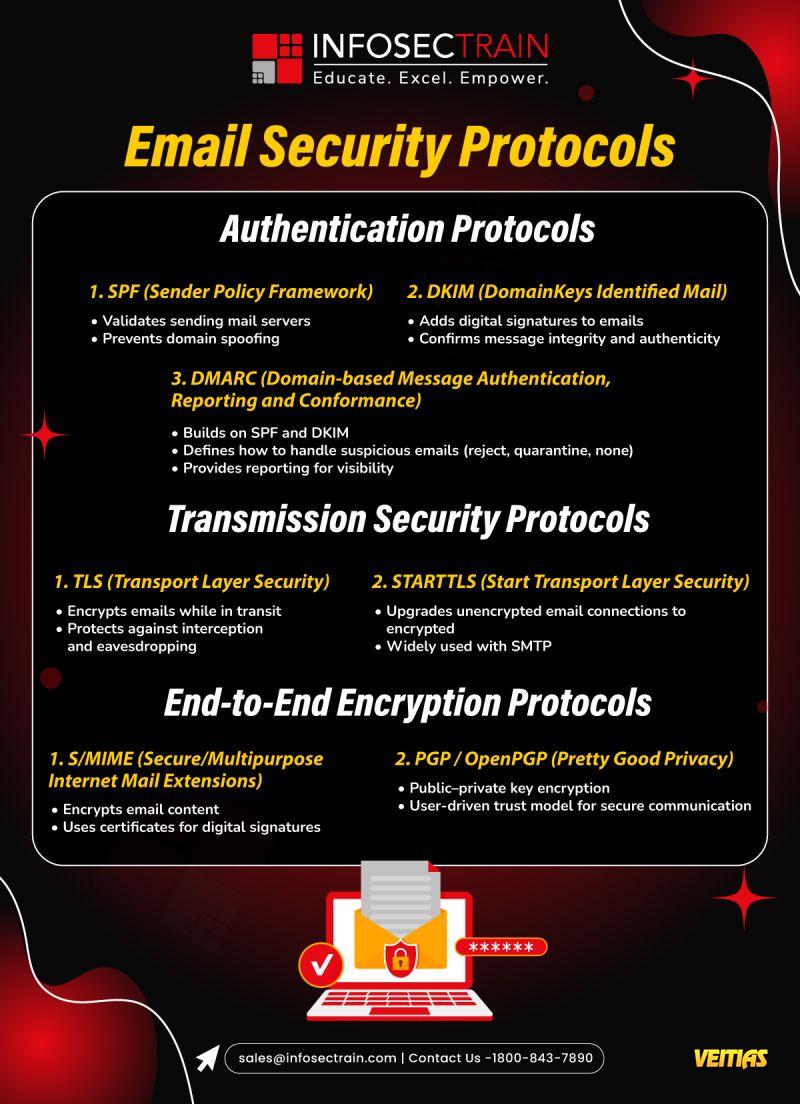
  • Keep Your Inbox Safe: Master Email Security Protocols!

    Did you know that email is one of the most targeted attack vectors for hackers? From phishing scams to data breaches, unsecured emails can expose sensitive business and personal information.

    That’s why Email Security Protocols are your first line of defense.

    Key Protocols You Should Know:
    Authentication Protocols – SPF, DKIM, DMARC (Stop spoofing & ensure authenticity)
    Transmission Security Protocols – TLS, STARTTLS (Encrypt emails in transit)
    End-to-End Encryption Protocols – S/MIME, PGP (Protect content with encryption & signatures)

    Together, these protocols shield your emails from interception, forgery, and unauthorized access.

    Learn more about strengthening your email security: www.infosectrain.com

    #CyberSecurityAwareness #EmailSecurity #PhishingProtection #InfoSec #CyberDefense #SecureEmail #DataProtection #OnlineSafety #CyberHygiene #SPF #DKIM #DMARC #Encryption #InfoSecTrain
    📧🔐 Keep Your Inbox Safe: Master Email Security Protocols! Did you know that email is one of the most targeted attack vectors for hackers? From phishing scams to data breaches, unsecured emails can expose sensitive business and personal information. That’s why Email Security Protocols are your first line of defense. ✨ Key Protocols You Should Know: ✅ Authentication Protocols – SPF, DKIM, DMARC (Stop spoofing & ensure authenticity) ✅ Transmission Security Protocols – TLS, STARTTLS (Encrypt emails in transit) ✅ End-to-End Encryption Protocols – S/MIME, PGP (Protect content with encryption & signatures) 💡 Together, these protocols shield your emails from interception, forgery, and unauthorized access. 🔗 Learn more about strengthening your email security: www.infosectrain.com #CyberSecurityAwareness #EmailSecurity #PhishingProtection #InfoSec #CyberDefense #SecureEmail #DataProtection #OnlineSafety #CyberHygiene #SPF #DKIM #DMARC #Encryption #InfoSecTrain
    0 Commentarios 0 Acciones 16689 Views 0 Vista previa
  • DNS Spoofing vs. MITM Attack

    Cybercriminals don’t break in through doors, they sneak in through your internet connection.

    Whatever you do online on a daily basis - visiting a website, buying something online or linking to a Wi-Fi network - each may seem harmless, but this is just one way to open serious risks. What you may not realize is you may be giving away sensitive data to a hacker.

    This is the key idea of DNS Spoofing & Man-in-the-Middle (MITM) attacks; they are cyber tricks that redirect your traffic or intercept your communication without your knowledge.

    Read the detailed breakdown here: https://www.infosectrain.com/blog/dns-spoofing-vs-mitm-attack/

    Through awareness of always checking for HTTPS connections, having strong authentication and implementing security measures like encryption and DNSSEC, both individuals and organizations are able to greatly reduce their risk of becoming victim to these attacks.

    #CyberSecurity #DNSSpoofing #MITM #DataProtection #InfoSec #CyberAwareness #Encryption #OnlineSafety
    DNS Spoofing vs. MITM Attack Cybercriminals don’t break in through doors, they sneak in through your internet connection. 👉 Whatever you do online on a daily basis - visiting a website, buying something online or linking to a Wi-Fi network - each may seem harmless, but this is just one way to open serious risks. What you may not realize is you may be giving away sensitive data to a hacker. 👉 This is the key idea of DNS Spoofing & Man-in-the-Middle (MITM) attacks; they are cyber tricks that redirect your traffic or intercept your communication without your knowledge. 🔗 Read the detailed breakdown here: https://www.infosectrain.com/blog/dns-spoofing-vs-mitm-attack/ ✅ Through awareness of always checking for HTTPS connections, having strong authentication and implementing security measures like encryption and DNSSEC, both individuals and organizations are able to greatly reduce their risk of becoming victim to these attacks. #CyberSecurity #DNSSpoofing #MITM #DataProtection #InfoSec #CyberAwareness #Encryption #OnlineSafety
    WWW.INFOSECTRAIN.COM
    DNS Spoofing vs. MITM Attack
    Explore the differences between DNS Spoofing and MITM Attacks. Learn how each exploits vulnerabilities and their impact on network security in this in-depth comparison.
    0 Commentarios 0 Acciones 7376 Views 0 Vista previa
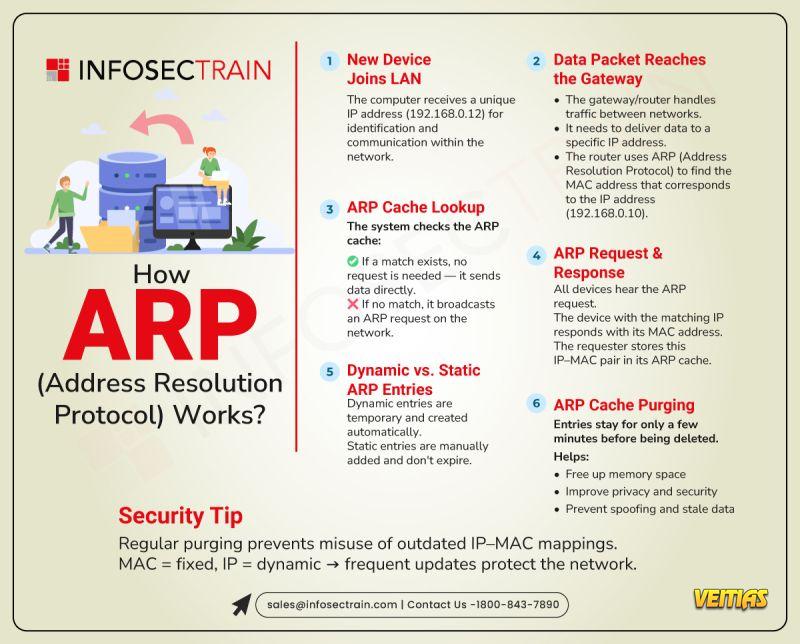
  • How ARP Works? (Address Resolution Protocol)

    Ever wondered how your device finds the right MAC address for an IP?

    Here’s a quick breakdown of what happens behind the scenes when you join a network!

    Key Steps:
    1⃣ New device joins the LAN
    2⃣ Gateway receives the data packet
    3⃣ ARP cache is checked
    4⃣ ARP request is sent if no match
    5⃣ Dynamic vs. Static ARP entries explained
    6⃣ Cache purging ensures performance & security

    Security Tip: Regular ARP cache purging helps prevent spoofing and stale data attacks!

    Learn more with InfosecTrain: https://www.infosectrain.com/events/

    #ARP #NetworkSecurity #CyberSecurityBasics #AddressResolutionProtocol #InfosecTrain #CyberEducation #ITNetworking #SecurityTips #NetworkProtocols #LearnCyberSecurity
    How ARP Works? (Address Resolution Protocol) Ever wondered how your device finds the right MAC address for an IP? Here’s a quick breakdown of what happens behind the scenes when you join a network! Key Steps: 1⃣ New device joins the LAN 2⃣ Gateway receives the data packet 3⃣ ARP cache is checked 4⃣ ARP request is sent if no match 5⃣ Dynamic vs. Static ARP entries explained 6⃣ Cache purging ensures performance & security Security Tip: Regular ARP cache purging helps prevent spoofing and stale data attacks! 📩 Learn more with InfosecTrain: https://www.infosectrain.com/events/ #ARP #NetworkSecurity #CyberSecurityBasics #AddressResolutionProtocol #InfosecTrain #CyberEducation #ITNetworking #SecurityTips #NetworkProtocols #LearnCyberSecurity
    0 Commentarios 0 Acciones 7847 Views 0 Vista previa
  • Best Network Sniffing Techniques

    Here are 7 powerful techniques used in both attacks and ethical hacking:
    Packet Capture & Analysis
    ARP Spoofing
    DNS Spoofing
    MAC Flooding
    DHCP Spoofing
    Wi-Fi Sniffing
    SSL Stripping

    Read Here: https://medium.com/@Infosec-Train/best-network-sniffing-techniques-68b3fc5f5de0

    #CyberSecurity #NetworkSniffing #EthicalHacking #PenetrationTesting #ARPspoofing #DNSspoofing #SSLstripping #InfosecTrain #RedTeam #NetworkSecurity #PacketCapture #CyberAwareness #BlueTeam #InfoSecTips
    Best Network Sniffing Techniques Here are 7 powerful techniques used in both attacks and ethical hacking: 🔹 Packet Capture & Analysis 🔹 ARP Spoofing 🔹 DNS Spoofing 🔹 MAC Flooding 🔹 DHCP Spoofing 🔹 Wi-Fi Sniffing 🔹 SSL Stripping Read Here: https://medium.com/@Infosec-Train/best-network-sniffing-techniques-68b3fc5f5de0 #CyberSecurity #NetworkSniffing #EthicalHacking #PenetrationTesting #ARPspoofing #DNSspoofing #SSLstripping #InfosecTrain #RedTeam #NetworkSecurity #PacketCapture #CyberAwareness #BlueTeam #InfoSecTips
    0 Commentarios 0 Acciones 9828 Views 0 Vista previa
  • Beginner’s Guide to Sniffing with Arpspoof

    Arpspoof, like many cybersecurity tools, walks a fine line between ethical use and abuse. The key distinction lies in intent and authorization. The guide emphasizes responsible use: only run ARP spoofing activities in environments where you have explicit permission to test.

    Read the full article here https://www.infosectrain.com/blog/beginners-guide-to-sniffing-with-arpspoof/

    #Arpspoof #EthicalHacking #PenTesting #CyberSecurity #NetworkSecurity #ARPspoofing #InfosecTrain #KaliLinux #Wireshark #EthicalHackerTools
    Beginner’s Guide to Sniffing with Arpspoof Arpspoof, like many cybersecurity tools, walks a fine line between ethical use and abuse. The key distinction lies in intent and authorization. The guide emphasizes responsible use: only run ARP spoofing activities in environments where you have explicit permission to test. Read the full article here 👉 https://www.infosectrain.com/blog/beginners-guide-to-sniffing-with-arpspoof/ #Arpspoof #EthicalHacking #PenTesting #CyberSecurity #NetworkSecurity #ARPspoofing #InfosecTrain #KaliLinux #Wireshark #EthicalHackerTools
    WWW.INFOSECTRAIN.COM
    Beginner’s Guide to Sniffing with Arpspoof
    Learn the basics of network sniffing using Arpspoof in this beginner-friendly guide. Understand ARP spoofing, packet interception, and ethical hacking techniques with step-by-step examples.
    0 Commentarios 0 Acciones 7917 Views 0 Vista previa
  • Learn MAC Address Spoofing with Macchanger

    Ever wondered how hackers mask their identity on a network? One popular technique is MAC address spoofing and with a powerful yet simple tool called Macchanger.

    Learning tools like Macchanger is a fantastic first step into the world of ethical hacking and network security. By understanding how these techniques work, you're better equipped to defend against them.

    Read more: https://www.infosectrain.com/blog/spoofing-mac-address-using-macchanger-tool-a-practical-guide/

    Always get proper authorization before attempting any network activity.

    #EthicalHacking #MacChanger #LinuxTools #NetworkSecurity #MACSpoofing #CyberSecurity #HackTheBox #InfoSec #RedTeam #CyberAwareness #MacAddressSpoofing #PenTestingTips #TechTutorials #InfosecTrain
    Learn MAC Address Spoofing with Macchanger Ever wondered how hackers mask their identity on a network? One popular technique is MAC address spoofing and with a powerful yet simple tool called Macchanger. ➡️ Learning tools like Macchanger is a fantastic first step into the world of ethical hacking and network security. By understanding how these techniques work, you're better equipped to defend against them. 👉 Read more: https://www.infosectrain.com/blog/spoofing-mac-address-using-macchanger-tool-a-practical-guide/ 👉 Always get proper authorization before attempting any network activity. #EthicalHacking #MacChanger #LinuxTools #NetworkSecurity #MACSpoofing #CyberSecurity #HackTheBox #InfoSec #RedTeam #CyberAwareness #MacAddressSpoofing #PenTestingTips #TechTutorials #InfosecTrain
    WWW.INFOSECTRAIN.COM
    Spoofing MAC Address Using Macchanger Tool: A Practical Guide
    A MAC address (Media Access Control address) is a unique, 12-digit hexadecimal identifier hardcoded into a device’s Network Interface Card (NIC).
    0 Commentarios 0 Acciones 6838 Views 0 Vista previa
  • Ever wondered what Network Sniffing is all about?

    Network sniffing plays a vital role in cybersecurity, helping professionals monitor and analyze traffic to detect vulnerabilities and potential threats.

    Here are some popular sniffing techniques used in ethical hacking:
    Packet Capture & Analysis with tools like Wireshark
    ARP Spoofing to simulate MITM attacks
    DNS & DHCP Spoofing to redirect traffic
    MAC Flooding to access data on switched networks
    Wi-Fi Sniffing for wireless traffic audits
    SSL Stripping to test HTTPS enforcement

    Read more: https://medium.com/@Infosec-Train/best-network-sniffing-techniques-68b3fc5f5de0

    #NetworkSniffing #EthicalHacking #CyberSecurity #Wireshark #PenTesting #NetworkSecurity #Infosec #ARPSpoofing #DHCP #CyberSkills #InfoSecTrain
    Ever wondered what Network Sniffing is all about? Network sniffing plays a vital role in cybersecurity, helping professionals monitor and analyze traffic to detect vulnerabilities and potential threats. Here are some popular sniffing techniques used in ethical hacking: 🔹 Packet Capture & Analysis with tools like Wireshark 🔹 ARP Spoofing to simulate MITM attacks 🔹 DNS & DHCP Spoofing to redirect traffic 🔹 MAC Flooding to access data on switched networks 🔹 Wi-Fi Sniffing for wireless traffic audits 🔹 SSL Stripping to test HTTPS enforcement Read more: https://medium.com/@Infosec-Train/best-network-sniffing-techniques-68b3fc5f5de0 #NetworkSniffing #EthicalHacking #CyberSecurity #Wireshark #PenTesting #NetworkSecurity #Infosec #ARPSpoofing #DHCP #CyberSkills #InfoSecTrain
    0 Commentarios 0 Acciones 7301 Views 0 Vista previa
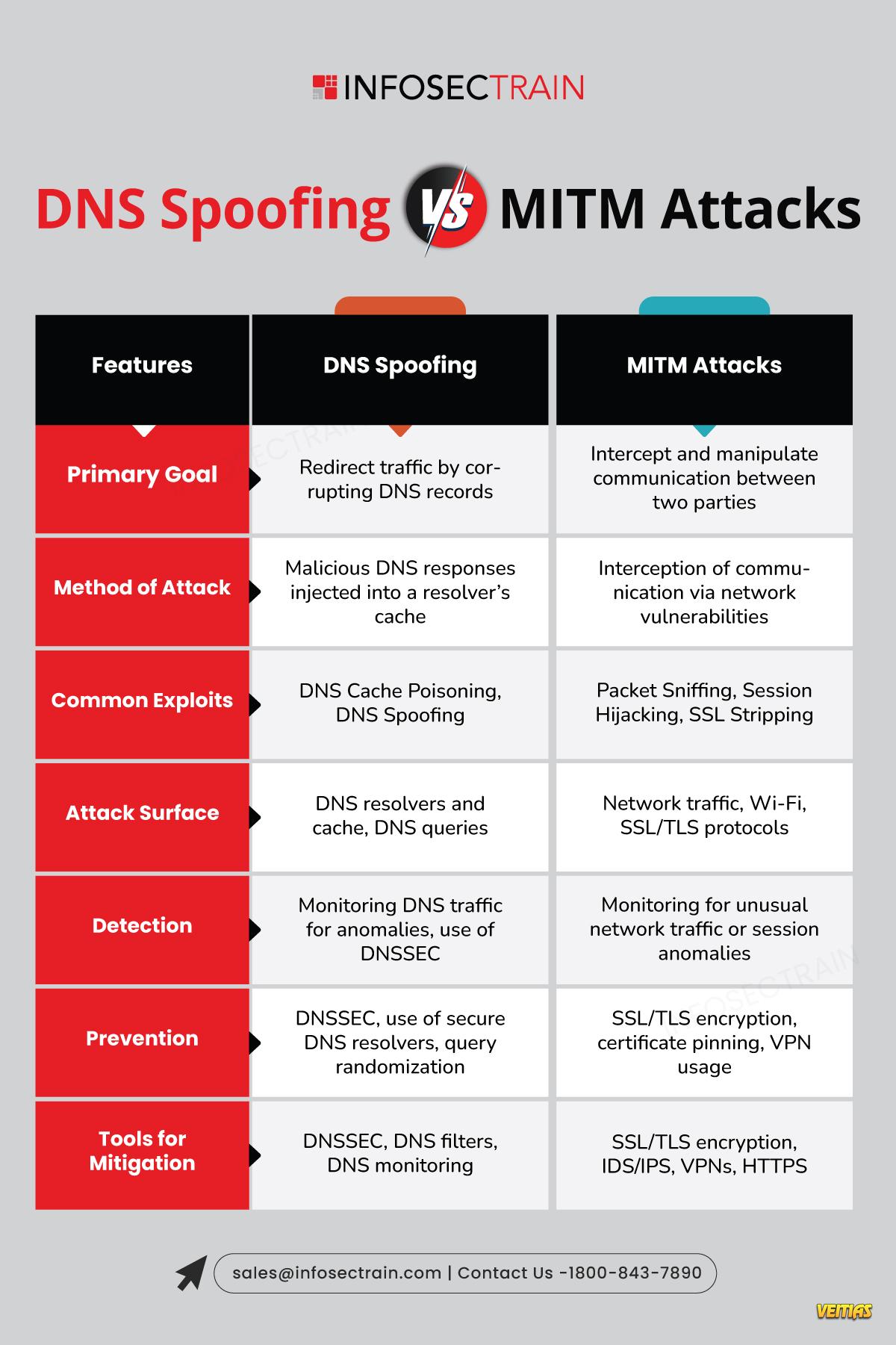
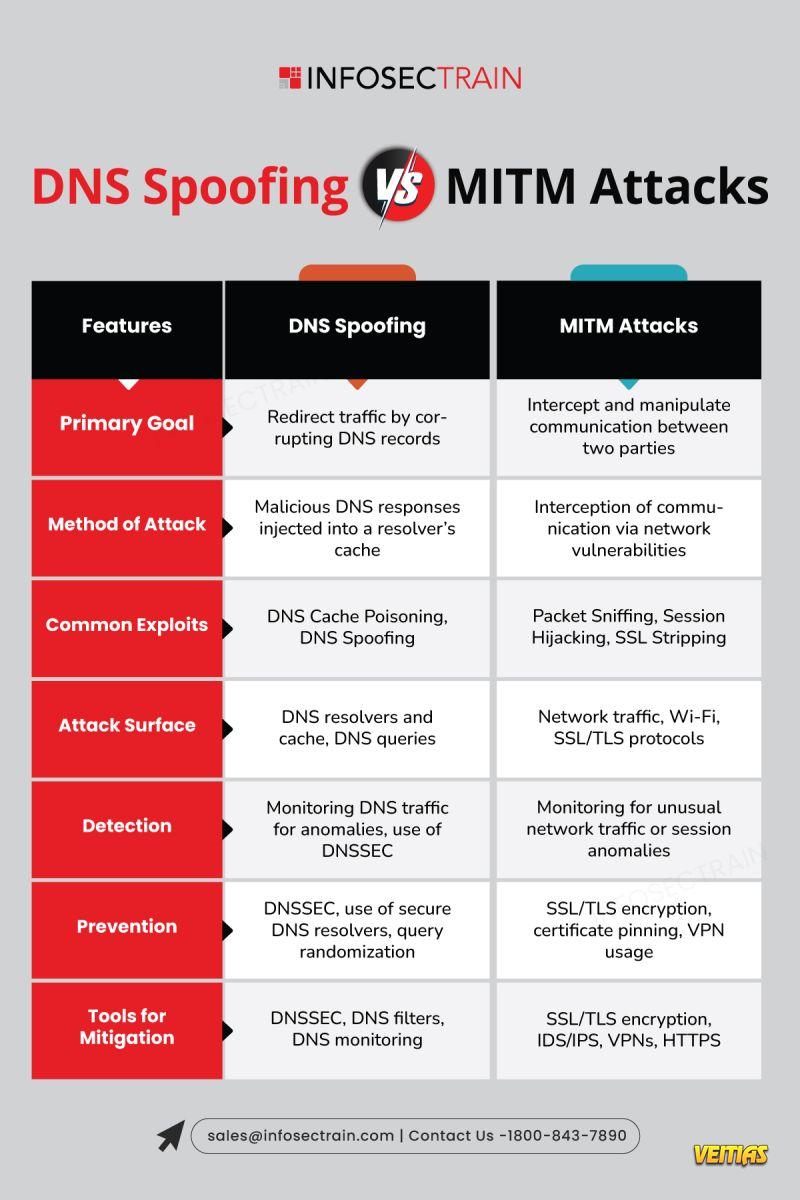
  • DNS Spoofing vs MITM Attacks: Know the Difference

    Understand the key differences between DNS Spoofing and Man-in-the-Middle (MITM) Attacks with this insightful infographic. Learn how attackers exploit vulnerabilities in DNS systems to redirect users or intercept communications to eavesdrop and manipulate data. Discover the risks, methods, and preventive measures to safeguard your network from these common cyber threats. Stay informed and protect your digital assets effectively!

    Visit our Site: - https://www.infosectrain.com/

    #DNSSpoofing #MITMAttacks #CyberSecurity #InfoSec #NetworkSecurity #PhishingProtection #CyberThreats #ManInTheMiddle #DNSAttacks #DigitalDefense hashtag#TechAwareness #DataIntegrity
    DNS Spoofing vs MITM Attacks: Know the Difference 🌐🔐 Understand the key differences between DNS Spoofing and Man-in-the-Middle (MITM) Attacks with this insightful infographic. Learn how attackers exploit vulnerabilities in DNS systems to redirect users or intercept communications to eavesdrop and manipulate data. Discover the risks, methods, and preventive measures to safeguard your network from these common cyber threats. Stay informed and protect your digital assets effectively! Visit our Site: - https://www.infosectrain.com/ #DNSSpoofing #MITMAttacks #CyberSecurity #InfoSec #NetworkSecurity #PhishingProtection #CyberThreats #ManInTheMiddle #DNSAttacks #DigitalDefense hashtag#TechAwareness #DataIntegrity
    0 Commentarios 0 Acciones 27883 Views 0 Vista previa
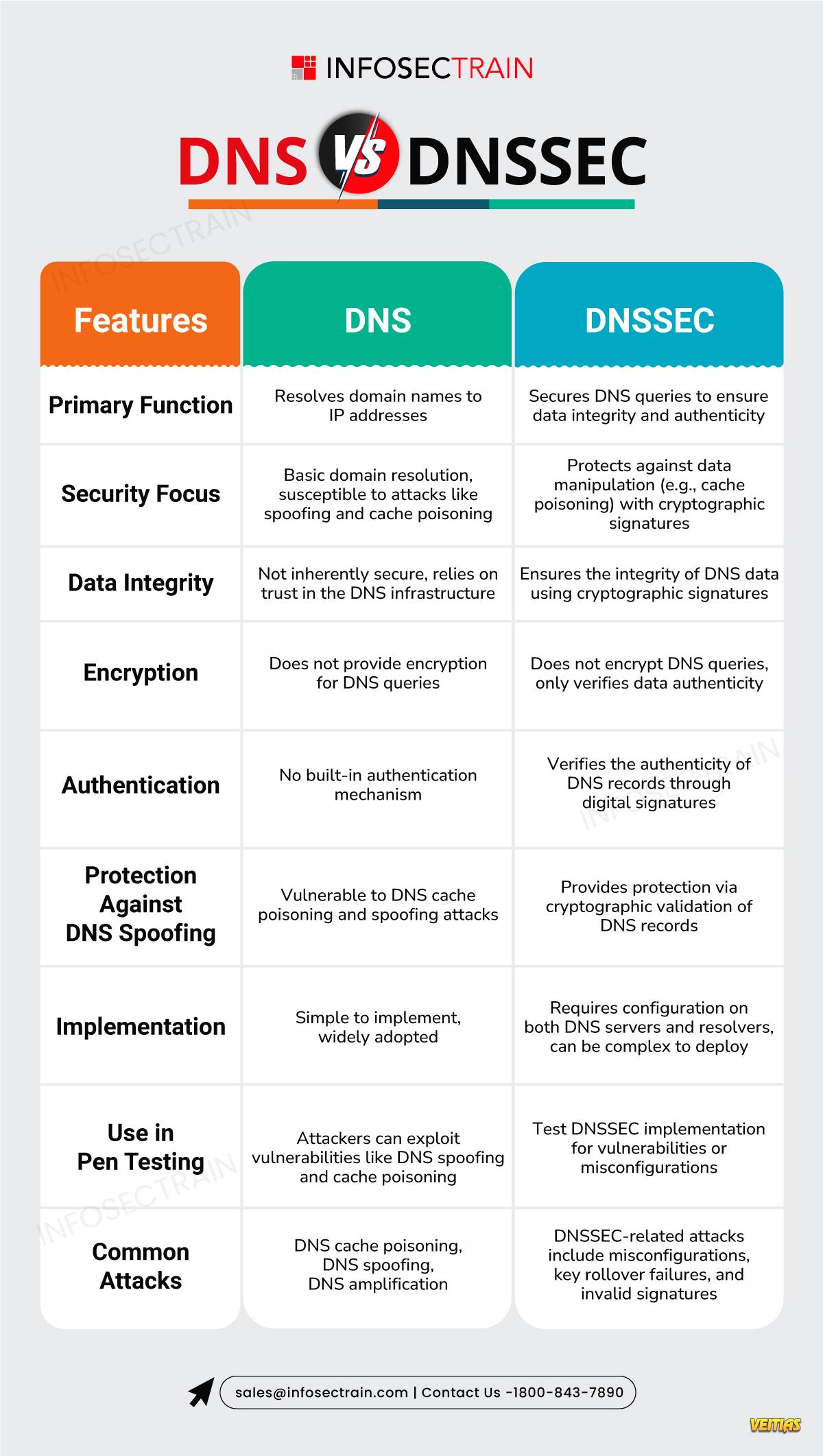
  • DNS vs. DNSSEC: Strengthening Your Domain Security

    Domain Name System (DNS) translates domain names into IP addresses, enabling seamless internet navigation. However, traditional DNS is vulnerable to attacks like spoofing and cache poisoning. DNS Security Extensions (DNSSEC) enhance DNS by adding cryptographic signatures, ensuring data integrity and authenticity. While DNS ensures connectivity, DNSSEC strengthens security by preventing malicious tampering. Together, they form a robust foundation for protecting your domain and ensuring secure online experiences.

    DNS Protocols and Attacks - https://www.infosectrain.com/blog/dns-protocols-and-attacks/

    #DNS #DNSSEC #CyberSecurity #DataIntegrity #DNSProtection #DomainSecurity #CyberDefense #TechSecurity #InfoSec #DigitalTrust #NetworkSecurity
    DNS vs. DNSSEC: Strengthening Your Domain Security Domain Name System (DNS) translates domain names into IP addresses, enabling seamless internet navigation. However, traditional DNS is vulnerable to attacks like spoofing and cache poisoning. DNS Security Extensions (DNSSEC) enhance DNS by adding cryptographic signatures, ensuring data integrity and authenticity. While DNS ensures connectivity, DNSSEC strengthens security by preventing malicious tampering. Together, they form a robust foundation for protecting your domain and ensuring secure online experiences. DNS Protocols and Attacks - https://www.infosectrain.com/blog/dns-protocols-and-attacks/ #DNS #DNSSEC #CyberSecurity #DataIntegrity #DNSProtection #DomainSecurity #CyberDefense #TechSecurity #InfoSec #DigitalTrust #NetworkSecurity
    0 Commentarios 0 Acciones 17101 Views 0 Vista previa
  • DNS Spoofing vs. MITM Attacks: Know the Difference! 🛡

    Cyber threats come in many forms, but do you know how DNS Spoofing and Man-in-the-Middle (MITM) Attacks differ?

    DNS Spoofing: Redirects users to a fake website by tampering with DNS records. It’s all about tricking your browser into trusting the wrong server.

    MITM Attacks: Intercepts and manipulates communication between two parties. The attacker sits in the middle to steal or alter data in real time.

    Key takeaway: While both are sneaky, DNS Spoofing targets where you're going, and MITM attacks target your data in transit.

    Stay informed and secure! Learn how to protect yourself from these threats.

    #Cybersecurity #DNSSpoofing #MITMAttacks #OnlineSafety #InfoSec #CyberAwareness #ProtectYourData
    DNS Spoofing vs. MITM Attacks: Know the Difference! 🛡 Cyber threats come in many forms, but do you know how DNS Spoofing and Man-in-the-Middle (MITM) Attacks differ? 🔑 DNS Spoofing: Redirects users to a fake website by tampering with DNS records. It’s all about tricking your browser into trusting the wrong server. 🔑 MITM Attacks: Intercepts and manipulates communication between two parties. The attacker sits in the middle to steal or alter data in real time. 📌 Key takeaway: While both are sneaky, DNS Spoofing targets where you're going, and MITM attacks target your data in transit. 💡 Stay informed and secure! Learn how to protect yourself from these threats. #Cybersecurity #DNSSpoofing #MITMAttacks #OnlineSafety #InfoSec #CyberAwareness #ProtectYourData
    0 Commentarios 0 Acciones 16588 Views 0 Vista previa
Resultados de la búsqueda