
• Wazuh vs. Splunk: A Practical Comparison of SIEM Platforms

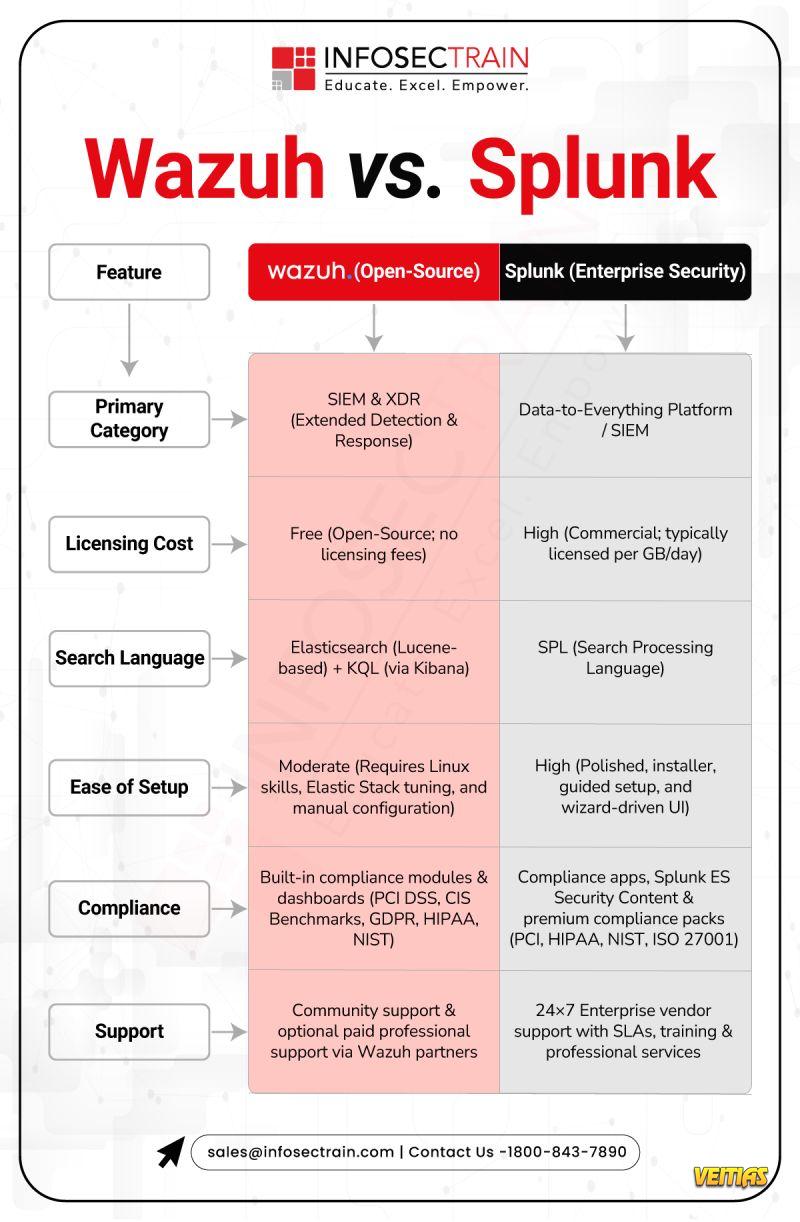
    This visual comparison breaks down the key differences between Wazuh and Splunk to help security teams choose the right SIEM solution. It highlights core aspects such as platform type, licensing cost, search language, ease of setup, compliance support, and enterprise readiness. Wazuh stands out as an open-source SIEM and XDR option with strong community-driven capabilities, while Splunk is positioned as a powerful enterprise-grade data and security analytics platform with advanced features and commercial support. This guide is ideal for SOC teams, security architects, and decision-makers evaluating SIEM tools based on budget, scalability, and operational needs.

    #SIEM #XDR #Wazuh #Splunk #CyberSecurity #SOC #ThreatDetection #LogManagement #SecurityAnalytics #Infosectrain
    Wazuh vs. Splunk: A Practical Comparison of SIEM Platforms This visual comparison breaks down the key differences between Wazuh and Splunk to help security teams choose the right SIEM solution. It highlights core aspects such as platform type, licensing cost, search language, ease of setup, compliance support, and enterprise readiness. Wazuh stands out as an open-source SIEM and XDR option with strong community-driven capabilities, while Splunk is positioned as a powerful enterprise-grade data and security analytics platform with advanced features and commercial support. This guide is ideal for SOC teams, security architects, and decision-makers evaluating SIEM tools based on budget, scalability, and operational needs. #SIEM #XDR #Wazuh #Splunk #CyberSecurity #SOC #ThreatDetection #LogManagement #SecurityAnalytics #Infosectrain
    0 Comentários 0 Compartilhamentos 870 Visualizações 0 Anterior
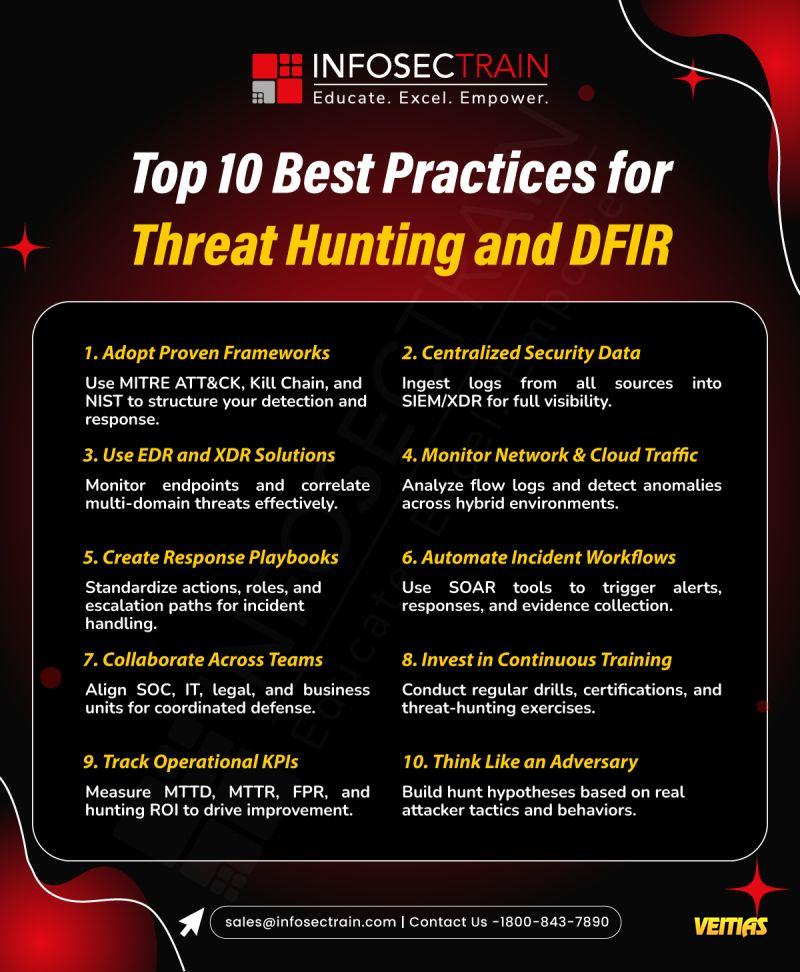
  • 𝐓𝐨𝐩 𝟏𝟎 𝐁𝐞𝐬𝐭 𝐏𝐫𝐚𝐜𝐭𝐢𝐜𝐞𝐬 𝐟𝐨𝐫 𝐓𝐡𝐫𝐞𝐚𝐭 𝐇𝐮𝐧𝐭𝐢𝐧𝐠 & 𝐃𝐅𝐈𝐑

    Stay ahead of adversaries with a proactive, intelligence-driven approach to detection and response:
    𝐔𝐬𝐞 𝐏𝐫𝐨𝐯𝐞𝐧 𝐅𝐫𝐚𝐦𝐞𝐰𝐨𝐫𝐤𝐬 – MITRE ATT&CK, Kill Chain, NIST
    𝐂𝐞𝐧𝐭𝐫𝐚𝐥𝐢𝐳𝐞 𝐘𝐨𝐮𝐫 𝐒𝐞𝐜𝐮𝐫𝐢𝐭𝐲 𝐃𝐚𝐭𝐚 in SIEM/XDR
    𝐋𝐞𝐯𝐞𝐫𝐚𝐠𝐞 𝐄𝐃𝐑/𝐗𝐃𝐑 for deep endpoint and cross-domain visibility
    𝐌𝐨𝐧𝐢𝐭𝐨𝐫 𝐍𝐞𝐭𝐰𝐨𝐫𝐤 & 𝐂𝐥𝐨𝐮𝐝 𝐓𝐫𝐚𝐟𝐟𝐢𝐜 for hybrid threat detection
    𝐁𝐮𝐢𝐥𝐝 𝐑𝐞𝐬𝐩𝐨𝐧𝐬𝐞 𝐏𝐥𝐚𝐲𝐛𝐨𝐨𝐤𝐬 for consistent incident handling
    𝐀𝐮𝐭𝐨𝐦𝐚𝐭𝐞 𝐖𝐨𝐫𝐤𝐟𝐥𝐨𝐰𝐬 with SOAR for faster reactions
    𝐂𝐨𝐥𝐥𝐚𝐛𝐨𝐫𝐚𝐭𝐞 𝐀𝐜𝐫𝐨𝐬𝐬 𝐓𝐞𝐚𝐦𝐬 to strengthen defense
    𝐔𝐩𝐬𝐤𝐢𝐥𝐥 𝐂𝐨𝐧𝐭𝐢𝐧𝐮𝐨𝐮𝐬𝐥𝐲 with training and exercises
    𝐓𝐫𝐚𝐜𝐤 𝐊𝐞𝐲 𝐌𝐞𝐭𝐫𝐢𝐜𝐬 like MTTD, MTTR & false positives
    𝐓𝐡𝐢𝐧𝐤 𝐋𝐢𝐤𝐞 𝐚𝐧 𝐀𝐭𝐭𝐚𝐜𝐤𝐞𝐫 to create actionable hunt hypotheses

    The stronger your hunting and DFIR practices, the faster you can detect, respond, and outmaneuver threats.
    🔥 𝐓𝐨𝐩 𝟏𝟎 𝐁𝐞𝐬𝐭 𝐏𝐫𝐚𝐜𝐭𝐢𝐜𝐞𝐬 𝐟𝐨𝐫 𝐓𝐡𝐫𝐞𝐚𝐭 𝐇𝐮𝐧𝐭𝐢𝐧𝐠 & 𝐃𝐅𝐈𝐑 Stay ahead of adversaries with a proactive, intelligence-driven approach to detection and response: 🔹 𝐔𝐬𝐞 𝐏𝐫𝐨𝐯𝐞𝐧 𝐅𝐫𝐚𝐦𝐞𝐰𝐨𝐫𝐤𝐬 – MITRE ATT&CK, Kill Chain, NIST 🔹 𝐂𝐞𝐧𝐭𝐫𝐚𝐥𝐢𝐳𝐞 𝐘𝐨𝐮𝐫 𝐒𝐞𝐜𝐮𝐫𝐢𝐭𝐲 𝐃𝐚𝐭𝐚 in SIEM/XDR 🔹 𝐋𝐞𝐯𝐞𝐫𝐚𝐠𝐞 𝐄𝐃𝐑/𝐗𝐃𝐑 for deep endpoint and cross-domain visibility 🔹 𝐌𝐨𝐧𝐢𝐭𝐨𝐫 𝐍𝐞𝐭𝐰𝐨𝐫𝐤 & 𝐂𝐥𝐨𝐮𝐝 𝐓𝐫𝐚𝐟𝐟𝐢𝐜 for hybrid threat detection 🔹 𝐁𝐮𝐢𝐥𝐝 𝐑𝐞𝐬𝐩𝐨𝐧𝐬𝐞 𝐏𝐥𝐚𝐲𝐛𝐨𝐨𝐤𝐬 for consistent incident handling 🔹 𝐀𝐮𝐭𝐨𝐦𝐚𝐭𝐞 𝐖𝐨𝐫𝐤𝐟𝐥𝐨𝐰𝐬 with SOAR for faster reactions 🔹 𝐂𝐨𝐥𝐥𝐚𝐛𝐨𝐫𝐚𝐭𝐞 𝐀𝐜𝐫𝐨𝐬𝐬 𝐓𝐞𝐚𝐦𝐬 to strengthen defense 🔹 𝐔𝐩𝐬𝐤𝐢𝐥𝐥 𝐂𝐨𝐧𝐭𝐢𝐧𝐮𝐨𝐮𝐬𝐥𝐲 with training and exercises 🔹 𝐓𝐫𝐚𝐜𝐤 𝐊𝐞𝐲 𝐌𝐞𝐭𝐫𝐢𝐜𝐬 like MTTD, MTTR & false positives 🔹 𝐓𝐡𝐢𝐧𝐤 𝐋𝐢𝐤𝐞 𝐚𝐧 𝐀𝐭𝐭𝐚𝐜𝐤𝐞𝐫 to create actionable hunt hypotheses 🛡️ The stronger your hunting and DFIR practices, the faster you can detect, respond, and outmaneuver threats.
    0 Comentários 0 Compartilhamentos 2251 Visualizações 0 Anterior
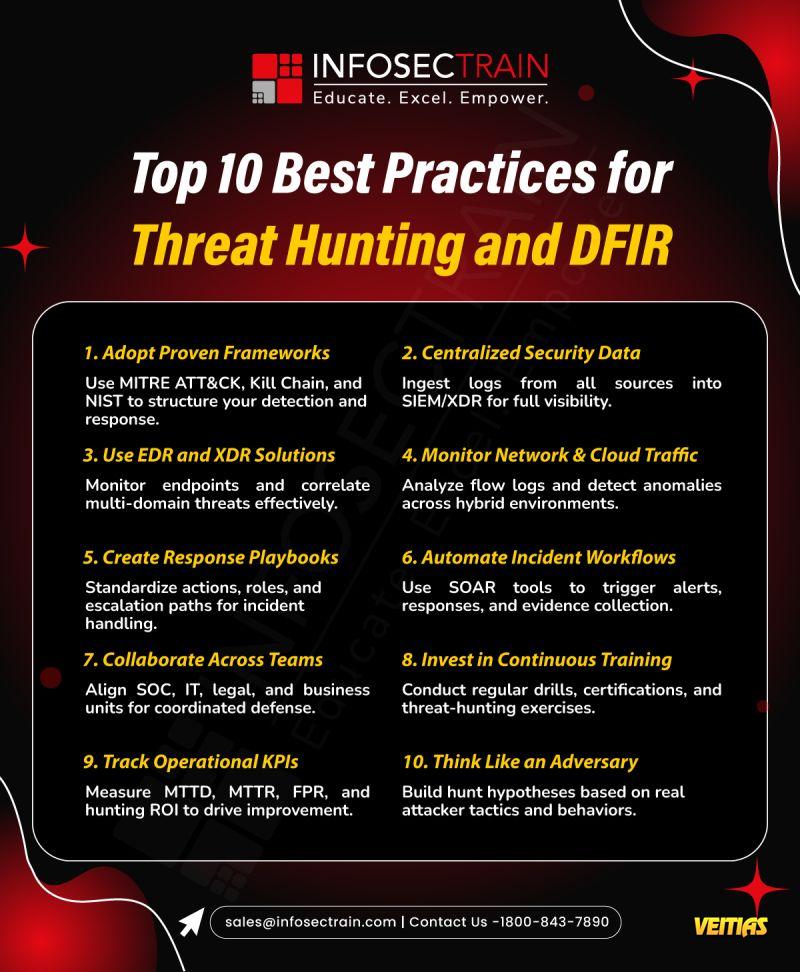
  • Top 10 Best Practices for Threat Hunting and DFIR

    This infographic outlines the top best practices for strengthening Threat Hunting and DFIR programs by leveraging proven frameworks like MITRE ATT&CK, consolidating security data, and using EDR/XDR tools for deep visibility. It emphasizes proactive strategies such as monitoring network and cloud traffic, building structured response playbooks, automating workflows through SOAR, and fostering collaboration across SOC, IT, and legal teams. It also highlights the importance of tracking operational KPIs like MTTD and MTTR, investing in continuous training, and adopting an adversarial mindset to create stronger hypotheses and uncover hidden threats more effectively.
    Top 10 Best Practices for Threat Hunting and DFIR This infographic outlines the top best practices for strengthening Threat Hunting and DFIR programs by leveraging proven frameworks like MITRE ATT&CK, consolidating security data, and using EDR/XDR tools for deep visibility. It emphasizes proactive strategies such as monitoring network and cloud traffic, building structured response playbooks, automating workflows through SOAR, and fostering collaboration across SOC, IT, and legal teams. It also highlights the importance of tracking operational KPIs like MTTD and MTTR, investing in continuous training, and adopting an adversarial mindset to create stronger hypotheses and uncover hidden threats more effectively.
    0 Comentários 0 Compartilhamentos 108 Visualizações 0 Anterior
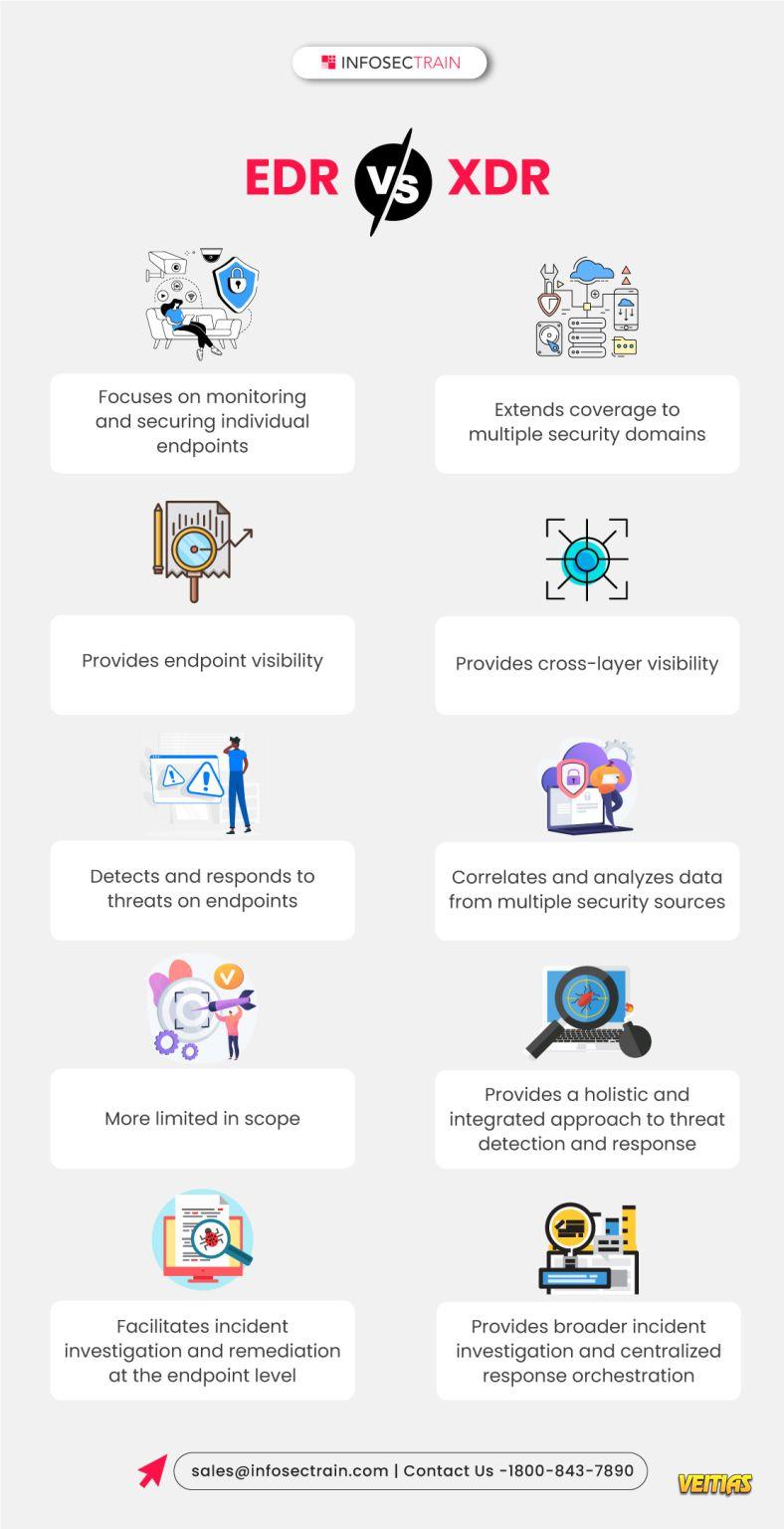
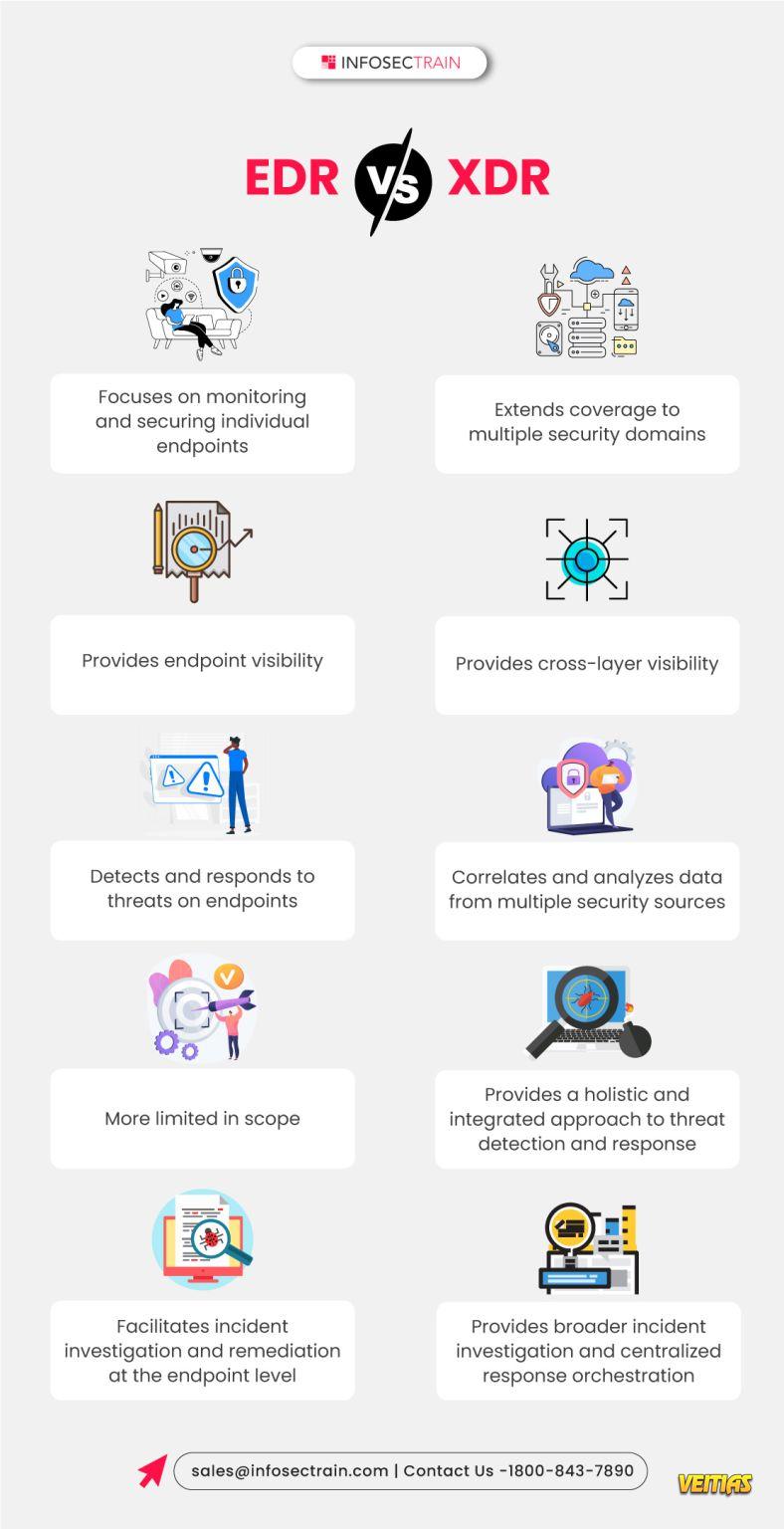
  • EDR (Endpoint Detection and Response) and XDR (Extended Detection and Response) are two powerful cybersecurity solutions designed to enhance threat detection and response capabilities. EDR focuses on monitoring, detecting, and responding to threats at the endpoint level, such as laptops, desktops, and servers. It provides detailed visibility into endpoint activities, enabling security teams to identify and remediate threats in real time. On the other hand, XDR expands this approach by integrating data across multiple security layers, including endpoints, networks, servers, emails, and cloud environments. This holistic view allows for better correlation of threat data, streamlined investigations, and faster incident response.
    EDR (Endpoint Detection and Response) and XDR (Extended Detection and Response) are two powerful cybersecurity solutions designed to enhance threat detection and response capabilities. EDR focuses on monitoring, detecting, and responding to threats at the endpoint level, such as laptops, desktops, and servers. It provides detailed visibility into endpoint activities, enabling security teams to identify and remediate threats in real time. On the other hand, XDR expands this approach by integrating data across multiple security layers, including endpoints, networks, servers, emails, and cloud environments. This holistic view allows for better correlation of threat data, streamlined investigations, and faster incident response.
    0 Comentários 0 Compartilhamentos 5576 Visualizações 0 Anterior
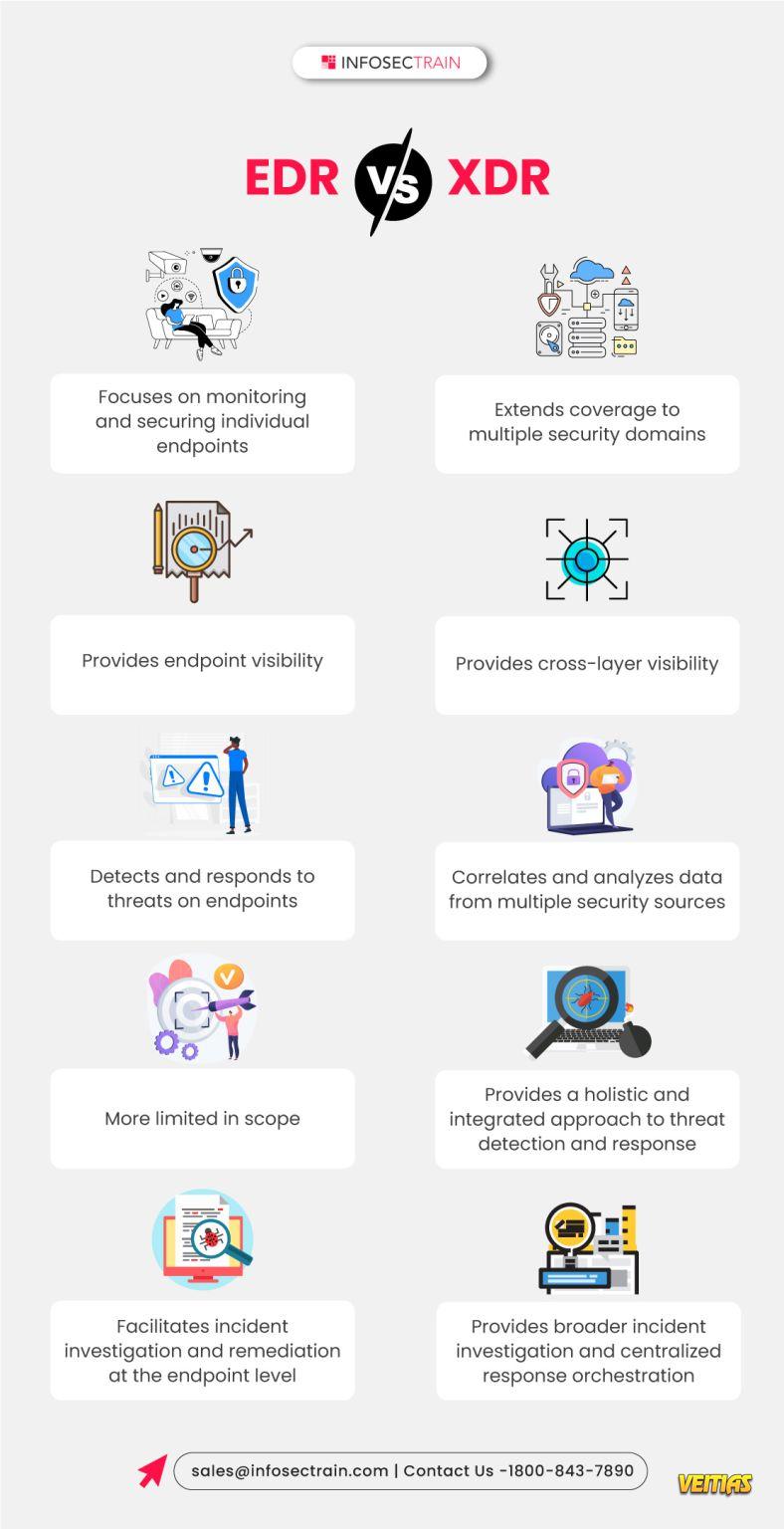
  • EDR vs. XDR: What’s the Difference?

    Confused about Endpoint Detection and Response (EDR) and Extended Detection and Response (XDR)? Let us simplify it for you!

    EDR focuses on endpoint-level security, detecting threats on individual devices.
    XDR takes it further, integrating data from across your IT environment for a unified, proactive defense.

    More Info: - https://www.infosectrain.com/

    Check out our infographic to explore how these technologies work and find the right fit for your security needs. Empower your cybersecurity strategy today!

    #EDR #XDR #Cybersecurity #EndpointProtection #ThreatDetection #CyberDefense #infosectrain #learntorise
    EDR vs. XDR: What’s the Difference? Confused about Endpoint Detection and Response (EDR) and Extended Detection and Response (XDR)? Let us simplify it for you! 🔍 EDR focuses on endpoint-level security, detecting threats on individual devices. 🌐 XDR takes it further, integrating data from across your IT environment for a unified, proactive defense. More Info: - https://www.infosectrain.com/ Check out our infographic to explore how these technologies work and find the right fit for your security needs. Empower your cybersecurity strategy today! #EDR #XDR #Cybersecurity #EndpointProtection #ThreatDetection #CyberDefense #infosectrain #learntorise
    0 Comentários 0 Compartilhamentos 4259 Visualizações 0 Anterior
  • Understanding EDR & XDR: Your Guide to Modern Security

    What's the difference?
    EDR (Endpoint Detection & Response)

    Focuses on endpoint security
    Monitors individual devices
    Real-time threat detection
    Perfect for small businesses

    XDR (Extended Detection & Response)

    Comprehensive security coverage
    Multiple data source integration
    Advanced threat hunting
    Ideal for enterprises

    Check out: https://www.infosectrain.com/

    #SecurityTools #CyberDefense #EDRvsXDR #infosectrain #learntorise
    🔐 Understanding EDR & XDR: Your Guide to Modern Security What's the difference? 📌 EDR (Endpoint Detection & Response) 💠 Focuses on endpoint security 💠 Monitors individual devices 💠 Real-time threat detection 💠 Perfect for small businesses 📌 XDR (Extended Detection & Response) 💠 Comprehensive security coverage 💠 Multiple data source integration 💠 Advanced threat hunting 💠 Ideal for enterprises Check out: https://www.infosectrain.com/ #SecurityTools #CyberDefense #EDRvsXDR #infosectrain #learntorise
    0 Comentários 0 Compartilhamentos 3940 Visualizações 0 Anterior
  • 𝐉𝐨𝐢𝐧 𝐟𝐨𝐫 𝐚𝐧 𝐅𝐫𝐞𝐞 𝐰𝐞𝐛𝐢𝐧𝐚𝐫: 𝐒𝐜𝐞𝐧𝐚𝐫𝐢𝐨-𝐁𝐚𝐬𝐞𝐝 𝐈𝐧𝐭𝐞𝐫𝐯𝐢𝐞𝐰 𝐏𝐫𝐞𝐩 𝐒𝐞𝐫𝐢𝐞𝐬: 𝐌𝐚𝐬𝐭𝐞𝐫𝐢𝐧𝐠 𝐌𝐢𝐜𝐫𝐨𝐬𝐨𝐟𝐭 𝐀𝐳𝐮𝐫𝐞

    Explore into real-world scenarios, case studies, and hands-on exercises to master Azure environments.

    Date: 17 July (Wed)
    Time: 8 – 9 PM (IST)

    𝐅𝐫𝐞𝐞 𝐑𝐞𝐠𝐢𝐬𝐭𝐞𝐫 𝐍𝐨𝐰: https://www.infosectrain.com/events/scenario-based-interview-prep-series-mastering-microsoft-azure/

    Agenda for the Masterclass
    Interview Preparation Strategy
    Top Scenario-based questions on following topics with answers:
    •Microsoft Azure Security: Protecting Azure Architecture
    •Microsoft Sentinel: Monitoring and Threat Detection
    •Microsoft Defender: Beyond Normal Monitoring with XDR
    Enhance problem-solving skills
    Additional tips for acing [Job] interviews
    Q&A Session

    #ScenarioBasedInterviewPrep #MicrosoftAzure #AzureInterviews #CloudSkills #CareerDevelopment #TechnicalInterviews #AzureExpertise #ScenarioBasedLearning #AzurePreparation #infosectrain #learntorise
    𝐉𝐨𝐢𝐧 𝐟𝐨𝐫 𝐚𝐧 𝐅𝐫𝐞𝐞 𝐰𝐞𝐛𝐢𝐧𝐚𝐫: 𝐒𝐜𝐞𝐧𝐚𝐫𝐢𝐨-𝐁𝐚𝐬𝐞𝐝 𝐈𝐧𝐭𝐞𝐫𝐯𝐢𝐞𝐰 𝐏𝐫𝐞𝐩 𝐒𝐞𝐫𝐢𝐞𝐬: 𝐌𝐚𝐬𝐭𝐞𝐫𝐢𝐧𝐠 𝐌𝐢𝐜𝐫𝐨𝐬𝐨𝐟𝐭 𝐀𝐳𝐮𝐫𝐞 Explore into real-world scenarios, case studies, and hands-on exercises to master Azure environments. 📅 Date: 17 July (Wed) ⌚ Time: 8 – 9 PM (IST) 𝐅𝐫𝐞𝐞 𝐑𝐞𝐠𝐢𝐬𝐭𝐞𝐫 𝐍𝐨𝐰: https://www.infosectrain.com/events/scenario-based-interview-prep-series-mastering-microsoft-azure/ ➡️ Agenda for the Masterclass 👉 Interview Preparation Strategy 👉 Top Scenario-based questions on following topics with answers: •Microsoft Azure Security: Protecting Azure Architecture •Microsoft Sentinel: Monitoring and Threat Detection •Microsoft Defender: Beyond Normal Monitoring with XDR 👉 Enhance problem-solving skills 👉 Additional tips for acing [Job] interviews 👉 Q&A Session #ScenarioBasedInterviewPrep #MicrosoftAzure #AzureInterviews #CloudSkills #CareerDevelopment #TechnicalInterviews #AzureExpertise #ScenarioBasedLearning #AzurePreparation #infosectrain #learntorise
    WWW.INFOSECTRAIN.COM
    Scenario-Based Interview Prep Series: Mastering Microsoft Azure
    InfosecTrain offer free live event "Scenario-Based Interview Prep Series: Mastering Microsoft Azure" with Rishabh
    0 Comentários 0 Compartilhamentos 20949 Visualizações 0 Anterior