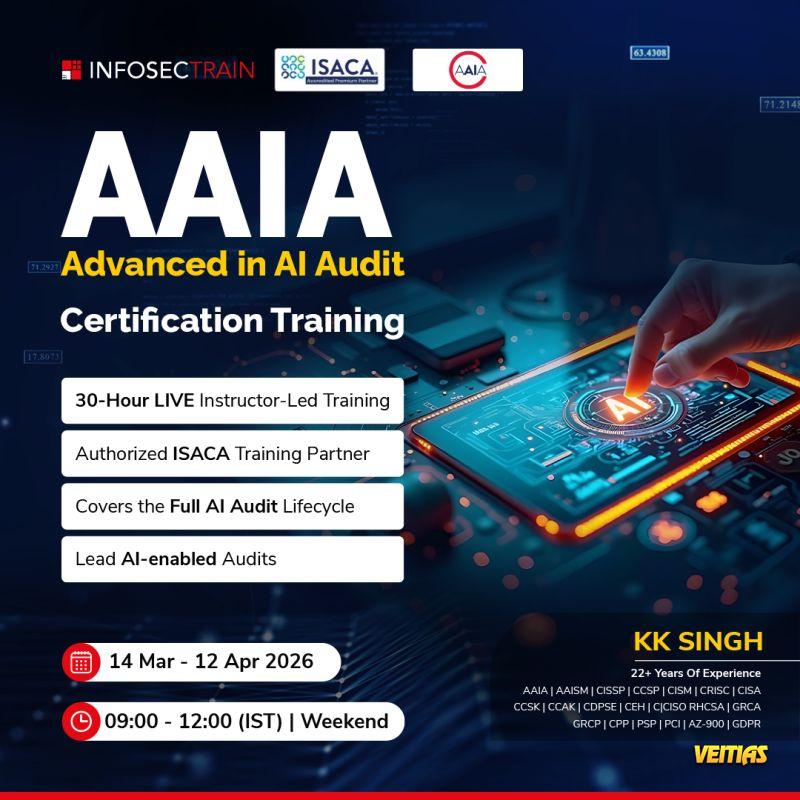
• 𝗔𝗔𝗜𝗔 – 𝗔𝗱𝘃𝗮𝗻𝗰𝗲𝗱 𝗶𝗻 𝗔𝗜 𝗔𝘂𝗱𝗶𝘁 𝗖𝗲𝗿𝘁𝗶𝗳𝗶𝗰𝗮𝘁𝗶𝗼𝗻 𝗧𝗿𝗮𝗶𝗻𝗶𝗻𝗴
    Lead the Future of AI Governance & Assurance

    AI systems are transforming enterprises - but who ensures they’re secure, ethical, and compliant?

    InfosecTrain’s 𝗔𝗔𝗜𝗔 (𝗔𝗱𝘃𝗮𝗻𝗰𝗲𝗱 𝗶𝗻 𝗔𝗜 𝗔𝘂𝗱𝗶𝘁) 𝗣𝗿𝗼𝗴𝗿𝗮𝗺 equips professionals to lead AI-enabled audits and manage AI risks confidently across the full audit lifecycle.
    This 30-hour LIVE program blends governance, risk, compliance, and AI auditing practices into one comprehensive learning journey.

    Led by KK Singh (22+ Years of Experience) AAIA | AISM | CISSP | CCSP | CISM | CRISC | CISA | CCSK | CDPSE | CIPM | PCI | AZ-900 | GDPR

    https://www.infosectrain.com/courses/advanced-in-ai-audit-aaia-certification-training
    🤖🔍 𝗔𝗔𝗜𝗔 – 𝗔𝗱𝘃𝗮𝗻𝗰𝗲𝗱 𝗶𝗻 𝗔𝗜 𝗔𝘂𝗱𝗶𝘁 𝗖𝗲𝗿𝘁𝗶𝗳𝗶𝗰𝗮𝘁𝗶𝗼𝗻 𝗧𝗿𝗮𝗶𝗻𝗶𝗻𝗴 Lead the Future of AI Governance & Assurance AI systems are transforming enterprises - but who ensures they’re secure, ethical, and compliant? InfosecTrain’s 𝗔𝗔𝗜𝗔 (𝗔𝗱𝘃𝗮𝗻𝗰𝗲𝗱 𝗶𝗻 𝗔𝗜 𝗔𝘂𝗱𝗶𝘁) 𝗣𝗿𝗼𝗴𝗿𝗮𝗺 equips professionals to lead AI-enabled audits and manage AI risks confidently across the full audit lifecycle. This 30-hour LIVE program blends governance, risk, compliance, and AI auditing practices into one comprehensive learning journey. 👨‍🏫 Led by KK Singh (22+ Years of Experience) AAIA | AISM | CISSP | CCSP | CISM | CRISC | CISA | CCSK | CDPSE | CIPM | PCI | AZ-900 | GDPR https://www.infosectrain.com/courses/advanced-in-ai-audit-aaia-certification-training
    0 Kommentare 0 Anteile 3762 Ansichten 0 Vorschau
  • 𝐓𝐨𝐩 𝐓𝐨𝐨𝐥𝐬 𝐚𝐧𝐝 𝐓𝐞𝐜𝐡𝐧𝐢𝐪𝐮𝐞𝐬 𝐟𝐨𝐫 𝐌𝐨𝐝𝐞𝐥 𝐈𝐧𝐭𝐞𝐫𝐩𝐫𝐞𝐭𝐚𝐛𝐢𝐥𝐢𝐭𝐲

    Modern AI models are incredibly smart, but they often come with a problem: no one can explain how they reached a decision. In areas like cybersecurity, healthcare, and finance, that’s a serious risk. Accuracy alone isn’t enough anymore 𝐮𝐧𝐝𝐞𝐫𝐬𝐭𝐚𝐧𝐝𝐢𝐧𝐠 𝐭𝐡𝐞 “𝐰𝐡𝐲” 𝐦𝐚𝐭𝐭𝐞𝐫𝐬.

    This is exactly why 𝐄𝐱𝐩𝐥𝐚𝐢𝐧𝐚𝐛𝐥𝐞 𝐀𝐈 (𝐗𝐀𝐈) matters. The system provides insight into model operations while it enables us to identify faults in the system at an early stage and create dependable systems.

    𝐑𝐞𝐚𝐝 𝐭𝐡𝐞 𝐝𝐞𝐭𝐚𝐢𝐥𝐞𝐝 𝐛𝐫𝐞𝐚𝐤𝐝𝐨𝐰𝐧 𝐡𝐞𝐫𝐞: https://www.infosectrain.com/blog/top-tools-and-techniques-for-model-interpretability

    AI doesn’t just need to be accurate. It needs to be understandable, defensible, and trustworthy.

    #ExplainableAI #XAI #AIGovernance #ResponsibleAI #CyberSecurity #MachineLearning #AITransparency #EthicalAI #ModelInterpretability
    𝐓𝐨𝐩 𝐓𝐨𝐨𝐥𝐬 𝐚𝐧𝐝 𝐓𝐞𝐜𝐡𝐧𝐢𝐪𝐮𝐞𝐬 𝐟𝐨𝐫 𝐌𝐨𝐝𝐞𝐥 𝐈𝐧𝐭𝐞𝐫𝐩𝐫𝐞𝐭𝐚𝐛𝐢𝐥𝐢𝐭𝐲 Modern AI models are incredibly smart, but they often come with a problem: no one can explain how they reached a decision. In areas like cybersecurity, healthcare, and finance, that’s a serious risk. Accuracy alone isn’t enough anymore 👉 𝐮𝐧𝐝𝐞𝐫𝐬𝐭𝐚𝐧𝐝𝐢𝐧𝐠 𝐭𝐡𝐞 “𝐰𝐡𝐲” 𝐦𝐚𝐭𝐭𝐞𝐫𝐬. This is exactly why 𝐄𝐱𝐩𝐥𝐚𝐢𝐧𝐚𝐛𝐥𝐞 𝐀𝐈 (𝐗𝐀𝐈) matters. The system provides insight into model operations while it enables us to identify faults in the system at an early stage and create dependable systems. 🔗 𝐑𝐞𝐚𝐝 𝐭𝐡𝐞 𝐝𝐞𝐭𝐚𝐢𝐥𝐞𝐝 𝐛𝐫𝐞𝐚𝐤𝐝𝐨𝐰𝐧 𝐡𝐞𝐫𝐞: https://www.infosectrain.com/blog/top-tools-and-techniques-for-model-interpretability ✅ AI doesn’t just need to be accurate. It needs to be understandable, defensible, and trustworthy. #ExplainableAI #XAI #AIGovernance #ResponsibleAI #CyberSecurity #MachineLearning #AITransparency #EthicalAI #ModelInterpretability
    WWW.INFOSECTRAIN.COM
    Top Tools and Techniques for Model Interpretability
    Explore top tools and techniques for model interpretability to explain AI decisions, improve trust, and meet compliance needs.
    0 Kommentare 0 Anteile 11458 Ansichten 0 Vorschau
  • AI Governance in each SDLC Phase

    When governance is built into every phase, organizations avoid costly rework, reduce regulatory exposure, and create AI systems that are reliable, explainable, and trustworthy. Continuous monitoring and regular audits ensure AI remains compliant long after deployment not just on day one.

    Read Here: https://www.infosectrain.com/blog/ai-governance-in-each-sdlc-phase

    AI governance isn’t a final checkpoint. It’s a continuous discipline that turns AI from a liability into a long-term advantage.

    #AIGovernance #SDLC #ResponsibleAI #AICompliance #InfosecTrain #CAIGS #CyberSecurity #AIEngineering #TrustworthyAI
    AI Governance in each SDLC Phase When governance is built into every phase, organizations avoid costly rework, reduce regulatory exposure, and create AI systems that are reliable, explainable, and trustworthy. Continuous monitoring and regular audits ensure AI remains compliant long after deployment not just on day one. Read Here: https://www.infosectrain.com/blog/ai-governance-in-each-sdlc-phase AI governance isn’t a final checkpoint. It’s a continuous discipline that turns AI from a liability into a long-term advantage. #AIGovernance #SDLC #ResponsibleAI #AICompliance #InfosecTrain #CAIGS #CyberSecurity #AIEngineering #TrustworthyAI
    WWW.INFOSECTRAIN.COM
    AI Governance in each SDLC Phase
    This approach to incorporating AI Governance at every step is crucial for ensuring our AI is reliable, compliant, and ready for inspection.
    0 Kommentare 0 Anteile 10158 Ansichten 0 Vorschau
  • 𝐀𝐈 𝐆𝐨𝐯𝐞𝐫𝐧𝐚𝐧𝐜𝐞: 𝐓𝐡𝐞 𝐂𝐨𝐧𝐭𝐫𝐨𝐥𝐬 𝐓𝐡𝐚𝐭 𝐊𝐞𝐞𝐩 𝐀𝐈 𝐨𝐧 𝐓𝐫𝐚𝐜𝐤

    Good AI governance is the framework that ensures AI systems operate safely, fairly, and within legal boundaries, instead of becoming “black box AI” that makes decisions no one can explain or stop.

    𝐖𝐡𝐲 𝐠𝐨𝐯𝐞𝐫𝐧𝐚𝐧𝐜𝐞 𝐦𝐚𝐭𝐭𝐞𝐫𝐬 𝐟𝐨𝐫 𝐛𝐮𝐬𝐢𝐧𝐞𝐬𝐬
    Clear governance boundaries let organizations innovate with AI confidently and driving growth while protecting reputation, compliance architecture, and budget from costly mistakes.

    𝐑𝐞𝐚𝐝 𝐦𝐨𝐫𝐞 𝐡𝐞𝐫𝐞: https://www.infosectrain.com/blog/what-are-the-key-principles-of-good-ai-governance

    In the end, AI governance isn’t about fear or restriction. It’s about control, accountability, and trust making sure powerful AI systems work for us, not against us.

    #AIGovernance #ResponsibleAI #PrivacyByDesign #PETs #AICompliance #InfosecTrain #CyberSecurity #AILeadership #EthicalAI #FutureOfAI
    𝐀𝐈 𝐆𝐨𝐯𝐞𝐫𝐧𝐚𝐧𝐜𝐞: 𝐓𝐡𝐞 𝐂𝐨𝐧𝐭𝐫𝐨𝐥𝐬 𝐓𝐡𝐚𝐭 𝐊𝐞𝐞𝐩 𝐀𝐈 𝐨𝐧 𝐓𝐫𝐚𝐜𝐤 Good AI governance is the framework that ensures AI systems operate safely, fairly, and within legal boundaries, instead of becoming “black box AI” that makes decisions no one can explain or stop. ➡️ 𝐖𝐡𝐲 𝐠𝐨𝐯𝐞𝐫𝐧𝐚𝐧𝐜𝐞 𝐦𝐚𝐭𝐭𝐞𝐫𝐬 𝐟𝐨𝐫 𝐛𝐮𝐬𝐢𝐧𝐞𝐬𝐬 Clear governance boundaries let organizations innovate with AI confidently and driving growth while protecting reputation, compliance architecture, and budget from costly mistakes. 👉 𝐑𝐞𝐚𝐝 𝐦𝐨𝐫𝐞 𝐡𝐞𝐫𝐞: https://www.infosectrain.com/blog/what-are-the-key-principles-of-good-ai-governance ✅ In the end, AI governance isn’t about fear or restriction. It’s about control, accountability, and trust ➡️ making sure powerful AI systems work for us, not against us. #AIGovernance #ResponsibleAI #PrivacyByDesign #PETs #AICompliance #InfosecTrain #CyberSecurity #AILeadership #EthicalAI #FutureOfAI
    WWW.INFOSECTRAIN.COM
    What are the Key Principles of Good AI Governance?
    Discover the key principles of good AI governance, including transparency, accountability, fairness, and risk management.
    0 Kommentare 0 Anteile 9523 Ansichten 0 Vorschau
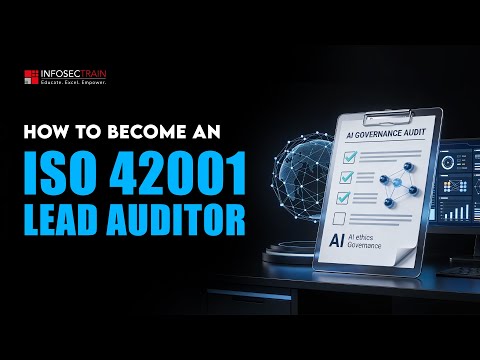
  • How to Become an ISO/IEC 42001 Lead Auditor: Step-by-Step Career Guide

    What You’ll Learn in This Video:
    Welcome: Entering the Era of Trusted AI
    The Trend: Why AI Governance is Exploding Right Now
    Decoding ISO 42001: The New Global Standard Explained
    Why It Matters: Managing Risk, Ethics, and Safety
    The Framework: How an AI Management System (AIMS) Works
    The Role: What Does an AI Lead Auditor Actually Do?
    The Roadmap: Simple Steps to Get Certified
    Essential Skills: Bridging the Gap Between Tech & Compliance
    Career Outlook: High Demand, Salaries, and Future Growth

    Watch Here: https://youtu.be/Fo2CFqV6GL8?si=ipKm9huONUZkrzRM

    #AI #AIGovernance #ISO42001 #LeadAuditor #CyberSecurity #AICompliance #InfosecTrain #TrustedAI #GRC #CISO #Audit #AIManagement #CareerGrowth
    How to Become an ISO/IEC 42001 Lead Auditor: Step-by-Step Career Guide 🔍 What You’ll Learn in This Video: ✅ Welcome: Entering the Era of Trusted AI ✅ The Trend: Why AI Governance is Exploding Right Now ✅ Decoding ISO 42001: The New Global Standard Explained ✅ Why It Matters: Managing Risk, Ethics, and Safety ✅ The Framework: How an AI Management System (AIMS) Works ✅ The Role: What Does an AI Lead Auditor Actually Do? ✅ The Roadmap: Simple Steps to Get Certified ✅ Essential Skills: Bridging the Gap Between Tech & Compliance ✅ Career Outlook: High Demand, Salaries, and Future Growth Watch Here: https://youtu.be/Fo2CFqV6GL8?si=ipKm9huONUZkrzRM #AI #AIGovernance #ISO42001 #LeadAuditor #CyberSecurity #AICompliance #InfosecTrain #TrustedAI #GRC #CISO #Audit #AIManagement #CareerGrowth
    0 Kommentare 0 Anteile 6090 Ansichten 0 Vorschau
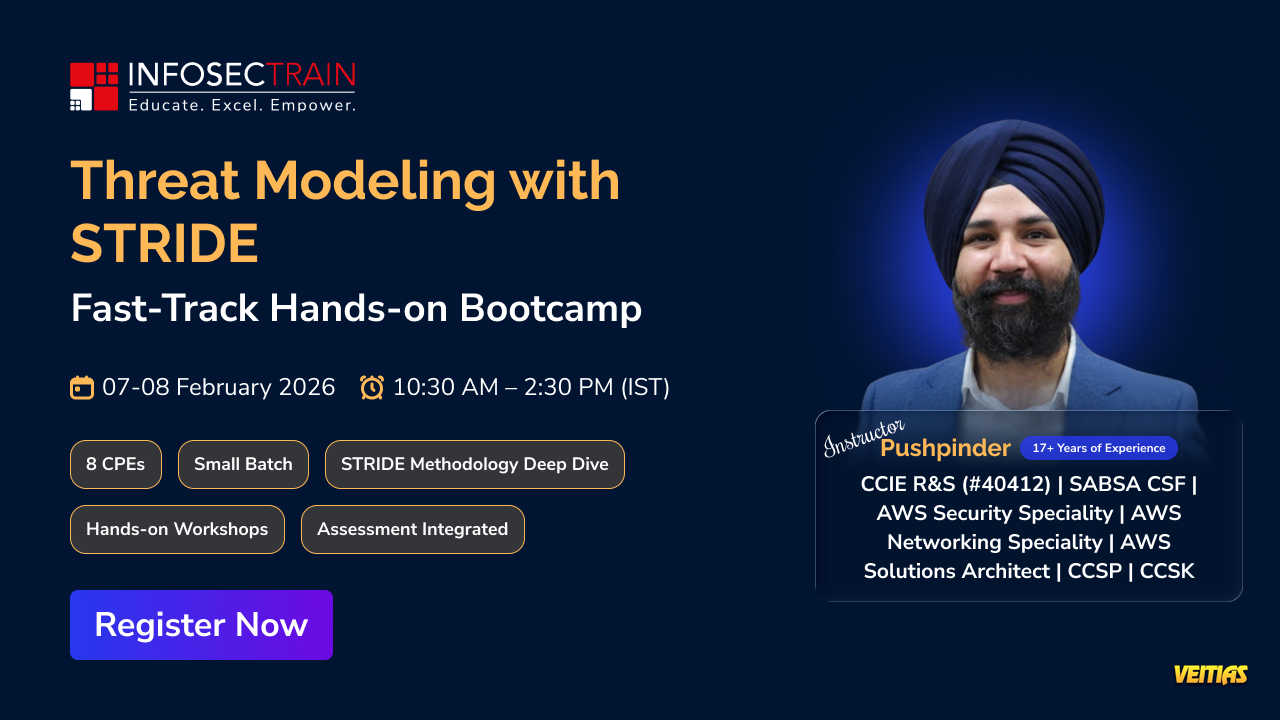
  • Threat Modeling with STRIDE — Fast-Track Hands-on Bootcamp

    Modern cyber threats demand proactive security, not last-minute fixes. Learn how to identify, analyze, and mitigate risks early using the globally trusted STRIDE threat modeling framework — through real-world, hands-on practice.

    Join this intensive 2-day bootcamp designed for security professionals, architects, and developers who want practical, job-ready threat modeling skills that align with compliance and audit requirements.

    Dates: 07–08 February 2026
    🕰 Time: 10:30 AM – 2:30 PM (IST)
    Instructor: Pushpinder

    What You’ll Gain:
    8 CPE Credits
    Real-world STRIDE Hands-on Labs
    Expert Mentorship & Career Guidance
    Industry-Recognized Certificate
    Lifetime Community & Learning Resources
    Compliance & Audit-Aligned Threat Modeling Skills

    🎟 Limited Seats — Register Now:
    https://www.infosectrain.com/bootcamp/threat-modeling-training/

    Build secure systems before attackers find the gaps — Enroll today!

    #ThreatModeling #STRIDEFramework #CyberSecurityTraining #AppSec #DevSecOps #CloudSecurity #SecureByDesign #InfosecTrain #CyberAwareness #EthicalHacking #SecurityEngineering #CPECredits
    Threat Modeling with STRIDE — Fast-Track Hands-on Bootcamp 🔐 Modern cyber threats demand proactive security, not last-minute fixes. Learn how to identify, analyze, and mitigate risks early using the globally trusted STRIDE threat modeling framework — through real-world, hands-on practice. Join this intensive 2-day bootcamp designed for security professionals, architects, and developers who want practical, job-ready threat modeling skills that align with compliance and audit requirements. 📅 Dates: 07–08 February 2026 🕰 Time: 10:30 AM – 2:30 PM (IST) 👨🏫 Instructor: Pushpinder 🎯 What You’ll Gain: ✅ 8 CPE Credits ✅ Real-world STRIDE Hands-on Labs ✅ Expert Mentorship & Career Guidance ✅ Industry-Recognized Certificate ✅ Lifetime Community & Learning Resources ✅ Compliance & Audit-Aligned Threat Modeling Skills 🎟 Limited Seats — Register Now: 👉 https://www.infosectrain.com/bootcamp/threat-modeling-training/ 🔐 Build secure systems before attackers find the gaps — Enroll today! #ThreatModeling #STRIDEFramework #CyberSecurityTraining #AppSec #DevSecOps #CloudSecurity #SecureByDesign #InfosecTrain #CyberAwareness #EthicalHacking #SecurityEngineering #CPECredits
    0 Kommentare 0 Anteile 7341 Ansichten 0 Vorschau
  • What is ISO 22301 (BCMS) Standard?

    ISO 22301 transforms continuity planning into a structured, tested, and trusted system giving your business a real competitive edge.

    Read Here: https://www.infosectrain.com/blog/what-is-iso-22301-bcms-standard

    #ISO22301 #BusinessContinuity #BCMS #RiskManagement #DisasterRecovery #InfosecTrain #CyberResilience #Compliance #BusinessProtection #OperationalResilience
    What is ISO 22301 (BCMS) Standard? ISO 22301 transforms continuity planning into a structured, tested, and trusted system giving your business a real competitive edge. Read Here: https://www.infosectrain.com/blog/what-is-iso-22301-bcms-standard #ISO22301 #BusinessContinuity #BCMS #RiskManagement #DisasterRecovery #InfosecTrain #CyberResilience #Compliance #BusinessProtection #OperationalResilience
    WWW.INFOSECTRAIN.COM
    What is ISO 22301 (BCMS) Standard?
    The ISO 22301:2019 standard is the globally acknowledged specification that sets out the requirements for establishing, implementing, maintaining, and continually improving a BCMS.
    0 Kommentare 0 Anteile 3045 Ansichten 0 Vorschau
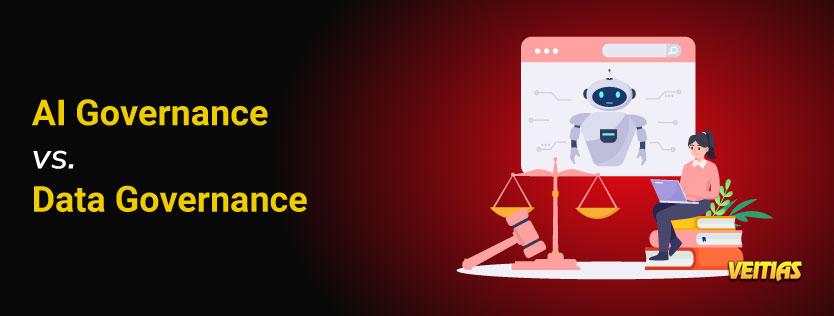
  • Data Governance versus AI Governance: What are the Differences Really and the Reasons for Having Both?

    It is obvious that the governing of data is no longer sufficient when AI is integrated into the routine business operations. Data Governance, on the one hand, makes your data precise, safe, compliant, and dependable. On the other hand, AI Governance not only does that but also guarantees the fairness, openness, responsibility, and reliability of your AI systems.

    Read more: https://www.infosectrain.com/blog/data-governance-vs-ai-governance

    That's the truth:
    Excellent data paired with no AI regulations = a chance of prejudice, shifting of models and violation of ethics
    AI supervision without a strong data basis = outcomes that are not trustworthy and unsafe

    #DataGovernance #AIGovernance #ResponsibleAI #AICompliance #DigitalTrust #EnterpriseAI #DataManagement #CyberSecurity #GRC #InfosecTrain
    Data Governance versus AI Governance: What are the Differences Really and the Reasons for Having Both? It is obvious that the governing of data is no longer sufficient when AI is integrated into the routine business operations. Data Governance, on the one hand, makes your data precise, safe, compliant, and dependable. On the other hand, AI Governance not only does that but also guarantees the fairness, openness, responsibility, and reliability of your AI systems. Read more: https://www.infosectrain.com/blog/data-governance-vs-ai-governance That's the truth: 👉 Excellent data paired with no AI regulations = a chance of prejudice, shifting of models and violation of ethics 👉 AI supervision without a strong data basis = outcomes that are not trustworthy and unsafe #DataGovernance #AIGovernance #ResponsibleAI #AICompliance #DigitalTrust #EnterpriseAI #DataManagement #CyberSecurity #GRC #InfosecTrain
    0 Kommentare 0 Anteile 3438 Ansichten 0 Vorschau
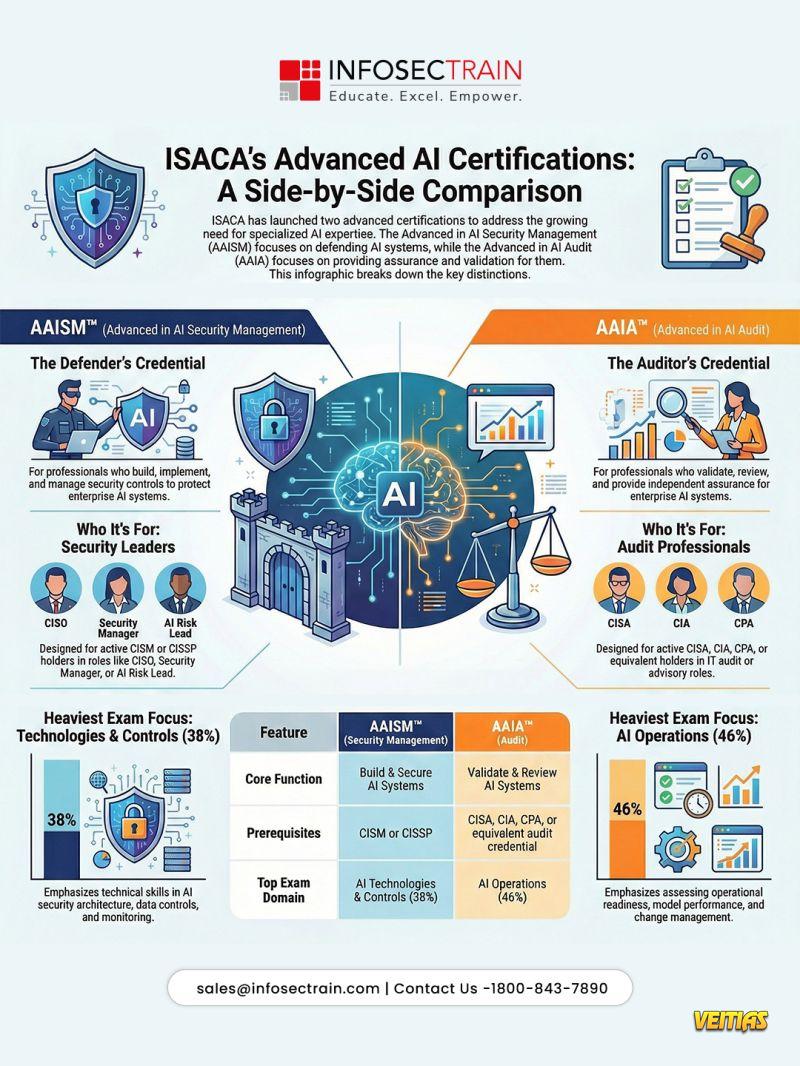
  • AI security and AI audit serve different purposes and require different expertise.
    ISACA’s AAISM is designed for professionals who build, manage, and secure AI systems, while AAIA is focused on validating, reviewing, and providing independent assurance over AI operations. Understanding this distinction helps professionals choose the certification that aligns with their role and responsibilities.
    AI security and AI audit serve different purposes and require different expertise. ISACA’s AAISM is designed for professionals who build, manage, and secure AI systems, while AAIA is focused on validating, reviewing, and providing independent assurance over AI operations. Understanding this distinction helps professionals choose the certification that aligns with their role and responsibilities.
    0 Kommentare 0 Anteile 2792 Ansichten 0 Vorschau
  • How to Start Your AI Journey: A Simple Guide?

    Securing AI systems is one of the crucial skills that we as designers need to acquire.

    This takes the form of:
    Protecting the systems from adversarial attacks.
    Making data privacy (GDPR) a priority.
    Complying with governance standards such as ISO/IEC 42001.

    Read Here: https://www.infosectrain.com/blog/how-to-start-your-ai-journey-a-simple-guide

    #ArtificialIntelligence #AIJourney #FutureSkills #MachineLearning #CyberSecurity #AIGovernance #InfosecTrain
    How to Start Your AI Journey: A Simple Guide? Securing AI systems is one of the crucial skills that we as designers need to acquire. This takes the form of: 🔹 Protecting the systems from adversarial attacks. 🔹 Making data privacy (GDPR) a priority. 🔹 Complying with governance standards such as ISO/IEC 42001. Read Here: https://www.infosectrain.com/blog/how-to-start-your-ai-journey-a-simple-guide #ArtificialIntelligence #AIJourney #FutureSkills #MachineLearning #CyberSecurity #AIGovernance #InfosecTrain
    WWW.INFOSECTRAIN.COM
    How to Start Your AI Journey: A Simple Guide?
    Discover how to start your AI journey step by step, from fundamentals to tools, skills, and real-world applications.
    0 Kommentare 0 Anteile 3316 Ansichten 0 Vorschau
  • LIME vs. SHAP: Who Explains Your AI Better?

    AI decisions shouldn’t feel like magic or guesswork. When models become black boxes, explainability is what turns predictions into trust.

    Read Here: https://infosec-train.blogspot.com/2026/01/lime-vs-shap.html

    Understanding LIME and SHAP is essential for building trustworthy, compliant, and accountable AI systems especially as AI regulations tighten worldwide.

    #ExplainableAI #XAI #AIGovernance #LIME #SHAP #ResponsibleAI #InfosecTrain #CAIGS #AITransparency
    LIME vs. SHAP: Who Explains Your AI Better? AI decisions shouldn’t feel like magic or guesswork. When models become black boxes, explainability is what turns predictions into trust. Read Here: https://infosec-train.blogspot.com/2026/01/lime-vs-shap.html Understanding LIME and SHAP is essential for building trustworthy, compliant, and accountable AI systems especially as AI regulations tighten worldwide. #ExplainableAI #XAI #AIGovernance #LIME #SHAP #ResponsibleAI #InfosecTrain #CAIGS #AITransparency
    INFOSEC-TRAIN.BLOGSPOT.COM
    LIME vs. SHAP
    The computer's powerful AI often gave answers without explaining itself; it was a black box. Two main tools came to help: LIME, the quick de...
    0 Kommentare 0 Anteile 2625 Ansichten 0 Vorschau
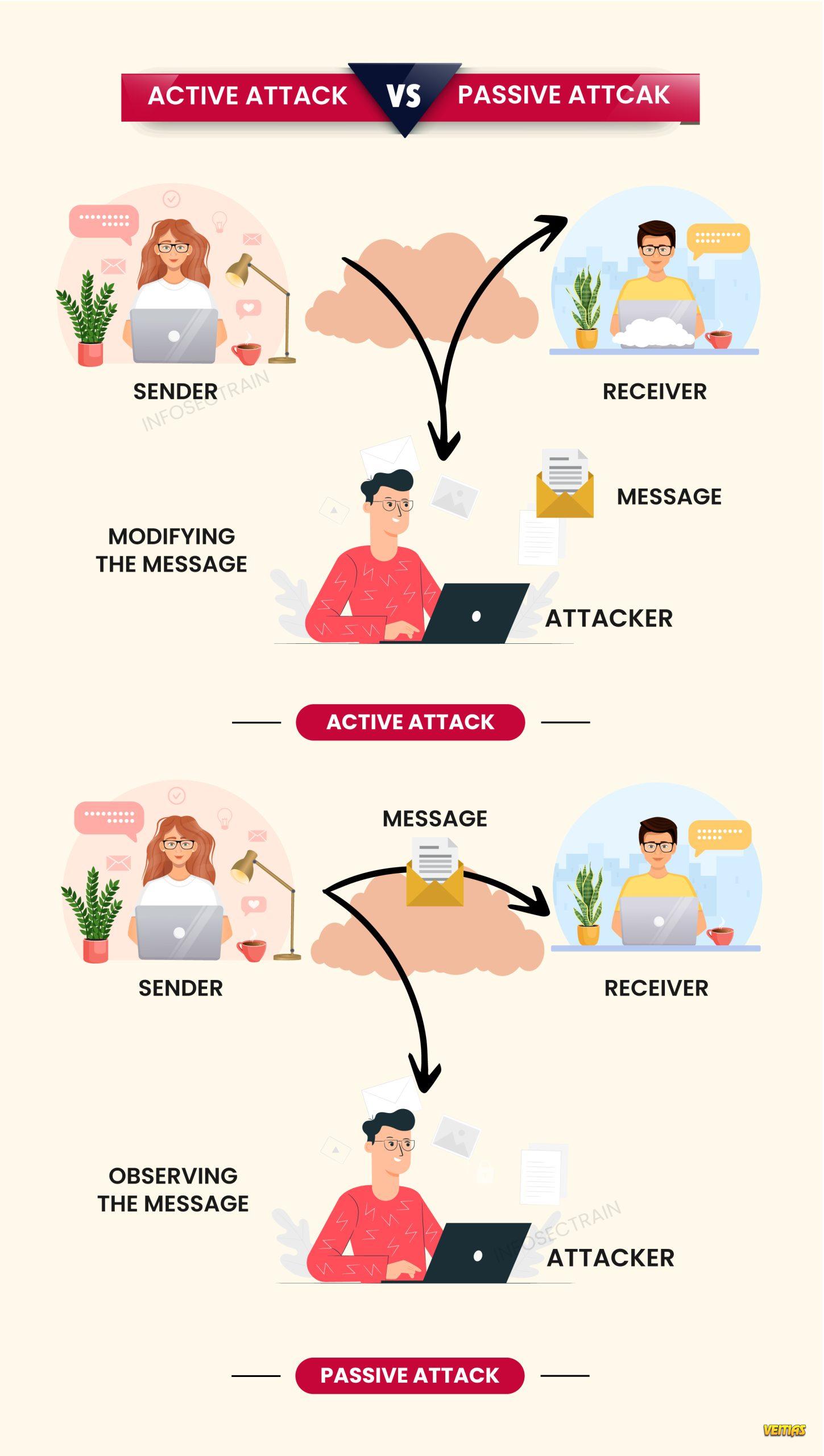
  • Differences between active attack and passive attack

    Active and passive attacks represent two fundamental threat categories in cybersecurity. An active attack involves modifying, disrupting, or destroying data and systems, such as malware injection, denial-of-service attacks, or message tampering. In contrast, a passive attack focuses on silently monitoring or intercepting information without altering it, commonly through eavesdropping or traffic analysis. Understanding the differences between these attacks helps security professionals design stronger detection, prevention, and response strategies to protect sensitive data and ensure system integrity.

    #CyberSecurity #ActiveAttack #PassiveAttack #NetworkSecurity #InfoSec #CyberThreats #SecurityAwareness #EthicalHacking #DataProtection #CyberRisk
    Differences between active attack and passive attack Active and passive attacks represent two fundamental threat categories in cybersecurity. An active attack involves modifying, disrupting, or destroying data and systems, such as malware injection, denial-of-service attacks, or message tampering. In contrast, a passive attack focuses on silently monitoring or intercepting information without altering it, commonly through eavesdropping or traffic analysis. Understanding the differences between these attacks helps security professionals design stronger detection, prevention, and response strategies to protect sensitive data and ensure system integrity. #CyberSecurity #ActiveAttack #PassiveAttack #NetworkSecurity #InfoSec #CyberThreats #SecurityAwareness #EthicalHacking #DataProtection #CyberRisk
    0 Kommentare 0 Anteile 672 Ansichten 0 Vorschau
Suchergebnis